The Digital Bridge: Why Lens Metadata is the Missing Link in Modern Filmmaking

In the high-stakes environment of modern film production, the gap between the camera lens and the final visual effects (VFX) shot has long been a source of friction. For decades, cinematographers have meticulously crafted images using specific glass to achieve particular focus rolls, bokeh, and distortions. Yet, when that footage reaches post-production, much of that "optical intent" is often lost, leading to hours of tedious, manual reconstruction.
In a recent fxpodcast, Jordan Thistlewood, Chief Digital Officer at Cooke Optics, argued that the solution to this disconnect has existed for over twenty years: Cooke’s /i Technology. While once considered an "optional extra" or a niche technical curiosity, lens metadata is rapidly evolving into a fundamental, non-negotiable tool for efficient and high-fidelity production.
The Evolution of /i Technology: A Brief Chronology
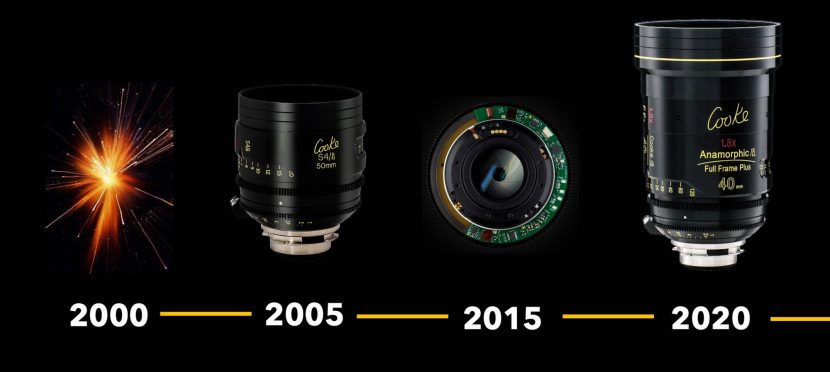
Cooke’s /i Technology (intelligent metadata) was born from a simple yet ambitious vision: to allow the lens to communicate directly with the digital recording ecosystem. For over two decades, Cooke has refined this system to capture frame-accurate data, including focus distance, iris settings, zoom positions, T-stops, focal length, and depth of field.
- The Early Days (The Sidecar Era): In the infancy of digital metadata, the primary hurdle was delivery. Data was often captured but relegated to "sidecar" files. These files were notorious for drifting out of sync with the image, becoming corrupted, or simply failing to reach the VFX pipeline during the chaos of production.
- The Integration Shift: The turning point arrived when major camera manufacturers—including ARRI, RED, Sony, and Blackmagic—began integrating
/isupport directly into their lens mounts. This move transformed metadata from an external, fragile file into an embedded property of the camera raw file. - The Modern Maturity: Today, the technology has reached a level of sophistication where it is no longer just about recording values; it is about characterization. Cooke now focuses on how lenses behave in real-world scenarios—acknowledging that a lens’s optical performance changes dynamically based on its focus distance and aperture.
Understanding the "Love Letter" to VFX
Jordan Thistlewood eloquently describes lens metadata as a "love letter from cinematography to VFX." This reframing is crucial. By moving away from viewing metadata as a cold, technical requirement and instead seeing it as a preservation of the cinematographer’s craft, production teams can foster better collaboration between on-set and post-production departments.
The Problem with "Eyeballing" It
When metadata is absent, VFX artists are forced to reconstruct the optical environment of a shot through plate analysis, witness cameras, and manual estimation. This is inherently flawed for several reasons:
- Focus as Choreography: Focus is not a binary state of "in" or "out." It is a creative choice—a dance performed by the cinematographer and focus puller to guide the viewer’s eye. Without data, that subtle artistic rhythm is often lost.
- Dynamic Distortion: Lenses are living, breathing entities. The distortion profile of a lens at infinity is vastly different from its behavior at a close-focus distance. Relying on generic lens grids fails to capture the "breathing" and shifting characteristics that occur during a complex shot.
- The Human Error Factor: Manual estimation is time-consuming, expensive, and prone to inaccuracies. In an industry where time is the most valuable commodity, forcing artists to reverse-engineer physics is a drain on both budget and creative potential.
Supporting Data: Why Trust is the New Currency
The shift in the industry is driven by a move toward "trusted data." When metadata is embedded in the raw file, it gains a level of permanence that a handwritten camera report—or a floating text file—never could.
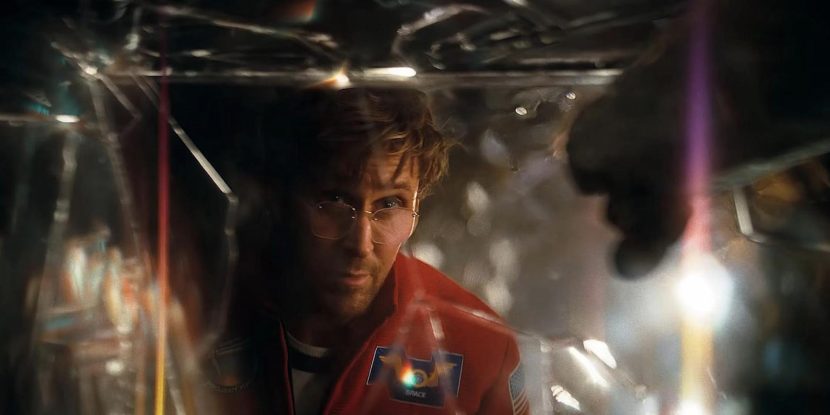
Recent large-scale productions, such as Project Hail Mary, have demonstrated the practical application of this technology. By utilizing focus distance metadata, these teams have been able to drive digital defocus in compositing, ensuring that the CG elements inherit the exact optical characteristics of the live-action plates. This isn’t just about efficiency; it is about achieving a seamless, photorealistic integration that was previously only possible through trial and error.
Official Perspectives: The Tipping Point
Cooke Optics’ recent presence at events like FMX underscores their commitment to bridging the gap between hardware and post-production. According to Thistlewood, the industry is approaching a "tipping point."
The argument for metadata is twofold:
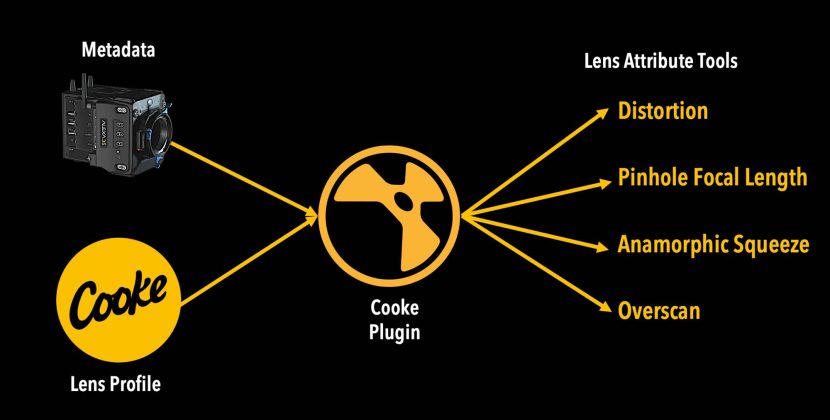
- For the Producer: It reduces the need for manual matchmoving and tracking. By providing the "knowns" of the lens, the VFX team can start their work from a position of mathematical certainty rather than speculative guessing.
- For the Artist: It removes the technical friction of reconstruction, allowing them to focus on the aesthetics of the image. When the camera’s behavior is already known, the artist can spend their time refining the creative output.
"The point is not that every tool has to use the metadata immediately," Thistlewood notes. "The first principle for any production is really simple: just do not throw it away."
Implications for the Future of Production
The transition to a metadata-heavy workflow requires a shift in both culture and procedure. As it stands, the technology is available, the cameras support it, and the software tools are becoming increasingly capable of reading it. The final barrier is procedural.
Recommendations for Productions:
- Mandate Metadata: VFX and post-production supervisors should make the delivery of
/imetadata a standard requirement in the turnover process. - Protect the Pipeline: Ensure that transcoding software and editorial tools are configured to preserve embedded metadata rather than stripping it out.
- QC Protocols: Incorporate metadata verification into the standard Quality Control (QC) process. If the metadata is not verified at the start of the post-production chain, it is often impossible to recover later.
As external systems, such as Preston motor encoders, continue to integrate with the /i ecosystem, even older or non-electronic lenses can contribute to this data-driven workflow. The goal is to move all relevant lens information into the camera file, where it can safely travel through the edit, the color grade, and the VFX pipeline without the risk of separation.
Conclusion: A New Standard for Filmmaking
Metadata is no longer an optional "extra" for high-budget blockbusters. It is becoming the standard language of modern cinematography. As the industry continues to rely on digital tools to manipulate and enhance the image, the need for a "ground truth" provided by the lens becomes increasingly vital.
Cooke’s continued development of their /i Technology serves as a reminder that the lens is the primary source of the image. By treating the data generated by that lens with the same care as the image data itself, productions can save significant time, reduce costs, and, most importantly, protect the artistic intent of the cinematographer. In the modern era of filmmaking, if you are not using your metadata, you are leaving the most important part of your creative vision to chance.