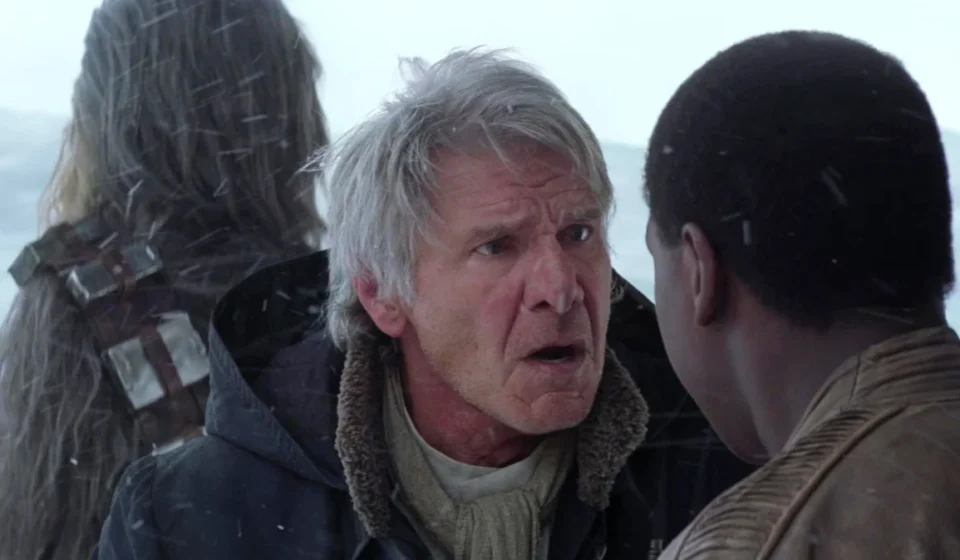

In the mid-2010s, the film industry entered a new era of "event cinema" hype, spearheaded by the most anticipated production in modern history: Star Wars: The Force Awakens. Following Disney’s acquisition of Lucasfilm in 2012, the pressure to maintain absolute secrecy surrounding J.J. Abrams’ return to the galaxy far, far away was unprecedented. While the studio implemented high-security protocols—ranging from non-disclosure agreements to physical site lockdowns—they could not account for the sheer unpredictability of the open sky.
What would become one of the most significant leaks in Star Wars history was not the result of a disgruntled employee or a sophisticated hacking operation. Instead, it was the byproduct of pure, unadulterated serendipity. On a quiet afternoon in 2014, an amateur pilot on a leisure flight over the British countryside inadvertently captured the first look at the return of cinema’s most iconic starship: the Millennium Falcon.
The Climate of Secrecy: The 2014 "Star Wars" Hype Cycle
To understand the impact of this accidental leak, one must look back at the cultural climate of 2014. For the better part of a decade, the Star Wars franchise had existed primarily in the realm of prequel discourse and extended universe novels. When it was confirmed that original trilogy stars Harrison Ford, Carrie Fisher, and Mark Hamill were returning, the internet entered a frenzy of speculation.
"The Force Awakens" was, effectively, the "holy grail" of leaks. Fan communities and news outlets were in a state of high alert. Every rumor—no matter how tenuous—was treated as gospel. Production hubs like Pinewood Studios were surrounded by fans with long-range lenses, and every logistical detail was scrutinized for clues about the plot. Within this high-pressure environment, Lucasfilm and Disney were forced to adopt a bunker mentality. They were successful in hiding major narrative pivots, such as the true nature of Daisy Ridley’s character, Rey, and the limited screen time of Luke Skywalker. However, keeping a full-scale physical prop of the Millennium Falcon hidden was an entirely different logistical challenge.
Chronology: A Routine Flight Becomes Global News
The event unfolded on a seemingly mundane afternoon in 2014, when Matthew Myatt, a member of the Airbourne Aviation Flying Club, decided to take his Ikarus C42 microlight aircraft for a routine excursion. Based at Popham Airfield in Hampshire, England, Myatt and his colleagues had no intention of conducting investigative journalism.
The Discovery
As the group navigated the skies near the former Royal Air Force base at Greenham Common, Myatt noticed something unusual on the ground. From an altitude of approximately 1,000 feet, the landscape below appeared to host structures that didn’t quite fit the topography of a decommissioned military site. Although the objects were not immediately identifiable to the naked eye, Myatt’s instincts as a photographer kicked in. He raised his camera and snapped a series of long-distance shots of the grassy area.
The Reveal
It was not until four days later, when Myatt finally sat down to review his digital files on a computer, that the reality of his haul became clear. Tucked away in the high-resolution images were unmistakable silhouettes: the circular cockpit, the mandibles, and the distinct profile of the Millennium Falcon, accompanied by a black X-wing fighter.
The Viral Aftermath
On the evening he processed the images, Myatt uploaded the photographs to Twitter. Expecting a few "likes" from his fellow aviation enthusiasts, he went to bed, unaware that he had just ignited a digital firestorm. By sunrise, his life had fundamentally changed. His phone was inundated with calls from major international news outlets, including The Sun and The Guardian. His Twitter mentions were flooded with notifications, and the images were being broadcast across every corner of the internet.
Supporting Data: The Logistics of the Leak
The location of the leak, Greenham Common, was chosen by production teams because of its vast, open space—perfect for constructing large-scale sets. However, the choice of an active flight path region proved to be a fatal flaw in the security perimeter.
The images were so high-quality that they left no room for doubt among the Star Wars fanbase. The physical presence of the Falcon confirmed that The Force Awakens would not rely solely on CGI, but would prioritize the tactile, practical effects that defined the original 1977 film. For Disney, this was a marketing win disguised as a security failure; it generated massive buzz, but it also robbed the studio of the "surprise reveal" they had meticulously planned for their official promotional cycle.
Official Responses and the "Barmy" Reality
In the immediate aftermath of the leak, the production team at Lucasfilm did reach out to Myatt, though the nature of these communications remained private. Myatt, feeling the weight of the massive attention, ultimately declined to engage further with the studio.
In a 2014 interview with The Hollywood Reporter, Myatt famously described the ordeal as "barmy"—a quintessentially British assessment of the absurdity of the situation. He admitted that the intensity of the media attention had nearly overwhelmed his daily life. Interestingly, Myatt expressed a hope that Harrison Ford—a renowned pilot in his own right—might stop by the Popham Airfield to view the site or discuss the craft. That meeting never occurred, perhaps for the best given Ford’s well-documented history of aviation incidents.
Implications for Modern Production Security
The Millennium Falcon leak served as a turning point for how major blockbuster studios handle location security. In the years following 2014, the "drone age" changed the landscape of film production.
- Airspace Restrictions: Major productions now routinely work with local aviation authorities to establish temporary "no-fly zones" over high-profile filming locations to prevent aerial surveillance.
- Increased Physical Camouflage: Studios have become far more adept at using climate-controlled tents, false roofing, and "hide-in-plain-sight" tactics to ensure that even if an aircraft passes over a set, the contents remain obscured.
- The "Leak as Marketing" Pivot: Perhaps most importantly, studios realized that if a leak is inevitable, they can often pivot to control the narrative. Today, when set photos leak, studios often respond with an official, high-quality "first look" within hours, effectively reclaiming the marketing window from the unauthorized source.
Conclusion
The story of the Millennium Falcon leak remains a fascinating footnote in cinema history. It stands as a testament to the fact that no matter how much money, legal power, or secrecy a studio like Disney commands, the world is still capable of producing moments of pure, accidental chaos.
Matthew Myatt did not set out to break the internet; he was merely a man in the sky with a camera and a curiosity for the unusual. His accidental scoop remains the definitive example of the "Streisand effect" in the age of blockbuster film production—where the more you attempt to keep a secret, the more the world leans in to catch a glimpse. For the fans who saw the first glimpse of Han Solo’s ship back in 2014, the leak provided a moment of genuine, albeit unscripted, magic that served as a prologue to the record-breaking success of The Force Awakens.