
In the annals of 21st-century pop culture, few franchises have defied the laws of cinematic evolution quite like Jackass. What began as a transgressive, low-budget experiment in self-inflicted pain has matured—if that is the word—into a global phenomenon. Now, with the 2026 release of Jackass: Best and Last, the troupe is facing the reality that the curtain may finally be closing on their long-running display of orchestrated mayhem.
At the center of this cultural juggernaut stands Jeff Tremaine. Clad in a vintage Smiths T-shirt, his gray hair betraying the decades that have passed since the first Jackass episode aired, Tremaine sits at a curious intersection: he is both the ringmaster of a literal circus of “knuckleheads” and an unlikely auteur who has quietly curated one of the most recognizable visual aesthetics in comedy.
A Legacy Built on Bruises: The Chronology of Madness
The origins of Jackass are rooted not in the polished halls of Hollywood, but in the gritty, DIY ethos of Big Brother magazine, a staple of the 1990s skateboarding scene. For Tremaine, a graduate of fine arts, the objective was never to become a director. It was to capture the raw energy of the personalities he encountered.
“I was good at curating not necessarily the best skaters, but the most outrageous personalities,” Tremaine reflects. The turning point, he recalls, was watching Johnny Knoxville shoot himself with a handgun—a moment that transcended the scope of a standard skate video. Alongside co-creators Knoxville and Spike Jonze, Tremaine realized he had stumbled upon a volatile, lightning-in-a-bottle chemistry involving Steve-O, Wee Man, and Chris Pontius.
The progression of the franchise tracks a transition from the intimate to the gargantuan:
- The Early Days: Small crews packed into a single van, filming without permits, fueled by spontaneous ideas like kidnapping Brad Pitt for a prank at a hot dog stand.
- The Mid-Era Expansion: The release of Jackass Number Two (2006) and Jackass 3D (2010) marked a shift toward high-production values, where the challenge became maintaining the "punk rock" spontaneity within the rigid constraints of a major studio machine.
- The Modern Era: Jackass Forever (2022) and the final chapter, Best and Last (2026), represent a bittersweet victory lap. The production now involves massive crews and complex safety protocols—a far cry from the days when Tremaine himself had to drive cast members to the hospital.
The Art of the "Dumb": Deconstructing the Aesthetic
Journalists and film critics often struggle to reconcile the crude content of Jackass—men being hit in the groin or launched by bulls—with the undeniable artistic intent behind the framing. Tremaine, who is famously wary of being labeled an “auteur,” views his work through a more practical, albeit precise, lens.
“We’re magnifying stupid,” Tremaine says. “That’s all it is to me. I can’t do it in an artist’s mindset.” Yet, the evidence suggests otherwise. Whether it’s the way he utilizes slow-motion cinematography to transform a slapstick moment into a visceral, painterly tableau, or his intuitive understanding of which cast member will provide the perfect comedic foil, Tremaine acts as a conductor of chaos.
Negotiating with Authority
The tension between the franchise’s anarchic spirit and the constraints of the Motion Picture Association (MPA) has provided some of the most surreal anecdotes in film history. Tremaine recounts the battle over a scene in Jackass 3D involving a ping-pong ball and Chris Pontius. The studio insisted on cutting the length of a specific shot due to nudity regulations. Tremaine’s solution—a strategic black bar that dances in and out of the frame—is a masterclass in creative problem-solving under duress.
“I like operating with some restrictions,” Tremaine admits. “I think that forces me to be more creative.”
The Human Element: Friendship and Vulnerability
Perhaps the most surprising aspect of Jackass is the genuine affection at its core. Behind the scenes of the "Best and Last" project, there is a pervasive wistfulness. Looking back at archival footage of the cast as young men, Tremaine admits to being hit by the weight of time.
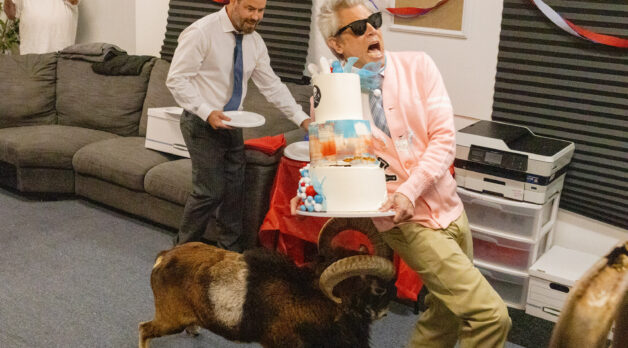
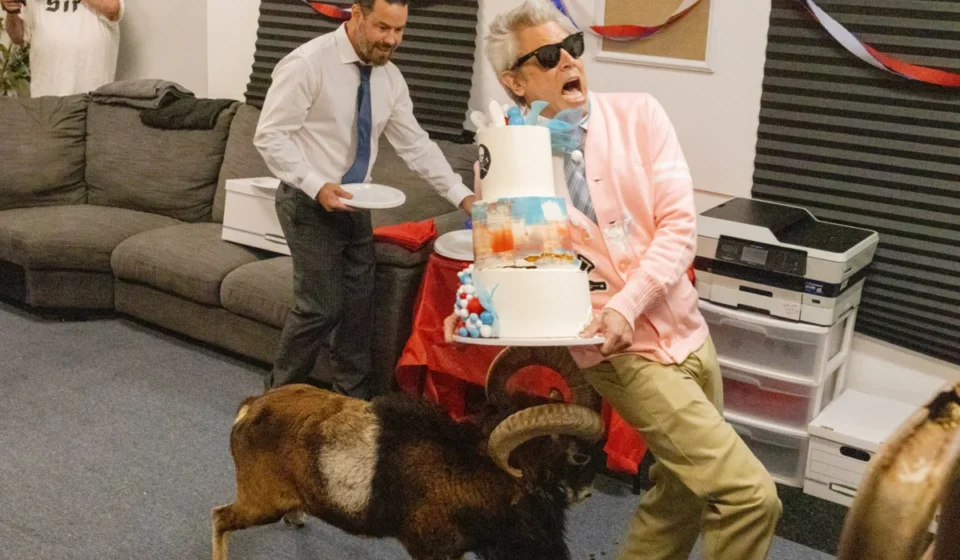
The franchise has been widely credited by sociologists and critics for dismantling toxic tropes of masculinity. By celebrating the vulnerability and deep, platonic love between its stars, Jackass provides a counter-narrative to the idea that "tough guys" cannot be soft. When the cast faces life-threatening stunts—such as the infamous bull-goring of Johnny Knoxville in Jackass Forever—the audience isn’t just watching a stunt; they are watching a brotherhood endure trauma together.
For Tremaine, directing these performances is about "picking who I think is going to be the funniest guy for this bit and then surrounding him with as much magic as I can." He rarely dictates lines; he creates the environment, and the cast provides the soul.
The Critical Pivot: From Pariah to MoMA
The critical reception of Jackass has undergone a dramatic transformation. In the early 2000s, the films were frequently panned or dismissed as mindless fodder. However, the premiere of Jackass 3D at the Museum of Modern Art served as a watershed moment. The high-art world finally acknowledged what the subculture had known for years: Jackass is a uniquely American form of performance art.
Tremaine finds the intellectualization of his work both hilarious and validating. “They’re much more psychologically in tune than I am with what’s happening,” he says of the critics. However, he remains grounded in his punk-rock roots. He admits to feeling a sense of existential dread when receiving positive reviews, fearing that the series might be losing its "fuck you" edge as it moves into the mainstream.
Implications: The End of an Irreplaceable Run
As the franchise winds down, the industry is left to wonder what follows the Jackass model. Can an era of digital content and highly curated social media personas ever replicate the authentic, visceral danger of a Tremaine production?
Tremaine himself isn’t entirely sure he has "grown up." Despite his nearly six decades of life, he maintains his affinity for the juvenile. “I’m almost 60 years old, and I still like to draw dicks on things,” he laughs. “It’s weird to me that that is still funny to me. I’m waiting to grow up.”
Beyond the Franchise
Even as the Jackass machine slows, Tremaine’s influence persists. His foray into directing a stylish, musical-esque safety video for American Airlines proved that his eye for visual storytelling translates well beyond the realm of stunts. Whether he turns to more traditional film projects or continues to push the boundaries of what is considered "legitimate" entertainment, one thing remains clear: Jeff Tremaine has redefined the limits of what a group of friends can achieve when they decide to stop taking the world—and themselves—seriously.
As he looks toward the future, Tremaine remains tethered to the same creative impulses that fueled his early days at Big Brother. He views his painting and his directing as part of the same mental process, a constant need to externalize a specific, rebellious vision.
In Jackass: Best and Last, the audience is invited to share in that final, reflective moment. It is a testament to a career that never sought to change the world, yet somehow managed to leave a permanent mark on its cultural landscape. Whether or not it is truly the end, the legacy of the "exceptional dumb-dumbs" and their director will remain a benchmark for authentic, unvarnished human experience.