The Sound of Invisibility: Jonny Woodley’s Score for the Satirical Mockumentary ‘Lady’ Released

Introduction: A Sonic Portrait of Narcissism and Disappearance
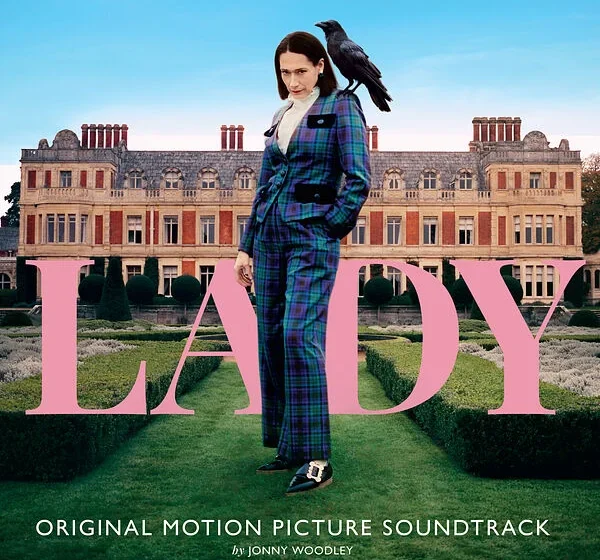
Natural Frequencies has officially released the original motion picture soundtrack for the British satirical comedy Lady, a film that has already begun to carve out a unique niche in the independent cinema landscape. Composed by the versatile Jonny Woodley, the album captures the bizarre, shifting tone of a movie that oscillates between biting social commentary and surreal psychological drama.
The soundtrack, now available across major digital streaming platforms, including Amazon, serves as a vital auditory companion to a film that explores the fragility of ego in the digital age. As the film makes its way from the prestigious stages of the BFI London Film Festival to broader theatrical distribution via Obscured Releasing, Woodley’s score has emerged as a focal point for critics and audiences alike, grounding the film’s increasingly surreal narrative in a cohesive, albeit unsettling, musical language.
Main Facts: The Intersection of Music and Meta-Narrative
At its core, Lady is a mockumentary that deconstructs the relationship between the observer and the observed. Co-written and directed by Samuel Abrahams, the film features a powerhouse ensemble cast, including Sian Clifford, Laurie Kynaston, Juliet Cowan, and Olisa Odele.
The premise follows a lonely, narcissistic aristocrat who manipulates a struggling, opportunistic director into filming every facet of her life. However, what begins as a vanity project quickly devolves into something far more abstract; the protagonist’s desperate obsession with the spotlight takes a surreal turn when she begins to literally fade away, becoming invisible to the world around her.
Jonny Woodley’s score plays an essential role in this transformation. By utilizing a mix of minimalist textures and discordant melodic lines, the soundtrack mirrors the protagonist’s descent from self-obsessed public figure to a ghost in her own life. The album, consisting of thirteen distinct tracks, captures this arc with precision, moving from the jaunty, self-important cues of the opening to the haunting, sparse arrangements of the film’s climax.
Chronology: From Festival Buzz to Theatrical Reality
The journey of Lady has been one of slow-burn critical acclaim. The film first garnered significant attention during its premiere at last year’s BFI London Film Festival. Industry insiders noted its sharp, acerbic script and the daring performances of its lead cast, positioning it as a standout in the British comedy circuit.
Following the festival circuit, the film underwent a period of strategic positioning. Earlier this month, Lady saw a limited release in UK theaters, where it was met with praise for its willingness to embrace high-concept absurdity. While domestic distribution in other territories remained a point of speculation for months, the recent announcement that Obscured Releasing has picked up the film for a broader rollout in the coming months marks a significant milestone for the project.
The release of the soundtrack by Natural Frequencies coincides with this wider distribution push. By making the music available now, the production team is ensuring that the film’s atmospheric legacy reaches audiences even before they have the chance to see it on the big screen, leveraging the power of streaming services to build anticipation.
Supporting Data: The Anatomy of the Soundtrack
The soundtrack is structured as a narrative in its own right. Woodley’s compositions are notably concise, with many tracks clocking in under a minute, reflecting the fragmented and fleeting nature of the protagonist’s existence.
The Track List:
- Lady (0:38) – A brief, punchy introduction.
- In With Fear (1:47) – The onset of psychological instability.
- Icon (0:56) – Capturing the superficiality of the film’s lead.
- Mummy’s Day Out (1:09) – A nod to the domestic tensions within the narrative.
- The Lake (1:17) – A transitional, atmospheric piece.
- My Tree (0:56) – Emphasizing the protagonist’s proprietary view of the world.
- Invisabella (0:26) – A micro-track marking the film’s central conceit.
- It’s Not Funny If I’m Dead (2:53) – The emotional anchor of the album.
- Probably Not (4:00) – The longest track, allowing for a deep dive into the film’s darker themes.
- Drowning (Shallow Meaningless Puddle) (0:47) – A dark, satirical look at the protagonist’s predicament.
- Unspeakable Suffering (0:57) – A brief, intense interlude.
- Ghost (2:02) – Reflecting the final, ethereal state of the protagonist.
- Isabella (3:01) – The final, haunting resolution.
By listening to tracks like "Isabella" or the opening "Lady," one can discern the evolution of Woodley’s approach: from the sharp, percussive sounds of fame to the echoey, reverb-heavy textures of invisibility.
Official Responses and Creative Intent
In discussions surrounding the film, director Samuel Abrahams has emphasized the importance of the score in maintaining the film’s precarious balance. "We didn’t want a score that simply told the audience how to feel," Abrahams noted in recent press. "We wanted music that felt like it was part of the documentary crew’s own confusion. Jonny Woodley captured that ‘fly-on-the-wall’ feeling while also hinting at the supernatural horror unfolding in the protagonist’s mind."
Jonny Woodley himself has spoken about the technical challenges of scoring a mockumentary. "The comedy comes from the reality, but the horror comes from the silence," Woodley stated. "When we started working on the music for the ‘invisibility’ sequences, the goal was to strip away the instruments one by one. By the time we hit the final tracks, there’s almost nothing left—just a whisper of what was there before."
The decision to release the music through Natural Frequencies was a strategic one, aimed at cinephiles who appreciate the intersection of experimental electronic music and traditional cinematic scoring.
Implications: The Future of Satirical Mockumentaries
The release of Lady and its accompanying score suggests a shift in how British independent films are being packaged for international audiences. By utilizing the "mockumentary" format to explore themes of modern narcissism, the film taps into a cultural zeitgeist defined by social media, the "influencer" economy, and the constant, crushing need for validation.
The implication for future filmmakers is clear: audiences are increasingly interested in genre-bending content that doesn’t fit neatly into a single box. Lady isn’t just a comedy; it is a tragedy, a thriller, and a social critique all at once. The fact that the music—which oscillates between the absurd and the profound—is being treated as a high-value asset by its distributors speaks volumes about the value placed on "prestige" independent projects.
Furthermore, the involvement of Obscured Releasing signifies a growing appetite for European independent cinema in the domestic market. As streaming platforms look to differentiate their libraries, films like Lady—which offer a unique voice and a distinct visual/auditory identity—are becoming highly sought after.
Conclusion: A Sonic Legacy
As Lady continues its theatrical rollout, it serves as a reminder of the power of collaborative artistry. The synergy between Samuel Abrahams’ vision and Jonny Woodley’s musical contribution has resulted in a project that is as unsettling as it is entertaining. For those who have seen the film, the soundtrack acts as a memento of the protagonist’s strange journey; for those who haven’t, it serves as an intriguing, haunting preview of a story that is as timely as it is surreal.
The release of this album, combined with the upcoming broader distribution, marks Lady as a definitive entry in the current wave of British satire. It is a film that demands to be watched—and, just as importantly, it is a score that demands to be heard. Whether one is a fan of the mockumentary format or simply a lover of evocative film music, the Lady soundtrack is an essential addition to any collection.
As we look toward the next few months of wider releases, it is highly probable that Lady will continue to spark conversations about the price of fame, the nature of visibility, and the strange, haunting beauty of being forgotten. For now, we are left with Woodley’s score—a final, echoing note that lingers long after the screen goes dark.