Beneath the Backlot: Cine Gear Expo 2026 and the Resilient Spirit of Hollywood Cinematography

In the ever-evolving landscape of motion picture technology, trade shows often serve as bellwethers for the industry’s collective anxiety. While the massive NAB Show in Las Vegas frequently triggers a sense of existential dread—forcing attendees to reconcile with cinema’s diminishing market share against the tidal wave of generic digital video growth—Cine Gear Expo offers a vital, necessary antidote.
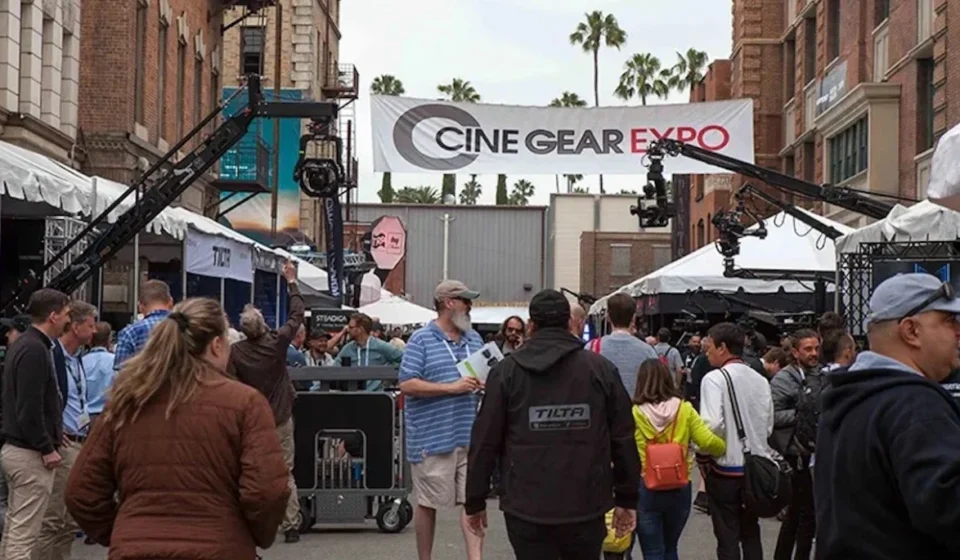
Set against the iconic, sun-drenched backdrop of the Universal Studios Lot, the 2026 edition of Cine Gear felt less like a cold corporate trade show and more like a high-stakes family reunion. For two days, the sprawl of Los Angeles’ cinematographers, gaffers, and lighting technicians transformed the backlot into a vibrant hub of technical discourse, where the latest 17K sensor advancements are weighed with the same gravity as the quality of the ribs at the Saturday night ASC barbecue.
The Ethnography of Gear: A Shifting Demographic
The atmosphere this year was underscored by a distinct generational shift. As I navigated the bustling walkways, I met with Alec Moeller, a standout of the 2022 "New Faces" class. Moeller, a proponent of film-based workflows and naturalistic lighting, described his attendance not as a quest for the "latest and greatest," but as an ethnographic study.
"In the wake of the success of projects like Obsession and Backrooms, there’s a palpable, youthful energy in the air," Moeller noted. The Friday morning crowd, dominated by film school students and up-and-coming freelancers, signaled a changing of the guard. While the industry is often defined by its union-card-carrying stalwarts, the presence of these younger creators—many of whom are building careers on micro-budget, internet-native horror—suggests that the tools of the trade are reaching a new, decentralized demographic.
Logistics and the Festival Experience
The logistical reality of Cine Gear 2026 was, at times, a test of endurance. Unlike the more compact layout of previous years at Warner Bros., the Universal Studios configuration presented challenges. The sprawling nature of the lot meant that attending a high-demand seminar—such as the insights provided by master cinematographers like Ed Lachman—required queueing in the unforgiving Southern California heat. The separation between the vendor tents and the seminar stages, bridged by a constant shuttle service, lent the event a festival-like atmosphere reminiscent of Sundance.
Yet, this friction didn’t dampen the enthusiasm. The trade show floor was a kaleidoscope of industry swag, with bright yellow Insta360 totes becoming the unofficial uniform of the event, stuffed to the brim with catalogues and smaller giveaways. It was a chaotic, communal, and uniquely "Hollywood" experience.
The ASC Dialogue: A Century of Vision
The cornerstone of the weekend was undoubtedly the annual American Society of Cinematographers (ASC) panel. Featuring a formidable lineup of 15 members, including Jeff Cronenweth, Rachel Morrison, Karl Walter Lindenlaub, and Natasha Braier, the session provided a rare, high-level glimpse into the evolution of the craft.
The panel opened with a sweeping montage of ASC work spanning over a century, including a breathtaking glimpse of John Toll’s Oscar-nominated cinematography for The Thin Red Line (1998). While the sheer size of the panel limited deep-dive technical breakdowns, the sound bites were profound. Steven Fierberg emphasized "body consciousness," noting that the placement of the camera is often dictated by an intuitive, physical connection to the set. Meanwhile, Natasha Braier shared how her upbringing in Argentina under a military dictatorship—a society defined by subtext and the unspoken—continues to inform her ability to tap into the unconscious, emotive power of the image.
Lighting and the Digital Evolution
For industry professionals, the technical meat of the expo was found in the lighting halls. I accompanied Local 728 gaffers Drew Moe and Jeffrey Taylor, principals of the boutique rental house Canary Yellow, on a tour of the latest advancements.
"Most of Hollywood’s history has just been tungsten, then HMIs, then fluorescent," Moe explained. "That was a slow timeline. Now, every year, we see new chipsets and attachments. It’s a rapid, exciting cycle." Moe highlighted the strides made by Aputure, specifically their proprietary Blair CG color engine, which has begun to standardize color reproduction in a way that was previously unattainable for portable LED units.
Furthermore, the introduction of V3 for the Blackout Lighting Console marked a significant pivot in the industry. By introducing visual control components to what has historically been a numbers-based workflow, Blackout is positioning itself to dominate the lighting control space, offering an iPad-driven interface that feels both fluid and remarkably intuitive.
The Cinelux Sixteen: A Bridge Between Mediums
Perhaps the most buzzed-about development on the lot was the Cinelux Sixteen. Developed by a small team and showcased at the CSLA rental booth, this 16mm prototype represents a daring attempt to bridge the gap between traditional film aesthetics and digital efficiency.
Chief engineer Caz Voorhees explained that the camera is designed to record to 16mm film while simultaneously capturing a 3.2k digital proxy. This dual-capture approach is specifically engineered to soothe producer anxiety regarding film costs and the slow turnaround of dailies. While the team estimates they are still two versions away from a mid-2027 release, the innovation is striking. Voorhees noted that while the digital sensor integration was straightforward, the real mechanical battle was the film magazine—a feat of engineering that requires flawless, frictionless film movement within a tiny footprint. In a move that highlights the indie-spirit of the project, the team intends to make the magazine designs open-source, allowing users to 3D-print replacements if they are in a pinch.
The Renaissance of Vintage Glass: Zero Optik and Atlas Lens Co.
The lens market at Cine Gear reflected a broader industry obsession with "character." Zero Optik, known for rehousing vintage glass, has become a vital curator of history. Operations manager Alex Baxter detailed their process of taking lenses from the 1930s and 40s—such as the Bausch & Lomb Ultra Baltars used by Ed Lachman—and transforming them into cinema-ready tools for the digital age.
"With digital cinema, all of a sudden you had all these new options," Baxter said. This sentiment was echoed by Atlas Lens Co. co-founder Dan Kanes, who leveraged his success in wireless video transmission (via his former company, Paralinx) to fund his passion for anamorphic glass. Atlas’s flagship Orion series and the newly shipped Kaizen series represent a departure from the "high field curvature" of vintage anamorphic glass, offering a more parallel focus that allows multiple subjects to remain sharp across the frame—a necessity for modern, large-sensor productions like Dune: Part Three.
Implications for the Future
The 2026 Cine Gear Expo left little doubt that while the industry is in a period of intense technological flux, the soul of the craft remains intact. The emergence of hybrid film-digital tools like the Cinelux, combined with the sophisticated rehousing of vintage optics, suggests that the "digital vs. film" debate is being replaced by a synthesis of both.
As I wrapped up the event in a seminar with M. David Mullen—who provided a masterclass in dissecting complex tracking shots from The Marvelous Mrs. Maisel—the contrast between the high-tech gear on the floor and the human expertise in the rooms was stark.
Cine Gear remains a necessary pilgrimage. It is a place where the gearheads, the artists, and the pragmatists meet to negotiate the future of the image. By the time I reached the ASC Clubhouse for the final barbecue, the complexities of sensors, LUTs, and color engines faded into the background. What remained was the reality that cinema is not just a technological process, but a community. Despite the challenges of an evolving market and the logistical hurdles of the Universal lot, the camaraderie displayed under the twilight sky confirmed one thing: the appetite for high-quality, artisanal storytelling is as strong as it has ever been.