
In the shifting, silt-heavy waters of the Venetian lagoon, where the boundary between the terrestrial and the aquatic blurs into a hazy horizon, a new cinematic voice has emerged to claim international acclaim. Marco Cavazzin, the 26-year-old Italian filmmaker, has been awarded the Best Director prize in the Pardi di Domani (Leopards of Tomorrow) section at the prestigious Locarno Film Festival. His short film, Mutrion, stands as a haunting exploration of identity, folklore, and the psychological tremors of returning home.
As the sole Italian entry in a highly competitive category featuring 20 works from global cinematic hubs—including France, the United Kingdom, Iran, Qatar, China, Taiwan, the United States, and Ukraine—Mutrion has effectively placed a spotlight on the unique cultural fabric of Italy’s lagoon islands.
The Narrative Architecture: A Study of Folklore and Isolation
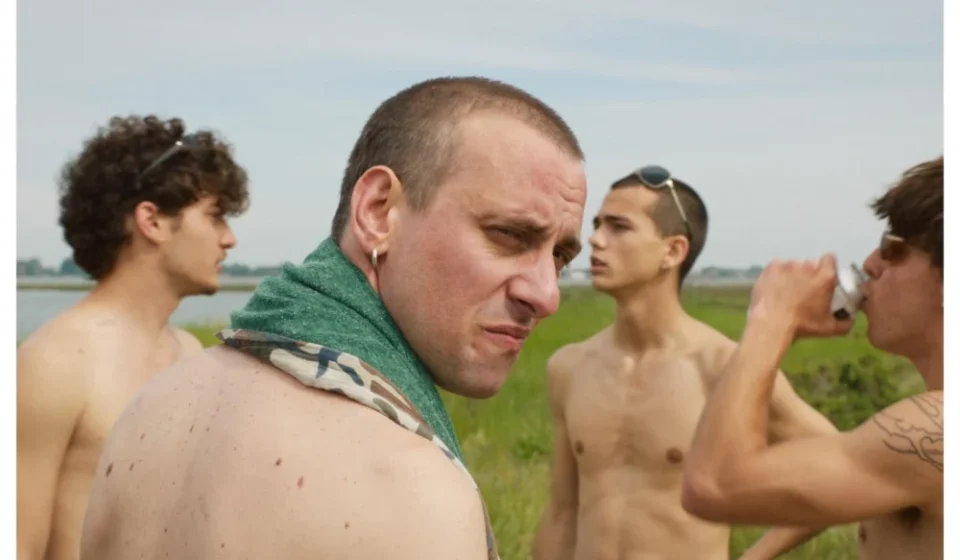
The premise of Mutrion is as idiosyncratic as the landscape it depicts. Set within a community suspended in time, the film weaves a local legend into the fabric of the protagonist’s existence: the belief that every inhabitant of the lagoon is destined to lose the toenail of their right big toe. It is a peculiar, tactile superstition that serves as an initiation into the community’s shared, albeit surreal, history.
The film follows Marco, played by Manfredi Marini—known for his evocative performance in Giovanni Tortorici’s Nineteen. Marco, who was teased in his youth with the nickname "Mutrion" (a local term for someone who is "sulky" or withdrawn), fled the suffocating isolation of the lagoon at the age of twenty. Now, four years later, he returns.
The central conflict arises from a singular biological anomaly: Marco is the only one who has never lost his toenail. This failure to conform to the local physical "rite of passage" marks him as an outsider, even among his own kin. His return is not merely a geographic relocation; it is a confrontation with the tacit expectations of a community that operates under its own set of rigid, albeit bizarre, laws. As the landscape shifts between the physical reality of the brackish water and the psychological projection of his internal turmoil, Marco finds that the facade of his composure is beginning to crack.
Chronology of the Production
The genesis of Mutrion reflects a deliberate, slow-burn approach to independent filmmaking. Produced by the independent studio Etimo, the project was designed to be deeply rooted in its environment.
- Pre-Production and Concept: Cavazzin began developing the script with the intent to capture the specific cadence of life in the Venetian lagoon. The project sought to blend regional superstition with a modern coming-of-age narrative.
- Principal Photography: The film was shot entirely on location within the lagoon islands. By choosing to film on-site, the production team, supported by the Veneto Film Commission, ensured that the environment acted as a character in its own right, rather than a mere backdrop.
- Post-Production and Distribution: Following the completion of the film, the independent production house Etimo partnered with Cattive Produzioni for distribution. The strategy focused on the international festival circuit, starting with the prestigious platform provided by Locarno.
- The Locarno Achievement: The selection of Mutrion into the Pardi di Domani section was the first major hurdle, followed by the rigorous deliberation of a jury panel consisting of Lebanese director Mounia Akl, South African producer Steven Markovitz, and Italian director Antonio Piazza. The jury’s decision to award Cavazzin reflects a growing appetite for stories that marry the hyper-local with the existential.
The Cultural and Geographic Context
The Venetian lagoon is often romanticized in art and literature, yet Cavazzin’s vision strips away the tourist veneer to expose the structural isolation inherent to the islands.
"This short stems from the desire to tell a story of return, the attempt to reconnect with a place that has become both familiar and distant over time," Cavazzin explained in his official director’s statement. "In the Venetian lagoon, rituals, superstitions, and family stories are still present and continue to shape collective identity."
For the inhabitants of these islands, identity is not formed in a vacuum; it is inherited through the rituals of the land. By centering the story on the "Mutrion"—the sulky, the one who refuses to participate—Cavazzin touches upon the universal tension between individual autonomy and communal belonging. The physical decay represented by the missing toenail serves as a metaphor for the erosion of the individual when faced with the relentless pressure of tradition.
Jury Perspectives and Supporting Data
The Pardi di Domani section of the Locarno Film Festival is globally recognized as a launchpad for the next generation of auteur directors. The inclusion of Mutrion alongside international heavyweights from the U.S., China, and Ukraine underscores the film’s narrative strength.
The jury’s selection process was noted for its focus on innovation and the capacity of short-form storytelling to encapsulate complex themes. By selecting an Italian film that rejects traditional narrative tropes in favor of a surrealist, localized fable, the jury signaled a preference for directors who can navigate the "local-to-global" pipeline effectively.
The production was bolstered by the Veneto Film Commission, which has been instrumental in preserving the visual heritage of the region. Their support for Mutrion highlights the commission’s commitment to projects that do not merely showcase the beauty of the landscape, but investigate its sociological nuances.
The Implications for Italian Independent Cinema
The success of Mutrion at Locarno is a significant indicator of the trajectory of Italian cinema. For years, the Italian film industry has been criticized for being overly reliant on traditional drama or historical biopics. Cavazzin’s victory represents a shift toward a more experimental, psychological, and atmospheric approach to filmmaking.
- A Shift in Perspective: By focusing on the "peripheral" experiences of the Venetian lagoon rather than the central hub of Venice itself, the film challenges the traditional geography of Italian storytelling.
- The Rise of Independent Studios: The role of Etimo in bringing this vision to life highlights the growing power of independent production houses in Italy. Without the constraints of major studio oversight, these producers are enabling directors like Cavazzin to take creative risks that result in unique, award-winning narratives.
- Marketability of the "Hyper-Local": Mutrion proves that stories deeply embedded in local legend and specific regional quirks have international appeal. The film’s ability to compete with global entries demonstrates that universal human emotions—such as the anxiety of returning home and the struggle for identity—can be effectively conveyed through the lens of a singular, niche experience.
Conclusion: A New Chapter for Marco Cavazzin
As the dust settles on the Locarno Film Festival, the industry is looking closely at what comes next for the 26-year-old director. Cavazzin has managed to accomplish what many filmmakers spend a career attempting: the creation of a film that is both a love letter to his home region and a scathing, poetic critique of the social pressures that define it.
With Mutrion now firmly established on the festival circuit, the film is expected to see a robust run across global venues. For the audience, the film serves as a reminder that the most profound stories are often hidden in the silt of the lagoon, waiting for someone to return and dig them up. Whether or not the residents of the lagoon actually lose their toenails is irrelevant; the fear of losing one’s sense of self, as Marco discovers, is the true tragedy of the return.
Marco Cavazzin has proven that he is a director to watch. In the quiet, damp silence of the Venetian islands, he has found a voice that is loud, clear, and undeniably resonant on the world stage.