Anonymous Content’s Renaissance: Inside the Strategic Overhaul of a Hollywood Powerhouse

For years, the halls of Anonymous Content were defined by the singular, towering shadow of its founder, Steve Golin. As the architect behind industry-defining triumphs like Spotlight, The Revenant, and Mr. Robot, Golin established a brand synonymous with prestige, creative risk, and an uncompromising commitment to auteur-driven storytelling. However, when Golin succumbed to cancer in 2019, the company did not merely lose a leader; it lost its gravitational center.
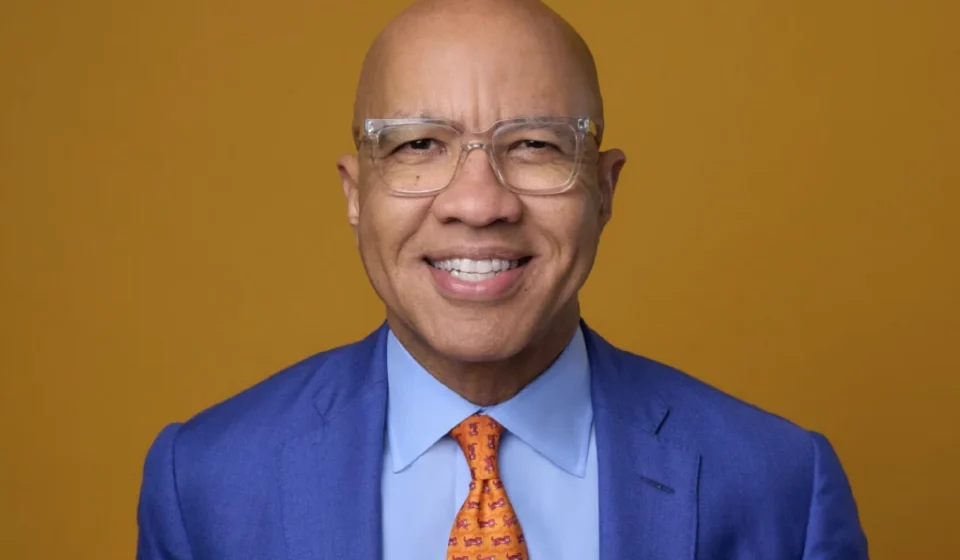
What followed was a protracted period of institutional drift, exacerbated by a global pandemic, the seismic labor strikes of 2023, and a series of high-level executive departures that left the company’s future in question. Today, however, under the guidance of new CEO Darren Walker—formerly the president of the Ford Foundation—Anonymous Content is positioning itself for a definitive "3.0" era. With a robust festival slate and a clarified mission, the company is attempting to prove that its best work is not just in its rearview mirror.
A Chronology of Crisis and Transition
The trajectory of Anonymous Content since 2019 has been a study in the volatility of modern Hollywood. Following Golin’s passing, the company sought to maintain its momentum by appointing Dawn Olmstead, a veteran of Universal Content Productions, as CEO. For a time, the transition seemed stable, but the internal friction was brewing.
In early 2023, the industry was shocked by the simultaneous, abrupt resignations of Olmstead and COO Heather McCauley. Reports indicated that the split was tied to disagreements regarding the company’s handling of a legal settlement with longtime executive Keith Redmon, who had been terminated in 2021 amid misconduct allegations. The subsequent departure left a power vacuum, leaving the company without a captain during one of the most tumultuous years in labor-management history.

The appointment of Darren Walker in January 2026 marked a departure from the traditional Hollywood executive mold. Walker, who spent 12 years steering the Ford Foundation, brought with him a reputation for bridge-building and institutional stewardship. While he arrived at a company that had been rudderless for years, his mandate was clear: restore the "buzz" and provide the clarity of purpose that had been absent since the Golin era.
The Philosophical Shift: From Philanthropy to Production
Critics initially questioned whether a career philanthropist could navigate the shark-infested waters of the entertainment industry. Walker, however, views his background as an asset rather than a liability. By leveraging deep-seated relationships with heavyweights like CAA’s Bryan Lourd, Steven Spielberg, and Oprah Winfrey, Walker has successfully signaled to the town that Anonymous Content is not just solvent, but influential.
"Any organization that has lacked a CEO for three years has a hard time finding its way," Walker said during a recent interview. "You need a vision. You need inspiration. You need clarity and purpose and a mission that everyone gets around. The last six months have been about building that. We are revving the engine because it’s time for takeoff."
The "Anonymous 3.0" strategy is rooted in a recommitment from Emerson Collective, the investment firm founded by Laurene Powell Jobs. This financial backing has been crucial in insulating the company from the short-term pressures that often force production houses to trade prestige for safe, commercial bets. "We have the capital that gives us the confidence to know that we can do bold and courageous things," Walker noted. "Supporting great storytelling is a noble calling."

A High-Stakes Fall Slate
The proof of this new mandate is currently visible in the company’s fall festival strategy. Anonymous Content is entering the circuit with a slate that is arguably its strongest in a decade.
- International Prestige: Lee Chang-dong’s Possible Love is set to make a splash in Venice, serving as South Korea’s official submission for the Best International Feature Film Oscar.
- Investigative Provocation: Alex Gibney’s Musk is perhaps the most anticipated—and volatile—project on the docket. The documentary offers a rigorous, "warts-and-all" examination of Elon Musk, a figure known for his litigious nature.
- Return to Form: The New York Film Festival will showcase The Statement, a climate-change drama that reunites the studio with Spotlight director Tom McCarthy. The film, which features an ensemble cast including Paul Rudd, Paul Giamatti, and Tatiana Maslany, uses dialogue transcribed directly from a pivotal 1980s climate conference.
- Television Expansion: On the streaming front, the company is rolling out Zoe Kazan’s adaptation of John Steinbeck’s East of Eden for Netflix, as well as the heist drama 12 12 12 for Apple TV, starring Anthony Mackie and Jamie Dornan.
Facing the "Thin-Skinned Trillionaire"
Perhaps the most significant litmus test for the new Anonymous Content will be its ability to weather the potential fallout from the Gibney project. Producing a documentary that critiques a figure as powerful and defensive as Elon Musk is a move that would make most traditional studios nervous.
Walker, however, appears unfazed by the threat of legal action or reputational blowback. "You have to believe that the work that we do is in the public interest," he stated. "We stand by the artists we work with. That’s the bottom line for us. We can’t shirk our responsibility to produce films about controversial people because we fear controversy."
By framing the work as a "noble calling" and prioritizing the integrity of the director over the comfort of corporate partners, Walker is signaling that Anonymous Content intends to reclaim its status as a "director-friendly" haven—a reputation that once made it the envy of the industry.

Implications for the Future of Independent Film
The successful pivot of Anonymous Content under Walker carries broader implications for the independent film sector. In an era where mid-budget prestige films are increasingly difficult to greenlight, the combination of philanthropic-leaning capital (Emerson Collective) and experienced institutional leadership suggests a viable path forward for other production entities.
The "Anonymous 3.0" model suggests that the future of prestige media lies in the synthesis of high-minded social purpose and rigorous, high-stakes storytelling. By tackling existential themes—from the climate crisis in The Statement to the influence of tech moguls in Musk—the company is positioning itself as a cultural bellwether.
Whether this momentum can be sustained beyond the current festival cycle remains to be seen. The challenges of the streaming age, the lingering effects of the 2023 strikes, and the constant need for fresh intellectual property are hurdles that every major studio faces. Yet, for the first time in seven years, Anonymous Content is no longer defined by the tragedy of its past. It is defined by the ambition of its present.
"Someone I had dinner with the other night, who runs a major agency, told me: ‘You know, it’s amazing how just the buzz in town around Anonymous has changed,’" Walker said. If the upcoming releases deliver on their promise, that buzz is likely to grow into a roar, effectively closing the book on the uncertainty that followed Steve Golin’s death and opening a new, more aggressive chapter for the company. The "takeoff" that Walker describes is not just a corporate strategy; it is a declaration that the business of prestige is back in session.