
Box Office Report: ‘Kung Fu Soccer’ Dominates Mainland China as Market Struggles for Momentum

Main Facts: A Resounding Victory for Stephen Chow
The mainland China box office landscape continues to be defined by the runaway success of Shenzhen Film Studio’s Kung Fu Soccer. During the weekend of July 17–19, the sports comedy comfortably retained its top position, raking in an impressive RMB501.1 million ($73.7 million). According to industry tracking firm Artisan Gateway, this second-weekend performance cements the film as a cultural juggernaut, having amassed a staggering cumulative total of $214.3 million in just nine days of release.
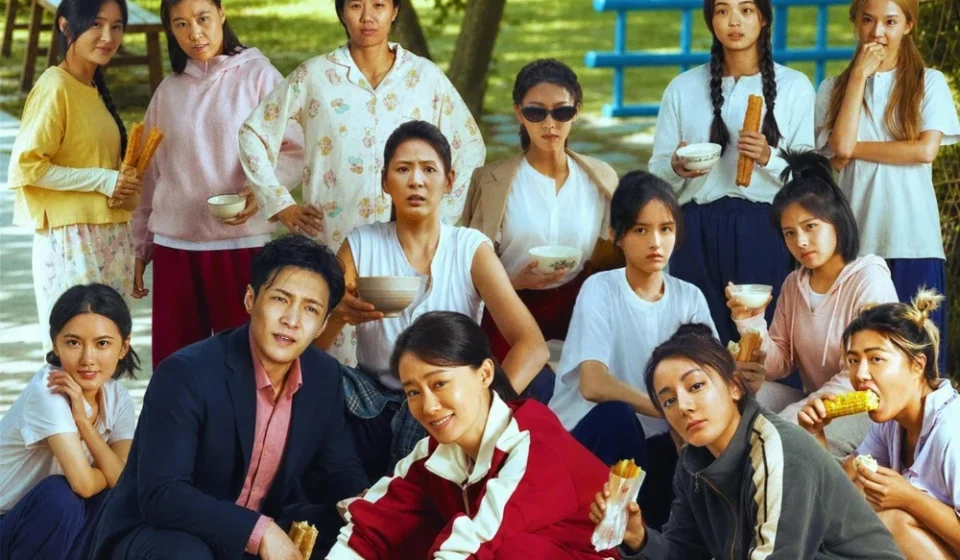
Directed by the legendary Stephen Chow, Kung Fu Soccer marks a triumphant return to his signature brand of athletic slapstick—a genre that arguably defined a generation of Hong Kong and mainland cinema. The narrative centers on an amateur women’s soccer team that fuses gravity-defying martial arts with professional football tactics to storm their way toward a major championship. The film’s global footprint is equally notable; it stood as the second highest-grossing film worldwide over the weekend, trailing only Christopher Nolan’s The Odyssey, which is slated for a highly anticipated Chinese release on August 15.
Chronology of the Weekend Market
The weekend box office dynamics provided a snapshot of shifting consumer preferences in China. While Kung Fu Soccer maintained a stranglehold on the No. 1 spot, the remainder of the top five saw a blend of family-oriented animation and emotional dramas.
The second-place debut went to Pearl Studio’s computer-animated fantasy, All Wishes Come True!. Directed by Mu Zhengyang, the film captured $30.6 million over its three-day opening frame, bringing its total haul to $39.6 million since its July 18 launch. The film leverages the rich tapestry of Chinese mythology, following eight ordinary mortals who must use their collective wit and courage to outsmart formidable deities to earn the legendary title of the Eight Immortals.
Securing the third position was Enlight Pictures’ A Part of Me. An adaptation of the 2015 U.K. film Miss You Already, the project grossed $13.6 million in its debut. Directed by Ma Yingxin and featuring stars Zhang Ruonan and Jolin Jin, the film offers a departure from the high-octane energy of the top two earners, focusing instead on a multi-decade exploration of female friendship, personal growth, and emotional resilience.
The fourth and fifth spots were occupied by holdovers and re-releases. Universal’s Minions & Monsters continued its steady, if declining, run, moving to fourth place in its third week with $3.7 million, bringing its cumulative Chinese haul to $40.3 million. Meanwhile, the fifth position was unexpectedly taken by a theatrical re-release of Christopher Smith’s 2009 psychological horror film, Triangle. The mind-bending thriller, originally funded by the U.K. Film Council, drew $3.7 million, demonstrating a persistent, albeit niche, appetite for genre cinema in the Chinese market.
Supporting Data: A Market in Transition
The aggregate data provided by Artisan Gateway highlights a challenging period for the Chinese theatrical industry. Mainland China’s overall weekend grosses reached $132.9 million. While individual hits like Kung Fu Soccer are performing at record levels, the broader market metrics tell a more sobering story.
Total year-to-date revenue for 2026 currently stands at $2.97 billion. When compared to the same period in 2025, this represents a significant decline of 35.3%. Analysts attribute this gap to a variety of factors, including shifts in consumer behavior following the pandemic-era boom, a changing regulatory landscape regarding foreign film imports, and a periodic lack of "tentpole" releases that drive mass-market foot traffic to cinemas.
Official Responses and Industry Sentiment
While studios have remained largely tight-lipped regarding specific revenue projections for the remainder of the year, industry insiders have expressed cautious optimism. The success of Kung Fu Soccer is being cited by production houses as a proof-of-concept for the "local blockbuster" model. By blending traditional Chinese martial arts aesthetics with modern, fast-paced sports narratives, Shenzhen Film Studio has effectively tapped into a domestic demographic that craves high-production-value entertainment rooted in local cultural motifs.
The release of All Wishes Come True! also serves as a strategic marker for Pearl Studio. By focusing on mythological themes, the studio is effectively leveraging domestic nostalgia, a trend that has proven historically resilient in the Chinese market. Conversely, the modest performance of international titles like Minions & Monsters suggests that domestic audiences are increasingly prioritizing stories that resonate with their specific cultural context over imported franchise content.
Implications for the Future of Chinese Cinema
The current box office climate has profound implications for stakeholders in the film industry, ranging from domestic distributors to Hollywood studios eyeing a piece of the Chinese market.
1. The "Stephen Chow" Effect
The dominance of Kung Fu Soccer underscores the enduring power of the auteur-led blockbuster in China. Unlike markets that rely heavily on established Western intellectual property, the Chinese market is proving that directors with strong, recognizable personal brands can drive massive ticket sales. This may encourage major studios to invest more heavily in local creative talent rather than attempting to adapt foreign properties, which often struggle to find a foothold with local audiences.
2. The Resurgence of Theatrical Re-releases
The success of Triangle in the top five—despite being a 17-year-old psychological thriller—points to an interesting trend in content scarcity. As studios grapple with production delays and regulatory hurdles, theaters are increasingly turning to curated back-catalog releases to fill programming gaps. This suggests that the "theatrical experience" is becoming less reliant on new releases and more on the curation of "event" cinema, regardless of the film’s original release date.
3. The Structural Deficit
The 35.3% decline in year-to-date revenue compared to 2025 cannot be ignored. The implication for exhibitors is clear: the current model of relying on a few massive hits to sustain the industry is becoming increasingly volatile. To reverse this downward trend, the industry likely needs a more consistent flow of mid-budget, high-quality films that can appeal to a broader demographic.
4. Preparing for the "Odyssey" Factor
All eyes are now turned toward the August 15 release of Christopher Nolan’s The Odyssey. As one of the most significant Western imports of the year, its performance will serve as a bellwether for the health of foreign films in China. If The Odyssey succeeds in bridging the gap between Western high-concept filmmaking and Chinese audience preferences, it could provide the necessary stimulus to close the current revenue deficit. If it fails, we may see a pivot toward even more aggressive protectionism and a continued focus on domestic productions as the primary drivers of the Chinese box office.
In conclusion, while Kung Fu Soccer provides a much-needed injection of capital and excitement into the marketplace, the broader industry remains at a crossroads. The challenge for the second half of 2026 will be to maintain this momentum, balance the influx of international titles with the strength of local blockbusters, and address the underlying structural decline that has defined the year thus far. As audiences continue to vote with their wallets, the path forward will undoubtedly be shaped by the tension between global cinema trends and the unique demands of the Chinese theatrical market.