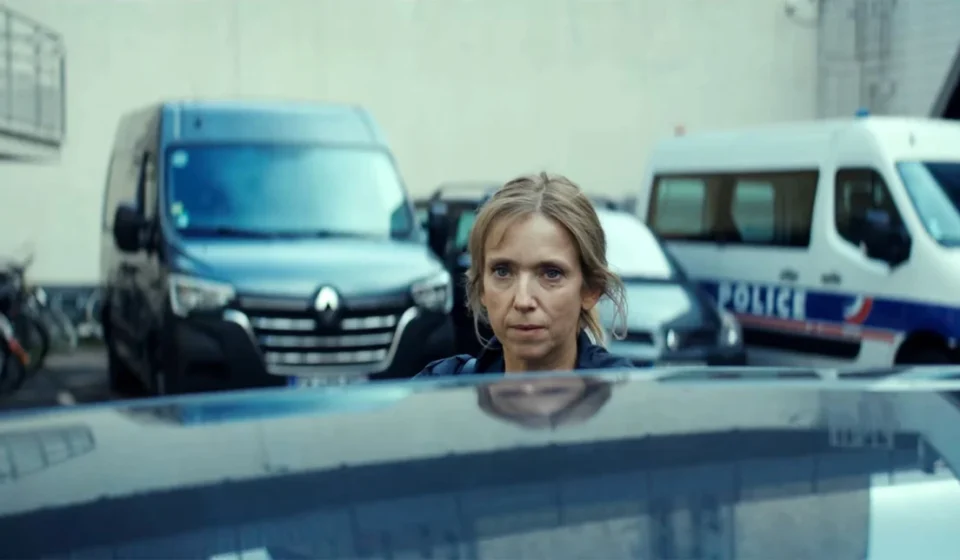
Truth Under Siege: Dominik Moll’s ‘Case 137’ Confronts the Shadows of French Policing

By Editorial Desk | August 25, 2026
After an extended wait following its high-profile premiere at the 2025 Cannes Film Festival, the harrowing French investigative thriller Case 137 (originally titled Dossier 137) is finally making its way to international audiences. Distributed by Conic, the film is set for a United Kingdom theatrical release on October 16, 2026. Directed by the acclaimed filmmaker Dominik Moll, the project marks a piercing return to the sociopolitical realism that has defined much of his recent career.
Featuring a powerhouse performance by Léa Drucker, Case 137 delves into the murky, high-pressure world of the IGPN—the French National Police’s Internal Affairs division, often colloquially referred to as "the police of the police." Against the volatile backdrop of the 2018–2020 Gilets Jaunes (Yellow Vests) protests, the film serves as both a taut procedural and a sobering examination of institutional accountability.
Main Facts: A Procedural in the Eye of the Storm
The narrative centers on Stéphanie, a methodical and dedicated investigator within the IGPN. Her professional life is defined by objectivity and a strict adherence to procedure, but her composure is shattered when she is assigned to investigate the critical injury of a teenager wounded by police fire during a chaotic demonstration.

Initially, the assignment appears to be a standard investigation, with Stéphanie finding little evidence of wrongdoing by the officers involved. However, the case shifts from a bureaucratic exercise to a moral crisis when she discovers that the victim shares a connection to her own hometown. This personal revelation forces Stéphanie to navigate a labyrinth of institutional obstructionism, internal pressure, and a burgeoning realization that the "truth" is being systematically suppressed.
The film stars Léa Drucker, whose ability to convey internal conflict through subtle, nuanced performances has made her a cornerstone of modern French cinema. She is supported by a robust ensemble cast, including Yoann Blanc, Guslagie Malanda, Jonathan Turnbull, Mathilde Roehrich, Stanislas Merhar, and Sandra Colombo.
Chronology: A Long Road to the Screen
The trajectory of Case 137 has been anything but conventional. The project’s development and release cycle reflect the complexities of producing films that tackle sensitive, contemporary political issues in France.
- 2018–2020: The Yellow Vests movement sweeps across France, characterized by intense street protests, police clashes, and widespread public debate regarding the use of force. This period provides the thematic and historical substrate for the film.
- May 2025: Case 137 makes its world premiere at the Cannes Film Festival. The film is met with critical acclaim, particularly for its clinical depiction of investigative work and its refusal to offer easy moral resolutions.
- November 2025: The film opens in French cinemas, sparking significant discourse regarding the role of the IGPN and the legacy of the protest movement.
- August 2026: Conic officially debuts the international trailer and confirms an October 16, 2026, release date for the UK.
- Present: While European distribution is secured, North American audiences remain in a state of uncertainty, as no firm US theatrical release date has been confirmed.
Supporting Data: Dominik Moll’s Cinematic Pedigree
To understand the weight of Case 137, one must look at the body of work produced by director Dominik Moll. A master of tension, Moll has spent decades refining a style that balances the mundane with the existential.

His filmography serves as a precursor to the intensity found in Case 137:
- Early Successes: With With a Friend Like Harry (2000) and Lemming (2005), Moll established a penchant for psychological thrillers that peel back the layers of polite society to reveal the darker impulses beneath.
- The Turn to Realism: With Only the Animals (2019) and the critically lauded The Night of the 12th (2022), Moll transitioned toward procedural dramas that function as metaphors for social malaise. The Night of the 12th, in particular, is the spiritual sibling to Case 137, focusing on an investigator obsessed with an unsolvable crime.
- Collaborative Strength: The screenplay for Case 137 was penned by Gilles Marchand and Moll, a frequent partnership that has consistently yielded narratives focused on the friction between individual integrity and systemic indifference.
The production is handled by a team of heavyweights—Carole Scotta, Caroline Benjo, Barbara Letellier, and Simon Arnal—who have ensured that the film maintains a gritty, authentic aesthetic that avoids the "glamorous" tropes often associated with police thrillers.
Official Responses: The Controversy of Internal Affairs
The film’s subject matter—the IGPN—is a lightning rod for controversy in France. The organization is frequently criticized by activists, human rights groups, and opposition politicians who argue that the agency is designed to protect the police rather than punish them.
In recent interviews, the production team has emphasized that the film is not a "hit piece" on individual officers, but rather an investigation into the system. By choosing an investigator as the protagonist, Moll forces the audience to view the institution from the inside out. Stéphanie is not a rogue cop; she is a cog in the machine who slowly realizes that the machine is designed to break people.

Critics who saw the film during its French release noted that the "institutional resistance" depicted in the film is chillingly realistic. The screenplay does not rely on cartoonish villainy; instead, it relies on the slow, grinding pressure of bureaucracy—the lost files, the "missing" bodycam footage, and the subtle warnings from superiors to look the other way.
Implications: Truth, Loyalty, and Justice
The core of Case 137 lies in its exploration of the "fragile lines" between truth, loyalty, and justice. When Stéphanie discovers that the victim is from her hometown, the film transitions from a political procedural into a deeply personal character study.
The Burden of Integrity
Stéphanie is tasked with the impossible: to find the truth without dismantling the institution she has served for years. This creates a psychological tension that transcends the plot of the film. The question posed to the audience is simple but devastating: How much are you willing to sacrifice for the truth when the truth threatens the very structure of your life?
A Mirror to Contemporary France
By centering the plot on the Yellow Vests movement, Case 137 ensures that the film is grounded in a specific, painful chapter of French history. The movement, which began over fuel taxes, quickly spiraled into a general strike against the perceived elitism of the government. The police response—often criticized as heavy-handed—remains a subject of intense debate. By revisiting this, the film asks whether France has truly processed the trauma of those years.

The Future of the Procedural
With the UK release on the horizon, Case 137 stands as a reminder of the enduring power of the European thriller. Unlike many Hollywood counterparts that prioritize action and closure, Moll’s work prioritizes the unanswered question. The film does not promise that justice will be served, nor does it guarantee that the truth will set the protagonist free. Instead, it provides a window into the messy, often frustrating reality of seeking accountability in a modern democracy.
As audiences prepare for the October release, the anticipation remains high. Whether or not a US distributor steps forward, the film is already being hailed as a vital piece of contemporary cinema—a testament to the fact that, as the trailer poignantly notes, "They mustn’t hush this up."
In the end, Case 137 is more than a story about a police case; it is a story about the cost of maintaining one’s conscience in an age of institutional silence. For viewers looking for a film that challenges, disturbs, and refuses to let go, Dominik Moll’s latest effort is an essential watch.