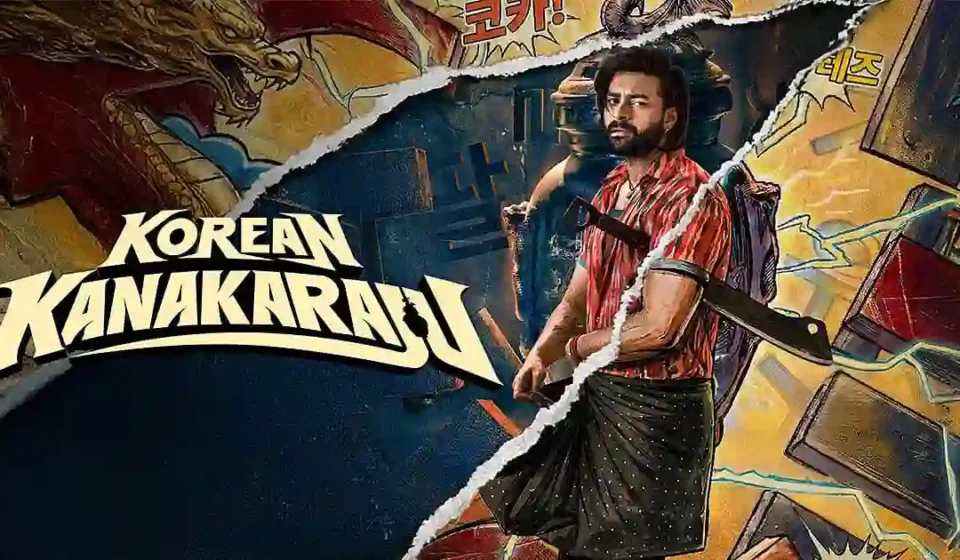
"Korean Kanakaraju" Ignites Tollywood with Fresh Indo-Korean Horror-Comedy Blend

Hyderabad, August 7, 2026 – In a highly anticipated cinematic event, Tollywood welcomed a refreshing new entry into the horror-comedy genre today with the release of "Korean Kanakaraju." Directed by the acclaimed Merlapaka Gandhi and starring the versatile Varun Tej alongside Ritika Nayak and the comedic powerhouse Satya, the film has quickly garnered attention for its unique cultural crossover and consistent comedic narrative. Early critical reception, including a 3.25/5 rating from 123telugu.com, suggests a largely positive response, hailing it as a much-needed shot in the arm for a genre that has seen its share of struggles in recent years.
The film, produced by Rajeev Reddy Yeduguru, Pramod Uppalapati, and Vamsi Krishna Reddy, aims to deliver a "clean entertainer" that masterfully blends traditional Telugu folk elements with contemporary Korean pop culture, all while navigating the chaotic world of supernatural possession. With a strong technical team featuring music by Thaman S, cinematography by Manojh Reddy, and editing by Satyaa G, "Korean Kanakaraju" has been positioned as a significant release, promising both laughter and thrills.
A New Chapter in Telugu Horror-Comedy
Telugu cinema has a rich history with horror-comedy, a genre that, when executed well, can become a commercial juggernaut. However, striking the right balance between genuine scares and effective humor remains a challenging feat. Many attempts often lean too heavily on one aspect, or fail to weave them together cohesively. "Korean Kanakaraju" enters this landscape with a bold premise, attempting to revitalize the genre by introducing an unexpected cross-cultural dynamic.
The Premise: A Cultural Collision in Penukonda
At its heart, "Korean Kanakaraju" tells the story of Kanakaraju (Varun Tej), a vibrant and charismatic leader of a traditional folk performance troupe in the historically rich Rayalaseema region, specifically Penukonda. His life, steeped in local customs and artistry, takes an unforeseen turn when he encounters Chaitra (Ritika Nayak). Chaitra is portrayed as a quintessential modern youth, deeply engrossed in the global phenomenon of K-pop, representing a stark contrast to Kanakaraju’s traditional world. This initial dynamic sets the stage for a compelling romantic interest, where two seemingly disparate worlds begin to converge.
However, the film swiftly escalates into its horror-comedy core when Kanakaraju’s life is irrevocably altered by the possession of a Korean spirit. The narrative then delves into the intriguing backstory of this spirit, exploring its origins, its motivations for entering Kanakaraju’s body, and the subsequent chaos it unleashes. The central conflict revolves around Kanakaraju, Chaitra, and Kanakaraju’s loyal friend Kisttappa (Satya) as they desperately try to unravel the mystery and find a way to exorcise the foreign entity. The blend of rural Telugu charm, the international flavor of K-pop, and the supernatural element creates a unique narrative tapestry that distinguishes "Korean Kanakaraju" from its contemporaries. The plot’s strength lies in its ability to generate humor from these cultural clashes and the absurdity of the possession, while still maintaining a semblance of mystery regarding the spirit’s true intentions.
Assembling the Creative Powerhouse
The success of any genre film often hinges on the collective talent behind it, and "Korean Kanakaraju" boasts a formidable team. At the helm is Merlapaka Gandhi, a director known for his knack for crafting engaging and commercially viable films. Gandhi first made a significant mark with "Venkatadri Express" (2013), a high-energy comedy-thriller that was lauded for its tight screenplay and swift pacing. He followed this with "Express Raja" (2016), another successful venture that solidified his reputation for delivering clean, entertaining narratives. After a brief hiatus and some mixed results with subsequent projects, "Korean Kanakaraju" was highly anticipated as a potential return to his signature style, where humor and plot progression are seamlessly intertwined.
Varun Tej, the leading man, has steadily carved a niche for himself in Tollywood with a diverse filmography. Known for his experimental choices and willingness to portray complex characters, Tej’s involvement in a horror-comedy, especially one demanding a dual persona, generated considerable excitement. Ritika Nayak, portraying Chaitra, adds a fresh face and contemporary appeal to the ensemble, while Satya, a comedian who has consistently delivered memorable performances, was expected to be a major highlight.
The technical crew also brought significant expertise. Thaman S, one of Telugu cinema’s most sought-after music directors, was tasked with composing a score that could oscillate between comedic buoyancy and suspenseful dread. Manojh Reddy’s cinematography was crucial in visually distinguishing the traditional Rayalaseema setting from the implied Korean elements, and Satyaa G’s editing was vital for maintaining the film’s brisk pace and comedic timing. This combination of established talent and promising new faces set a high bar for the film’s potential impact.
The Journey to the Silver Screen: Production and Anticipation
The journey of "Korean Kanakaraju" from concept to its release on August 7, 2026, was marked by strategic planning and a keen understanding of audience preferences, particularly in a market increasingly open to novel narratives. The film’s unique blend of local folklore and international pop culture promised a distinct cinematic experience, setting it apart from the usual fare.
From Concept to Production: Merlapaka Gandhi’s Vision
Merlapaka Gandhi’s decision to tackle a horror-comedy with such an unconventional premise was a calculated risk. His directorial philosophy, as evident in his earlier hits, often revolves around strong characterization and situational comedy that arises organically from the plot. For "Korean Kanakaraju," Gandhi reportedly immersed himself in understanding both the nuances of Rayalaseema folk culture and the global phenomenon of K-pop to ensure an authentic, yet humorous, portrayal of their collision. The challenge was to make the possession believable enough to drive the horror elements, while simultaneously extracting genuine laughs from Varun Tej’s transformation and the reactions of those around him.
Sources close to the production indicated that Gandhi spent considerable time on script development, meticulously crafting the screenplay to ensure that the comedy never felt forced or detracted from the narrative’s momentum. His aim was to create a "clean entertainer," a film suitable for family audiences, which required a delicate balance in depicting both the supernatural occurrences and the comedic sequences. This commitment to a wholesome yet entertaining experience was a key driver behind the film’s production. The producers, Rajeev Reddy Yeduguru, Pramod Uppalapati, and Vamsi Krishna Reddy, demonstrated foresight in backing a project that dared to experiment with genre and cultural fusion, recognizing its potential appeal to a broader demographic.
Pre-Release Buzz and Audience Expectations
The pre-release phase for "Korean Kanakaraju" was characterized by a gradual build-up of excitement. The initial announcement of the project, highlighting the unusual Indo-Korean theme and Varun Tej’s involvement in a horror-comedy, immediately piqued curiosity. The release of the film’s trailer, accessible via platforms like YouTube (as indicated by the provided link), played a pivotal role in shaping audience expectations. The trailer offered glimpses of Varun Tej’s dual performance – first as the grounded Kanakaraju and then as the possessed, stylish Korean entity – showcasing his physical transformation and comedic timing.
Promotional campaigns emphasized the film’s unique selling proposition: a fresh take on horror-comedy with an engaging cultural twist. Interviews with the cast and crew often highlighted the challenges and fun involved in bringing such a distinct concept to life. The chemistry between Varun Tej and Satya, a duo expected to deliver significant comedic relief, was also heavily promoted. The anticipation was not just for the film itself, but for Merlapaka Gandhi’s potential comeback to his celebrated form and for Varun Tej’s continued evolution as an actor willing to explore diverse roles. As August 7, 2026, dawned, moviegoers queued up, eager to witness this unique cinematic fusion that promised both cultural intrigue and unadulterated entertainment.
Dissecting the Cinematic Experience: Strengths and Nuances
Upon its release, "Korean Kanakaraju" was met with a generally favorable reception, largely due to its strengths in performance, direction, and technical execution. The film successfully navigated the often-tricky waters of horror-comedy, delivering a consistent stream of entertainment that resonated with audiences seeking light-hearted fare.
Varun Tej’s Dual Act: A Performance Masterclass
The film’s strongest pillar undeniably rests on Varun Tej’s shoulders. His portrayal of Kanakaraju is multifaceted, showcasing a remarkable range. As the traditional folk troupe leader from Penukonda, he embodies a grounded, relatable charm, conveying the essence of rural Rayalaseema with authenticity. His transformation, however, is where Tej truly shines. Once possessed by the Korean spirit, he undergoes a complete metamorphosis, adopting a stylish, almost ethereal demeanor that is a stark contrast to his initial persona. This dual avatar is not merely a costume change; Tej imbues each version with distinct mannerisms, voice modulation, and comedic timing, making the possession feel both dramatic and hilariously absurd.
His ability to switch between the two personalities seamlessly is a testament to his acting prowess. The comedic moments arising from the spirit’s influence on Kanakaraju’s traditional life are often the film’s highlights, and Tej executes them with precision, ensuring that the humor lands effectively without becoming over-the-top. His performance is central to the film’s appeal, proving his versatility and establishing him as an actor capable of carrying a demanding, genre-bending role.
Satya: The Unsung Hero of Hilarity
While Varun Tej anchors the film, Satya emerges as the undisputed king of comedic relief, proving once again why he is considered a true gem in the industry. His character, Kisttappa, Kanakaraju’s loyal friend, is perfectly crafted to complement Tej’s dual role. Satya’s histrionics and impeccable comic timing are utilized to their fullest potential, providing a continuous stream of laughter. The scenes featuring the Varun Tej-Satya combo are particularly noteworthy, often described as laugh-out-loud moments. Satya’s reactions to Kanakaraju’s bizarre behavior, his exasperated expressions, and his quick-witted one-liners elevate the film’s humor quotient significantly.
He embodies the common man’s perspective, reacting to the supernatural chaos with a blend of fear, confusion, and genuine concern, all filtered through a comedic lens. His ability to deliver impactful lines and engage in physical comedy without resorting to vulgarity aligns perfectly with Merlapaka Gandhi’s vision for a "healthy comedy." Satya’s performance ensures that even amidst the supernatural elements, the audience is never far from a good laugh.
Merlapaka Gandhi’s Return to Form: Crafting Consistent Laughter
"Korean Kanakaraju" marks a significant resurgence for writer-director Merlapaka Gandhi, who delivers a film that firmly re-establishes his reputation for crafting clean, engaging entertainers. His direction is characterized by a strong narrative flow, where comedy is not an interruption but an integral part of the storytelling. The screenplay is peppered with amusing episodes consistently, ensuring that the audience is kept engaged and entertained throughout the runtime.
Gandhi’s strength lies in his ability to generate situational comedy that arises naturally from the characters and their circumstances. The one-liners are sharp and frequent, delivering plenty of laughs. Even seemingly "amateurish" dialogue is used effectively, turning potential weaknesses into comedic strengths. A particular block in the second half featuring Satya, Ritika Nayak, and Muralidhar Goud has been singled out as hilariously memorable, showcasing Gandhi’s adeptness at orchestrating ensemble comedic sequences. His commitment to healthy comedy, devoid of unnecessary vulgarity, makes the film accessible and enjoyable for a wide audience, fulfilling his stated intention of delivering a wholesome cinematic experience.
Technical Brilliance: Setting the Scene
The technical aspects of "Korean Kanakaraju" play a crucial role in enhancing its narrative and overall cinematic appeal. Thaman S, the music director, delivers a decent album with songs that serve their purpose, but it is his background score that truly stands out. Thaman’s BGM is impactful, effectively underscoring both the comedic and suspenseful moments, ensuring that the emotional beats of the film resonate with the audience. His ability to craft distinct musical themes for the traditional Kanakaraju and the Korean spirit contributes significantly to the narrative’s dual nature.
Manojh Reddy’s cinematography is another highlight, described as stunning. His visual storytelling is particularly effective in distinguishing between the two cultural worlds depicted in the film. The scenes set in Penukonda are captured with a rustic charm, highlighting the beauty of Rayalaseema, while the visuals during the "Korean portions" – whether actual scenes or dream sequences – are rendered with a distinct stylishness, employing different color palettes and framing techniques to evoke a sense of the foreign and contemporary. This visual contrast enriches the cultural crossover theme. Editor Satyaa G deserves commendation for a solid job in maintaining the film’s brisk and tight pacing. The editing ensures that the narrative moves smoothly, transitioning seamlessly between comedic beats and plot developments, preventing any lag and keeping the audience thoroughly engaged. The synergy between these technical departments contributes significantly to the polished feel and entertainment value of "Korean Kanakaraju."
The Imperfections: Areas for Refinement
Despite its numerous strengths, "Korean Kanakaraju" is not without its flaws. These imperfections, while not entirely detracting from the overall entertainment, represent missed opportunities that could have elevated the film from a "fun watch" to a truly exceptional one.
Logical Leaps and Narrative Gaps
One of the most frequently cited drawbacks of "Korean Kanakaraju" is its occasional disregard for logical consistency. In their earnest endeavor to entertain the audience thoroughly, the filmmakers at times appear to have thrown the logical part "out of the window." This manifests in plot conveniences or character decisions that, upon closer scrutiny, defy common sense or established narrative rules. While genre films, especially horror-comedies, often take liberties with realism for the sake of entertainment, excessive logical errors can break the immersion for discerning viewers.
For instance, certain aspects of the spirit’s powers or its interaction with the physical world might lack clear explanation or consistent application. The ease with which certain problems are resolved, or the sudden appearance of solutions without proper build-up, can feel jarring. While audiences are often willing to suspend disbelief for the "magic" of cinema, a more grounded approach to the supernatural mechanics, even within a comedic framework, could have enhanced the film’s credibility and prevented moments of head-scratching. This particular criticism suggests that while the humor was consistent, the underlying narrative framework sometimes struggled to maintain its integrity.
The Climax Conundrum and CGI Concerns
The film’s climax is another area that drew criticism, described as "underwhelming" and "not-so-great CGI." The resolution of the central conflict, particularly the exorcism or departure of the Korean spirit, felt rushed and lacked the emotional or narrative punch expected after a sustained build-up. A strong climax is crucial for any film, providing a satisfying conclusion to the characters’ journey and the plot’s intricacies. In "Korean Kanakaraju," the ending reportedly felt abrupt, with some explanations omitted that could have tied up loose ends and provided greater clarity or emotional closure.
Furthermore, the quality of the Computer-Generated Imagery (CGI) during crucial supernatural sequences, particularly in the climax, was noted as below par. In an era where visual effects are increasingly sophisticated, subpar CGI can be a significant detractor, pulling the audience out of the cinematic experience. This technical shortfall, combined with a rushed narrative resolution, diminished the impact of what could have been a powerful and memorable conclusion. Additionally, the review noted that "the violence could have been toned down at certain instances as the film is made for family audience." While not explicit, this implies that some scenes, perhaps during the spirit’s more aggressive manifestations, might have pushed the boundaries for a film aiming for broad family appeal, potentially creating discomfort for younger viewers or those sensitive to depictions of violence.
Industry Responses and Future Implications
The release of "Korean Kanakaraju" has elicited various responses within the Telugu film industry, and its performance is likely to have several implications for future projects, especially within the horror-comedy genre and the broader trend of cultural fusions.
Filmmakers’ Intentions and Audience Reception
The creative team behind "Korean Kanakaraju" had a clear and commendable intention: to deliver a thorough and consistent entertainment experience. Director Merlapaka Gandhi, along with his producers, aimed to produce a "clean entertainer" that could be enjoyed by a wide family audience. This dedication to wholesome comedy, blended with a unique supernatural premise, was evident in the film’s execution. The consistently positive feedback regarding the humor, Varun Tej’s performance, and Satya’s comedic timing suggests that the filmmakers largely succeeded in their primary goal of entertaining.
The 123telugu.com rating of 3.25/5, coupled with the detailed positive points, indicates a generally warm reception from critics, who appreciated the film’s fresh approach and effective comedic elements. Audience reactions, implied by such reviews, likely mirror this sentiment, with many finding the Indo-Korean crossover concept intriguing and the continuous laughs highly enjoyable. The film’s ability to engage without resorting to cheap thrills or excessive reliance on jump scares, instead prioritizing healthy comedy, has been a key factor in its positive word-of-mouth. This successful delivery on their core promise of entertainment bodes well for the film’s commercial viability and its standing among recent Tollywood releases.
Paving the Way: The Future of Horror-Comedy and Cultural Crossovers
"Korean Kanakaraju" has instilled a renewed sense of hope for the horror-comedy genre in Tollywood. For years, the genre has been struggling to find a fresh voice, often recycling old tropes or failing to balance its two constituent elements effectively. Merlapaka Gandhi’s successful navigation of this challenging genre, delivering a film that keeps the laughs coming consistently, could serve as a blueprint for future filmmakers. Its success might encourage more directors to experiment with innovative concepts and focus on strong screenwriting to ensure that comedy and horror complement each other rather than clash. This could lead to a revival of horror-comedy, attracting both new talent and established names to explore its untapped potential.
For Varun Tej, "Korean Kanakaraju" represents a significant milestone. His splendid performance in a dual avatar, showcasing both his dramatic range and comedic timing, further cements his position as a versatile actor in Tollywood. The film’s success could open doors for him to take on more experimental roles, pushing the boundaries of his craft and appealing to a wider audience. It reinforces his image as an actor willing to step out of his comfort zone, which is crucial for long-term career growth.
Perhaps the most significant implication lies in the film’s pioneering Indo-Korean fusion. The enthusiastic reception to the blend of traditional Telugu culture with contemporary K-pop elements suggests a growing appetite among Indian audiences for cross-cultural narratives. This could pave the way for more such fusions in Indian cinema, not just with Korean culture but with other global influences. Filmmakers might be inspired to explore diverse cultural backdrops and integrate them into local storytelling, leading to more globally conscious and creatively adventurous projects. This trend could enrich the narrative landscape of Tollywood, fostering a new era of culturally diverse and genre-bending cinema.
Final Verdict: A Refreshing Yet Flawed Entertainer
On the whole, "Korean Kanakaraju" stands as a commendable horror-comedy entertainer that largely delivers on its promise of consistent laughs. The film’s unique Indo-Korean crossover concept, coupled with Merlapaka Gandhi’s knack for healthy comedy, Varun Tej’s splendid dual avatar, and Satya’s fantastic comedic timing, keeps the proceedings engaging and thoroughly entertaining. While it suffers from some blemishes, notably logic taking a backseat at times and an underwhelming climax marred by below-par CGI, these issues do not entirely overshadow the film’s overall charm and entertainment value. It is a fun watch that offers a refreshing take on a beloved genre, making it a recommended outing for those seeking light-hearted cinematic escapism.
123telugu.com Rating: 3.25/5
Reviewed by 123telugu Team