
Beyond the Prompt: Autodesk Flow Studio Redefines AI Filmmaking Through 3D Direction

In the rapidly evolving landscape of generative AI, the industry has reached a critical inflection point. For the past two years, the conversation has been dominated by "prompt-to-video" models—systems capable of conjuring surreal imagery from a few typed words. However, while these tools are impressive, they have historically failed to satisfy the rigorous requirements of professional cinematography. Autodesk, a titan in the creative software space, is now pivoting away from this "black box" approach with the introduction of Autodesk Flow Studio.
Flow Studio represents a fundamental shift in philosophy. By integrating a sophisticated 3D Editor and a node-based 2D Canvas, Autodesk is attempting to bridge the chasm between experimental AI generation and the granular, frame-by-frame control required by directors and visual effects (VFX) supervisors.
The Architecture of Control: Main Facts
Autodesk Flow Studio is not merely an image generator; it is a creative platform designed to integrate generative AI into existing, professional-grade production workflows. The platform addresses the most significant criticism leveled at current AI tools: the lack of "directability."
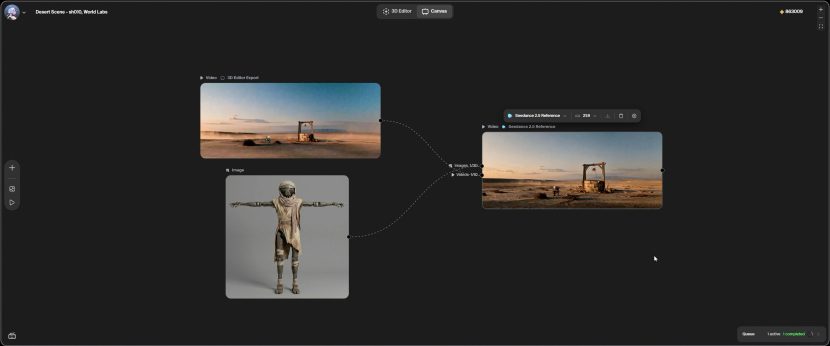
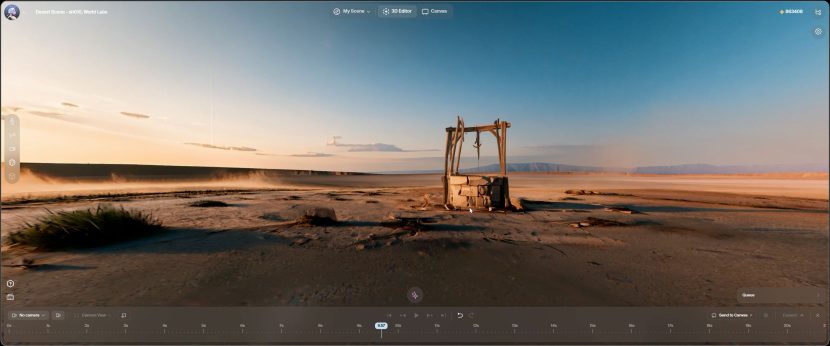
The system operates on a dual-layered pipeline:

- The 3D Editor: This is the creative cockpit. Filmmakers use this environment to perform traditional cinematic blocking. They can place cameras, define character positioning, manipulate motion-capture data, and construct spatial environments. This stage is about intentionality—deciding exactly what the audience sees and from what angle.
- The Canvas: Once the 3D scene is staged, artists move to a node-based 2D environment. Here, generative models are applied not to "create" the movie from thin air, but to provide cinematic finishing, lighting, atmospheric simulation, and texture.
By separating the "staging" from the "rendering," Autodesk has effectively turned AI into a high-powered paint brush rather than a replacement for the filmmaker’s vision.
From Experimentation to Pipeline: A Chronology
The genesis of Flow Studio lies in the acquisition and integration of Wonder Dynamics, co-founded by Nikola Todorovic. Todorovic, a visionary in the space of AI-driven VFX, brought a deep understanding of how to automate complex technical tasks without sacrificing artistic nuance.
The adoption of this technology follows a familiar historical arc in filmmaking, reminiscent of the early days of digital compositing or non-linear editing. According to Todorovic, the technology’s evolution is moving through predictable stages:
- Stage 1: Social and Experimental Content: Initially, these tools capture the imagination of content creators and social media influencers who prioritize speed and novelty.
- Stage 2: Commercial and Music Video Production: As the tools become more robust, they migrate to industries with tighter turnaround times, where the ability to rapidly iterate on a concept is a distinct competitive advantage.
- Stage 3: Independent and Feature Film Pipelines: Finally, the technology reaches the level of major studio productions, where integration with existing software (like Maya or Arnold) and strict quality control are paramount.
Flow Studio is currently in the transition phase between Stage 2 and Stage 3, providing a sandbox where indie filmmakers and small teams of three to five people can achieve a level of visual fidelity that was previously the domain of large, multi-million dollar post-production houses.

The 80/20 Rule: Supporting Data
In the latest installment of the fxpodcast, Todorovic articulated the "80/20 rule" of generative AI. In a typical prompt-based workflow, an AI model can generate the first 80 percent of a shot with stunning speed. It can produce high-quality lighting, textures, and atmospheric depth that would take a traditional artist hours to construct.
However, the "final 20 percent"—the critical revisions requested by a director—is where prompt-only models fail. If a director needs an actor to turn their head two degrees to the left or requires a specific light reflection on a character’s eye, a text prompt is essentially a gamble. The model might change the entire scene, losing the 80 percent of the work that was already successful.
Flow Studio’s 3D-first approach solves this. By anchoring the generation in a 3D scene, the artist can move an object or adjust a camera path without the generative model "forgetting" the scene’s composition. It treats the AI as a layer in a composite, rather than an all-or-nothing generator. This is a direct answer to the industry’s ongoing debate regarding "AI slop"—the generation of visually appealing but narratively hollow or technically uncontrollable imagery.
Performance Before Prompting: Official Perspectives
A central pillar of the Flow Studio philosophy is the primacy of human performance. Todorovic and his team remain skeptical of purely synthetic performance generation. While audio-driven animation can produce impressive results, it often lacks the micro-expressions and intentional timing that define great acting.
"You cannot replace the intent of a performer with a text string," suggests the workflow methodology of Flow Studio. Instead, the platform prioritizes recorded video and audio from human performers. This source data drives the character, ensuring that the timing, the emotional weight, and the specific cadence of the performance are preserved. The generative model is then tasked with "re-skinning" or enhancing the visual appearance of the actor, rather than hallucinating the performance from scratch.
This ensures that the final result is not just a high-fidelity image, but a piece of storytelling that carries the weight of a human performance.
Implications for the Future of Filmmaking
The implications of Flow Studio for the broader industry are profound.
Democratization of Complexity
Historically, high-end filmmaking required a mastery of multiple, disparate disciplines: lighting, rigging, camera optics, and compositing. Flow Studio masks much of the underlying mathematical complexity of these tasks. By providing a unified 3D/2D environment, it allows storytellers to focus on the directing of the shot rather than the engineering of the frame. This lowers the barrier to entry, enabling a wider array of voices to compete in the visual marketplace.
The Death of "Over-Building"
Traditional CG pipelines often suffer from "over-building," where artists create entire 3D worlds in high detail, even for shots where only a fraction of that world is visible. Because AI-assisted workflows allow for more flexible iteration, filmmakers can shift their focus. They can solve the "technical complexity" of a scene through smarter, AI-assisted background processes, allowing them to dedicate their creative energy to the elements that appear on screen.
Stability and Professionalism
Perhaps the most significant implication is the shift toward professional stability. As studios look to incorporate AI, they require tools that are predictable, repeatable, and integrable. Flow Studio’s cloud-based, node-based infrastructure provides a bridge for studios to adopt generative tools without disrupting their existing pipelines. It is a transition from "generative chaos" to "generative craft."
Conclusion
Autodesk Flow Studio represents a move toward maturity for AI in the creative arts. By refusing to concede control to the unpredictability of the prompt, Autodesk is positioning its platform as the professional standard for the next generation of filmmakers.
The future of film is not a "prompt-button" that renders a masterpiece in seconds; it is a sophisticated, hybrid workflow where human performance, 3D spatial design, and generative AI converge. As the technology continues to evolve and integrate into major studio pipelines, the role of the filmmaker remains unchanged: it is still about the choices—where to place the camera, how to block the actors, and what story to tell. With Flow Studio, those choices finally have the tools they need to be realized in the age of AI.