The Unvarnished Lens: Douglas Keeve and the Enduring Legacy of ‘Unzipped’

For documentary filmmakers, the intersection of the personal and the professional is a treacherous landscape. When the subject of one’s camera is also the subject of one’s heart, the result can either be a compromised exercise in hagiography or a transcendent, intimate portrait that captures truths inaccessible to an objective observer. Thirty years after its debut, Douglas Keeve’s Unzipped remains the definitive case study in this delicate balancing act. As the film returns to theaters this weekend in a pristine 4K restoration via Janus Films, it serves as a time capsule of a bygone era in fashion, a masterclass in cinéma vérité, and a poignant record of a romance that flickered out just as the film ascended to cultural icon status.
The Genesis of an Icon: Capturing the Frenetic Mind
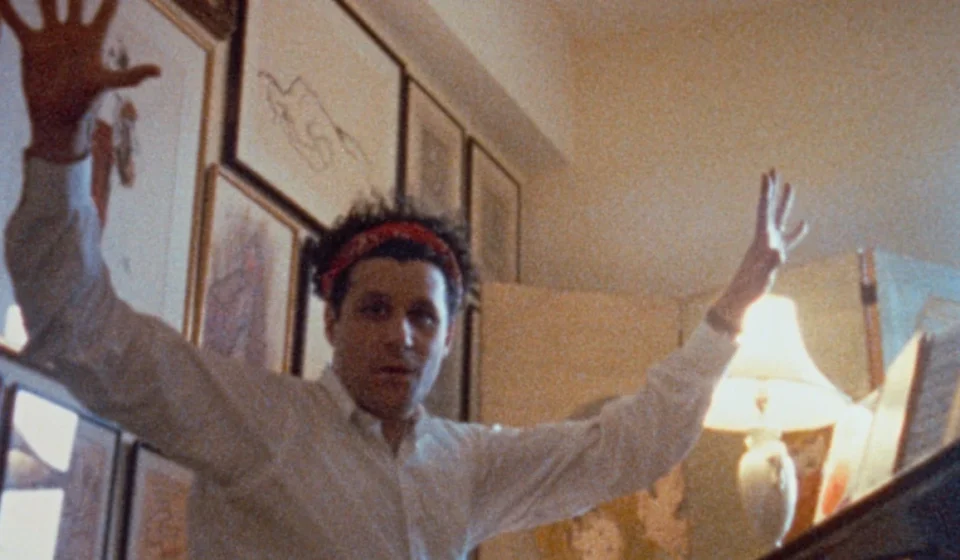
In 1994, the New York fashion scene was not the globalized, digital-first monolith it is today; it was a tight-knit, high-stakes ecosystem of personalities, cigarettes, and uncompromising creative vision. At the center of this storm was Isaac Mizrahi, a rising designer whose outré personality and signature "Eraserhead" shock of hair made him a darling of the industry.
At the time, Mizrahi’s fashion house was backed by a majority financial stake from Chanel, allowing him the creative latitude to produce "sensibly chic" haute couture. Keeve, a photographer and filmmaker, found himself in the unique position of being both Mizrahi’s partner and his documentarian. The resulting film follows the designer as he mounts his 1994 collection—a daring, Nanook of the North-inspired runway show that would become a landmark moment in fashion history.
The documentary is a transportive chronicle, capturing the chaotic, glamorous, and often absurd reality of pre-digital New York. For younger audiences currently swept up in the aesthetic nostalgia of the 1990s—fueled by the renewed cultural obsession with figures like Carolyn Bessette-Kennedy—Unzipped offers a visceral, mostly black-and-white look at a world where the stakes felt smaller, yet the art felt far more immediate.
A Chronology of a Creative Collapse
The timeline of Unzipped is inextricably linked to the trajectory of Keeve and Mizrahi’s relationship. As the production moved from the drafting tables of the studio to the catwalks of Paris Fashion Week, the pressures of the industry began to exert a subtle but corrosive force on the couple.

Following its premiere at the 1995 Sundance Film Festival, where it secured a prestigious audience award, the film launched both men into a new stratum of fame. However, the romantic partnership did not survive the transition into the post-premiere glow.
"Did the movie break us up? I’m not sure I know how to answer that because relationships are so complicated," Keeve noted in a recent interview with IndieWire. "Isaac is complicated, I’m complicated. So you have two complicateds, plus a complicated world. Our lives were so different, and in some ways I couldn’t quite keep up with his."
Keeve recalls a fundamental mismatch in their daily rhythms: Mizrahi was a social whirlwind, consistently opting for multi-stop evenings of cocktails, dinners, and after-hours parties. For Keeve, who was balancing the demands of a burgeoning career as a filmmaker, the pace was unsustainable. "He wanted a partner who could share those things, which I think is correct," Keeve reflected. "There was so much external pressure from different things."
Behind the Lens: Ethical Boundaries and Artistic Intimacy
One of the most frequent criticisms leveled at "subject-as-partner" documentaries is the perceived lack of objectivity. Yet, Keeve’s approach was not to curate a flattering portrait, but to remain a quiet witness to Mizrahi’s "benign volatility."
The film does not shy away from the designer’s frustrations. In one memorable sequence, Mizrahi is visibly flummoxed by a competitor’s "Eskimo-inspired" collection that mirrors his own work. Simultaneously, the audience sees his obsessive attention to detail—he models his show’s hair and makeup after Loretta Young’s character in the 1935 film The Call of the Wild. The irony is sharp: he models his collection after a woman who, in the film, is meant to be frozen and near death, yet remains impeccably glammed up, waiting to be rescued.

Keeve insists that his closeness to the subject allowed for a level of access that would have been impossible for a neutral party. "I wouldn’t show Isaac the movie when we were editing it at all, and only when I was happy with it, I brought it to him," Keeve explained. "There may be those moments in the movie that may seem like I’m shooting him in the bathtub and exploiting him, but I just always had a camera, and Isaac is somewhat oblivious to the camera in a way."
This "obliviousness" is what elevates Unzipped from a promotional video to a profound human document. When Keeve caught Mizrahi in the bathroom, deep in a fraught, intimate phone conversation with his mother, Sarah, the camera remained rolling. The presence of Sarah Mizrahi—a quintessential, imposing, and fiercely loving Jewish mother—adds a layer of domestic comedy and psychological depth that grounds the high-fashion narrative in something universally relatable.
The Supporting Cast: Models as Performance Artists
Beyond the primary relationship, Unzipped functions as a historical document of the supermodel era. The cast of characters includes icons like Naomi Campbell, Christy Turlington, Linda Evangelista, Cindy Crawford, and Kate Moss.
Keeve’s lens captures these women not just as clothes hangers, but as savvy performers who understood exactly how to manipulate the camera. "There are a lot of people who say that Linda is the greatest fashion model who ever lived," Keeve said, reflecting on a scene where Evangelista cycles through a series of "hissy fits" backstage.
"She’s turning it on for the camera. She knows we’re making a movie. Linda said, ‘I have to bring it,’ so she did. She just turns to the camera, and she gives this look like she’s just staring at the camera like, ‘I dare you to judge me,’ and then she turns away. For me, that’s an incredible moment."

Implications and Restoration: A New Perspective
The 4K restoration of Unzipped, supervised by the Sundance Institute and the UCLA Film & Television Archive, offers a sharper, more refined look at the original negatives. However, for Keeve, the technical upgrades are secondary to the emotional resonance.
"When I’m watching the movie, I’m not really looking at the technical part of the film about how the diamond has been polished even more," he admitted. "I’m really seeing those moments and feeling those feelings."
The enduring legacy of Unzipped lies in its ability to reconcile the artifice of the fashion world with the raw, messy reality of human emotion. Today, the two men remain on good terms, often described as "frenemies" who still share a deep, abiding affection for one another. They have even collaborated on the promotional efforts for this re-release, a testament to the fact that while the relationship may have ended, the shared work—and the love that birthed it—remains an indelible part of their history.
As it returns to theaters, starting with New York’s Film Forum and expanding to cities like Los Angeles on October 9, Unzipped serves as a reminder that the best documentaries are not those that capture the subject perfectly, but those that capture the subject honestly. In the case of Douglas Keeve and Isaac Mizrahi, the camera didn’t just record their lives; it acted as a mirror for a love that, while ephemeral, was entirely, beautifully real.