The Unstoppable Rita Moreno: A Legend’s Plan for 95 and a Reflection on a Trailblazing Life

At 94 years old, EGOT winner and Hollywood icon Rita Moreno remains a force of nature. As she approaches a monumental 95th birthday this December, the West Side Story legend is not looking for a quiet affair or a stuffy gala. Instead, she is leaning into her characteristic wit and indomitable spirit, inviting her inner circle to do their worst.
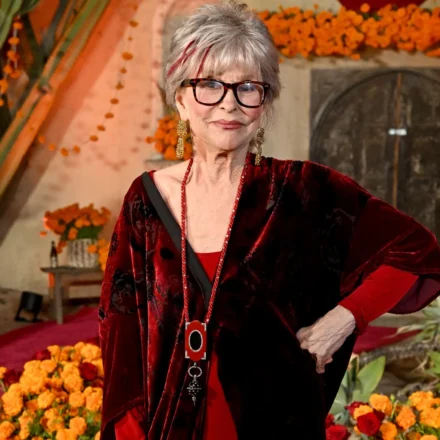
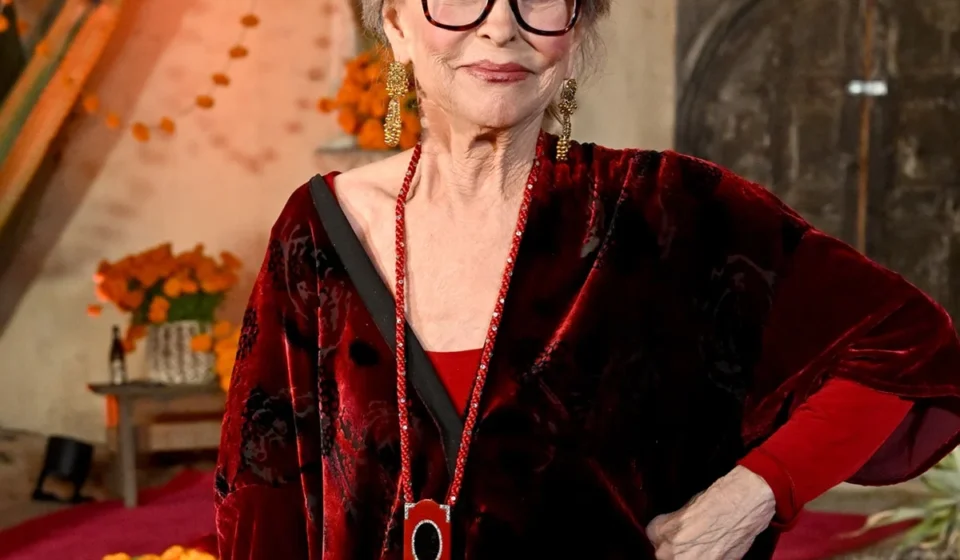
In an exclusive conversation with E! News’ Erin Lim Rhodes at the 2026 Día de Muertos Gala on October 27, Moreno revealed that her birthday celebration will be centered around a roast. With a mischievous glint in her eye, she noted, "We’re going to have a dinner, and I’m sure people will be insulting me all night." Far from being intimidated by the prospect of being the "butt of the joke," Moreno is actively welcoming the jabs. "Why not?" she quipped. "They can do whatever they damn want. It’s just a wonderful way to celebrate. So, I can’t wait."
A Legacy Honored: The Vida y Legado Award
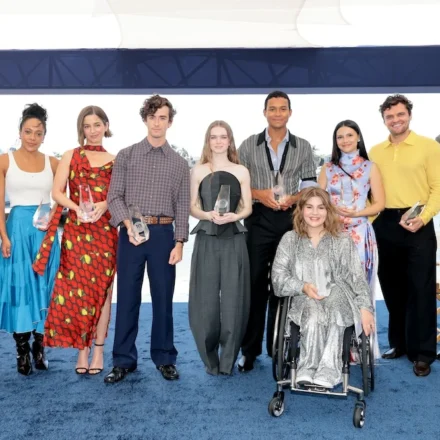
Moreno’s appearance at the 2026 Día de Muertos event was marked by a significant professional milestone: the receipt of the Vida y Legado (Life & Legacy) Award. Presented by a coalition of partners including Lexus, Wells Fargo, Tequila Don Julio, and NBCUniversal Telemundo Enterprises, the honor serves as a testament to her enduring impact on the entertainment industry and the Hispanic community at large.
"I think it’s special," Moreno said of the accolade. "It’s special because it’s Hispanic, and that makes me really, ultra proud." For decades, Moreno has stood as a beacon for Latin representation in film, television, and theater. Yet, as she reflects on the path that brought her to this summit of success, she is quick to provide a sobering reality check about the lack of support she faced during her early years.
Chronology: Navigating a Career Without a Roadmap
To understand the magnitude of Rita Moreno’s career, one must look at the historical vacuum in which she began. Born in Puerto Rico in 1931, she moved to New York City as a young girl, eventually breaking into a film industry that was notoriously closed off to performers of color.
Throughout the 1950s and 60s, Moreno navigated a studio system that often pigeonholed Latin actors into stereotypical roles. Despite these systemic barriers, she achieved what few others could: she became one of the few performers in history to attain EGOT status—winning an Emmy, Grammy, Oscar, and Tony Award.
When asked who guided her through those treacherous early decades, her answer was characteristically blunt. "Who helped me? Nobody," she admitted. "Because if there had been people helping me, I probably would have gotten farther than I did." This admission is not a lament, but a declaration of her own agency. She views her career as a solo ascent, one where she had to out-maneuver industry gatekeepers through sheer talent and tenacity. "I owe nobody anything," she stated, emphasizing that her success was earned, not gifted. "I don’t say that with bitterness, but I say it with a sense of attitude, because I deserve it and I earned it."
Supporting Data: The Philosophy of Longevity
Moreno’s longevity is not merely a product of her talent; it is a product of her philosophy on life. She has often spoken about the concept of "spreading joy" as the secret to her ageless approach. In a previous interview with E! News, she described a simple, daily practice: complimenting strangers.
"If I see someone on the street who has a beautiful jacket on, I don’t mind just stopping and saying, ‘Excuse me, that is a beautiful jacket, you have good taste,’" she explained. "I found in my life that that makes people very happy." This outward-facing optimism has become her trademark, allowing her to transition from the golden age of Hollywood to contemporary hits like One Day at a Time and Fast X with seamless grace.
The Cultural Implications of Aging
Moreno’s upcoming 95th birthday provides a broader lens through which to examine the culture of aging in Hollywood. While the industry has historically been obsessed with youth, a wave of iconic women has begun to dismantle the stigma associated with getting older. Moreno joins a chorus of peers who are reframing the narrative from one of "anti-aging" to one of "earned wisdom."
Perspectives on the Passage of Time
The conversation surrounding aging has shifted from a desperate attempt to maintain a youthful aesthetic to an embrace of the life experience that comes with time. Notable figures across the industry have echoed sentiments similar to Moreno’s:
- Cameron Diaz: "There’s no such thing as anti-aging. We’re all aging, period… My belief is that it’s a privilege to get older—not everybody gets to get older."
- Kate Beckinsale: Addressing the pressure on women, she noted, "I refuse to feel shame about being human."
- Diane Von Furstenberg: In her reflections on aging, she beautifully articulated that one’s face is a map of their experiences. "My wrinkles reflect the roads you have taken; they form the map of your life… Why should I erase them?"
- Helen Mirren: Highlighting the joy of each decade, Mirren stated, "As you reach each age, you gain the understanding you need to deal with it and enjoy it."
- Oprah Winfrey: On the importance of honesty, she wrote, "Only by owning who and what you are can you step into the fullness of life."
These perspectives collectively signal a move toward "pro-aging"—a movement that values the authenticity of a life lived over the artificiality of a preserved exterior.
Implications: A Trailblazer’s Final Act
As Rita Moreno looks toward her 95th year, the implications of her career are clear: she has transformed from a marginalized performer into an industry pillar who dictates the terms of her own legacy. By choosing to spend her birthday being roasted, she is reinforcing a core tenant of her character—that she is confident enough in her own skin to laugh at herself.
She has paved the way for generations of Latin stars, not by adhering to the rules, but by breaking them and refusing to seek validation from those who initially denied her space. Her journey from the vibrant, difficult streets of mid-century New York to the global stage of the 21st century is a masterclass in resilience.
When she talks about "spreading joy," she is essentially describing the mechanism by which she survived the industry. She turned her life into a series of interactions and performances that made the world a bit brighter, even when the world wasn’t always kind to her.
Conclusion: A Toast to the Future
As December approaches, the entertainment world watches with anticipation. The roast of Rita Moreno will undoubtedly be a star-studded affair, but its true significance lies in the woman at the center of the table. She has nothing left to prove, no one to impress, and an entire life of triumphs to look back upon.
Moreno’s story is a reminder that the most powerful thing one can possess is a sense of self-worth that is independent of external approval. As she prepares to celebrate, the rest of us are reminded that while we cannot stop the clock, we can certainly choose how we hear it ticking. For Rita Moreno, it is not a countdown to the end, but a steady beat to which she continues to dance. She has earned the right to be toasted, to be roasted, and to be celebrated—not just for her legendary roles, but for her refusal to be anything other than exactly who she is.