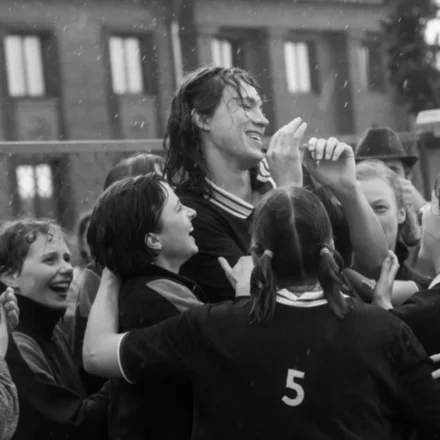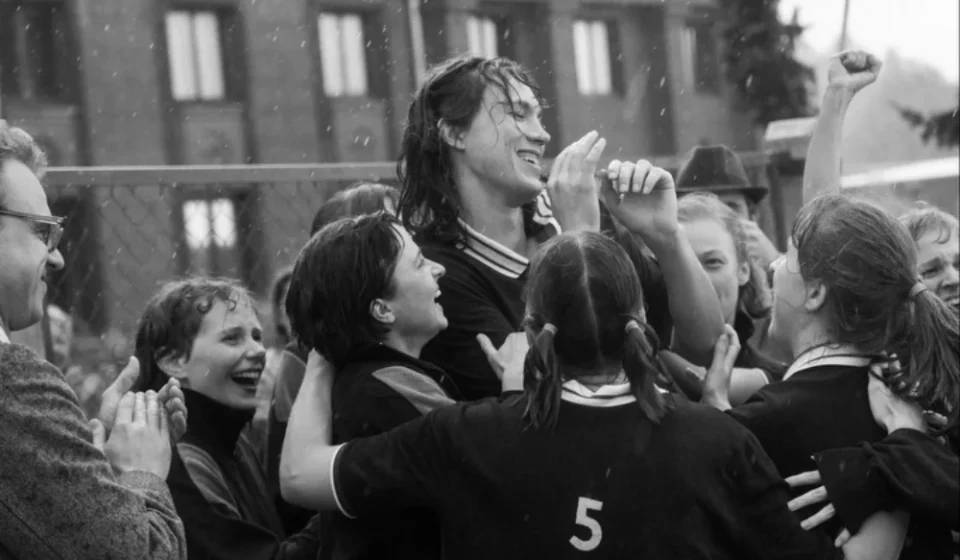

The international film landscape is currently witnessing a profound, black-and-white phenomenon from the Baltic. Ulya, the evocative Latvian feature film directed by Viesturs Kairiāss, has secured a sweeping array of international distribution deals, signaling a major victory for independent European cinema. As the official Latvian entry for the Best International Feature Film at the Academy Awards, the project has transcended its regional origins to resonate with audiences globally.
With recent acquisitions by New Mountain Films (North America), Destiny (France), Invisible Carpet (Italy), and others—including territories spanning Slovakia, the former Yugoslavia, Estonia, Lithuania, the MENA region, Finland, Poland, and Brazil—Ulya has proven that arthouse sensibilities can command a robust commercial footprint. The film, which opened the 30th edition of the Tallinn Black Nights Film Festival, continues to cement its status as one of the most talked-about cultural exports of the decade.
The Genesis of an Icon: From Basketball Court to Cinema
The film finds its roots in the life of Ulyana Semjonova, the legendary basketball player born in 1952. Standing at seven feet tall, Semjonova was not merely a sporting titan; she was a cultural monument and, often, a recluse. Yet, Ulya is far from a standard sports biopic. It avoids the trope-heavy structure of the "rise to glory" narrative, opting instead for a deeply introspective, almost ethereal exploration of identity, isolation, and the weight of being different.
The inception of the film was as unconventional as the final product. It was not a calculated studio project but rather the long-held ambition of lead actor Kārlis Arnolds Avots. When Kairiāss took on the role of artistic director at the Dailes Theatre, he was scouting for talent and discovered Avots.
“During our first meeting, when I asked him to join our ensemble, he said: ‘You know, I would like to play Ulyana Semjonova,’” Kairiāss recalled.
At the time, the director dismissed the idea as a whimsical notion. However, years later, while filming the acclaimed January, Kairiāss overheard Avots discussing the concept with the director of photography. It was then that the director recognized the potential for a cinematic experiment. “In theatre, it’s not unusual for men to play women. It goes back to Shakespearean times,” Kairiāss noted. The decision to cast a male actor to embody the soul of a seven-foot-tall female basketball legend became the film’s narrative anchor—a bold stylistic choice that invites the audience to look past physical reality and into the internal landscape of the character.
Chronology of a Vision
The development of Ulya followed a path of creative resistance. Throughout the pre-production phase, the creative team faced pressure to conform to the conventions of the traditional biopic.
- Initial Concept: Originating in the mind of Kārlis Arnolds Avots, the idea was met with skepticism by producers who favored a more commercial, standard approach to Semjonova’s life.
- The Creative Pivot: Director Viesturs Kairiāss insisted on an arthouse approach, citing a desire to capture a “Werner Herzog-esque” narrative—a story centered on the existential isolation of a “giant girl living in the countryside.”
- Production Collaboration: The project became a multi-national endeavor, produced by Ego Media (Latvia), Allfilm (Estonia), Staro Film (Poland), and Tremora (Lithuania), with sales handled by B-Rated International.
- Cannes Premiere: The film made its international debut in the prestigious Un Certain Regard section at the Cannes Film Festival, where it received critical acclaim for its visual language and unconventional narrative structure.
- The Blessing: In a poignant turn of events, the real Ulyana Semjonova—who passed away in January 2026—gave the project her blessing. The film concludes with a photograph of Semjonova alongside Avots, a testament to the trust placed in the filmmakers.
- Festival Run and Commercial Success: Following its success in Cannes, the film saw stellar runs in Rome and Los Angeles, culminating in its selection as the opening film for the 30th Tallinn Black Nights Film Festival.
Crafting the Subjective: The Technical Artistry of ‘Ulya’
To capture the “inner soul” of a woman known for her stature and subsequent withdrawal from the public eye, Kairiāss utilized a specific visual lexicon. He aimed for a “very, very subjective” experience.
“To stick to her point of view, we used what we called ‘crazy cameras’ and slightly out-of-focus shots,” the director explained. These techniques were not mere aesthetic flourishes but functional tools designed to mirror the sensory experience of a person who perceives the world differently due to their physical and social placement.
The film eschews the typical sports-movie focus on winning or losing, choosing instead to focus on the human cost of being perceived as a “giant.” As Kairiāss suggests, the goal was to find the landscape of her soul—a concrete task that required a departure from reality to reach a deeper emotional truth.

Supporting Data: A Global Reach
The commercial performance of Ulya defies the traditional limitations placed on foreign-language arthouse films. In its home territory of Latvia, the film has achieved unprecedented success, becoming the second most-watched film in the country’s history.
| Territory | Distributor |
|---|---|
| North America | New Mountain Films |
| France | Destiny |
| Italy | Invisible Carpet |
| Slovakia | ASFK |
| Former Yugoslavia | Five Star Distribution |
| Estonia | Hea Film |
| Lithuania | GPI |
| MENA Region | Teleview |
| Finland | Cinema Orion |
| Poland | 1989 |
| Brazil | Belas Arte |
This diverse list of acquisitions confirms that the film’s themes—identity, alienation, and the struggle to exist in a world that demands conformity—possess a universal language.
Official Responses and Artistic Philosophy
The director’s perspective on the film’s reception remains grounded in the human element. Kairiāss reflects on the current state of society, noting that, “There’s so much pressure today to look the same and like the same things. We live in times that try to kill all the difference.”
Kairiāss believes the film has struck a nerve because of this modern climate. Even his own daughter expressed a personal connection to the character, illustrating that Ulya is not just about a basketball player; it is about the "freak" that exists within everyone. “Everyone is struggling with something they want to hide, but it’s probably the best part of who they are,” Kairiāss said.
The actor at the center of this, Kārlis Arnolds Avots, has also undergone his own transformation. Described by Kairiāss as having a natural affinity for the role of an “outsider,” Avots has spent time filming the Viking series Bloodaxe, a role that requires a physical transformation that contrasts with his work in Ulya. Yet, according to Kairiāss, Avots has always understood the feeling of being treated as a giant. This empathy is what translates on screen, turning a biographical film into a deeply resonant character study.
Implications for Independent Cinema
The success of Ulya carries significant implications for the future of international cinema. It demonstrates that when filmmakers resist the pressure to produce "standard" content and instead pursue a specific, idiosyncratic vision, they often create work that finds a more authentic connection with audiences.
By leveraging the "Shakespearean" tradition of cross-gender casting and employing experimental cinematography, Ulya has forced the international market to reconsider what constitutes a "blockbuster." It has proven that viewers are not just looking for spectacles; they are looking for mirrors of their own internal struggles.
As the film continues its journey through global festivals and into theaters worldwide, it serves as a reminder that the most compelling stories are often those that dare to embrace the unconventional. Whether one is seven feet tall or simply someone who feels like an outsider in their own skin, Ulya offers a path toward self-acceptance—a mandate to trust the “freak” within and embrace it as the defining feature of one’s identity.
In the final assessment, Ulya is more than a film; it is a cultural landmark that, much like its subject, stands tall, distinct, and impossible to ignore.