The Business of Thin Mints: ‘Cookie Queens’ and the High-Stakes Evolution of the Girl Scout Empire

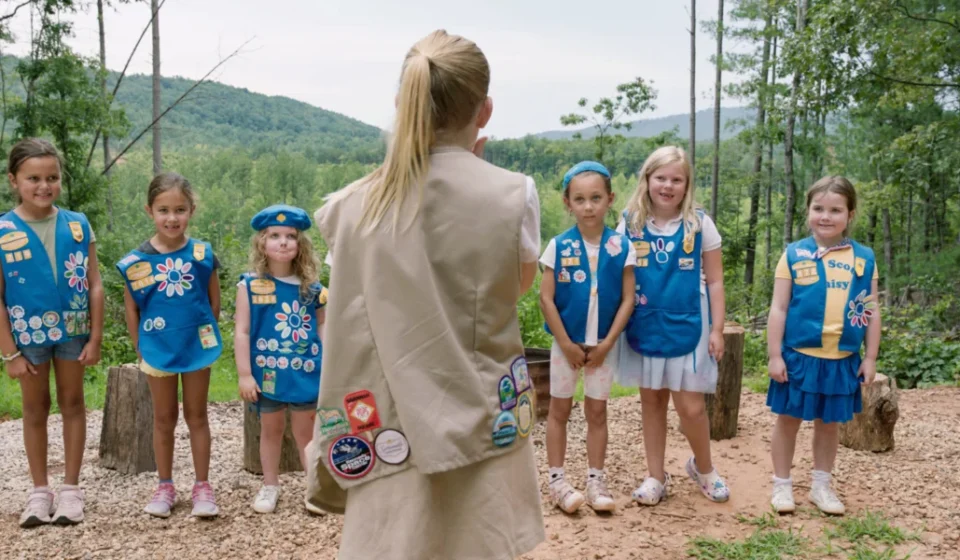
The image is a staple of the American suburban landscape: a card table set up outside a grocery store, manned by a group of young girls in green or brown vests, offering boxes of Thin Mints and Tagalongs with practiced smiles. For decades, this was viewed as a quaint, wholesome rite of passage—a lesson in manners and modest goal-setting. However, as documented in Alysa Nahmias’s new documentary, Cookie Queens, the modern reality of the Girl Scout Cookie season has evolved into a high-octane, $800 million-a-year industrial machine.
Executive produced by Meghan Markle and Prince Harry’s Archewell Productions, Cookie Queens pulls back the curtain on a world where "wholesome" has been replaced by "hyper-competitive." The film explores how a century-old tradition has entered its late-capitalist phase, transforming preteen girls into savvy entrepreneurs, brand influencers, and numbers-crunching dynamos who view the six-week sales window as a high-stakes corporate sprint.
Main Facts: A Billion-Dollar Season
At its core, Cookie Queens is a character study of four young girls—Olive, Ara, Shannon Elizabeth, and Nikki—as they navigate the grueling demands of the annual cookie drive. The film eschews a traditional historical retrospective, opting instead to immerse the viewer in the frantic, present-day reality of the "Cookie Queen" phenomenon.
The scale of the operation is staggering. The Girl Scouts of the USA (GSUSA) generates over $800 million in revenue from cookie sales annually, remarkably achieving this figure in just six to eight weeks. If the Girl Scout cookie program were a standalone company, it would rival several mid-cap food corporations in annual revenue.
The documentary highlights a significant shift in the program’s DNA. While the GSUSA officially frames the program as a "financial literacy" tool, Cookie Queens suggests it has become a training ground for a new generation of "hustle culture." The subjects are not merely selling treats; they are managing inventory, executing digital marketing strategies, and navigating complex supply chain logistics—all before they reach high school.
Chronology: From World War I Roots to Digital Dominance
To understand the world depicted in Nahmias’s film, one must look at the trajectory of the institution. While the documentary focuses on the present, the "Cookie Queen" phenomenon is the result of a century of escalating commercialization.
The Origins (1917–1930s)
The tradition began in 1917, five years after Juliette Gordon Low founded the Girl Scouts. The Mistletoe Troop in Muskogee, Oklahoma, baked cookies in their home kitchens and sold them in high school cafeterias as a service project to fund activities for U.S. soldiers during World War I. By 1922, The American Girl magazine published a standard sugar cookie recipe, suggesting a selling price of 25 to 30 cents per dozen.
Commercialization and Expansion (1930s–1990s)
In the 1930s, the organization shifted from home-baked goods to commercially licensed bakers to meet rising demand. This era saw the birth of the "Middle American pastime" image—door-to-door sales and "booth" sales at local churches. The flavors became standardized, and the "Thin Mint" emerged as a cultural icon.
The Modern Era: The Rise of the "Super-Seller" (2000s–Present)
The 21st century introduced the concept of the "Cookie Queen." Rewards for high-volume sellers shifted from simple badges to high-tech prizes and "entrepreneurial" recognition. Cookie Queens picks up in this era, showing how the introduction of digital sales platforms and social media has removed the geographic limits of the traditional "neighborhood" sale.
Supporting Data: The Economics of the Box
The most revealing—and perhaps controversial—aspect of the documentary is its deep dive into the financial structure of the cookie program. As of the current season, the standard price for a box of cookies has risen to $6 in many regions. However, the "profit" seen by the individual scout is surprisingly slim.
The Revenue Split
The film details a breakdown that often surprises consumers:
- The Council Share: Approximately $5.00 of every $6.00 box goes to the regional Girl Scout Council. These funds are used to maintain camps, pay staff salaries, and fund organizational overhead.
- The Troop/Scout Share: The individual troop—and by extension, the scout—retains roughly $1.00 per box.
This 16.6% margin is a point of contention in the film. One of the subjects, 12-year-old Olive, candidly suggests that a 50-50 split would be more equitable given that the girls provide the labor and marketing.
The Cost of Entry
The documentary also highlights a "pay-to-play" aspect that many viewers may find jarring. Parents are often required to purchase boxes in advance to stock their "booths," leading to significant upfront financial risks. One mother in the film half-jokingly mentions the possibility of needing a second mortgage to cover the initial inventory, highlighting the intense pressure on families to support their children’s ambitious sales goals.
Individual Goals
The "queens" featured in the film set targets that dwarf the national average:
- Olive (12): Goal of 8,000 boxes.
- Shannon Elizabeth (8): Goal of 2,750 boxes.
- Nikki (9): Aiming to reclaim the "Cookie Queen" trophy previously held by her sister.
Official Responses and Context
The Girl Scouts of the USA have long defended the cookie program against criticisms of commercialism. In official statements and educational materials, the organization emphasizes five key skills: goal setting, decision making, money management, people skills, and business ethics.
"The Girl Scout Cookie Program is the largest girl-led entrepreneurial program in the world," the GSUSA frequently notes in its press releases. They argue that the high-stakes environment depicted in the film is not about "hustle" for the sake of profit, but about preparing girls for a competitive global economy.
However, the documentary suggests a disconnect between the national headquarters’ rhetoric and the ground-level reality. While the GSUSA emphasizes "business ethics," the film captures moments of raw, cutthroat competition. The "official" response to the film’s portrayal has been one of cautious distance; while the organization facilitates the program, the "reality-TV" framing of Nahmias’s work suggests a level of intensity that the organization’s branding usually attempts to soften.
Implications: Empowerment or Exploitation?
The release of Cookie Queens has sparked a broader conversation about the role of children in the modern economy. The film raises several critical questions about the future of youth-led organizations and the "professionalization" of childhood.
The "Influencer" Generation
Olive, one of the film’s primary subjects, represents a new breed of scout. She is media-savvy, speaks in the polished cadence of a professional influencer, and understands the power of a "personal brand." This shift suggests that the traditional skills of salesmanship are being replaced by the skills of digital content creation. The implication is that a girl’s success in the program is now tied to her ability to "perform" her personality for an audience.
The Burden on Families
The film serves as a critique of how much of the "labor" of the Girl Scouts has shifted to the parents. From hauling thousands of boxes in SUVs to managing spreadsheets and manning booths for eight hours a day, the parents are the invisible infrastructure of the $800 million industry. Cookie Queens asks whether this is a shared family bonding experience or a stressful auxiliary job for parents already stretched thin.
Late-Capitalism and Childhood
Perhaps the most profound implication of the documentary is its depiction of "the tasty crunch of capitalism." By framing the cookie season as a contest with winners and losers, trophies and "drops," the film suggests that even our most cherished, "wholesome" institutions have been subsumed by the need for constant growth and competitive dominance.
As the credits roll on Cookie Queens, the viewer is left with a dual sense of admiration and unease. There is no denying the talent, drive, and intelligence of the young girls featured. They are, in every sense of the word, "queens" of their domain. Yet, the film leaves us wondering what is lost when a box of cookies is no longer a treat shared between neighbors, but a unit of "cold hard cash" in a race to the top of the leaderboard.
In the end, Cookie Queens is less a documentary about cookies and more a mirror held up to the American Dream in the 21st century—showing us that even the sweetest traditions are now being baked with a heavy dose of corporate ambition.