The Underground Stage: How ‘SubwayTakes’ Became the Definitive Pulse of New York City

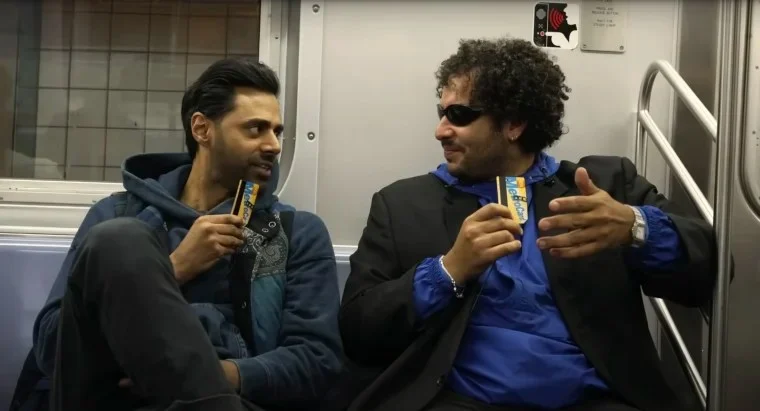
In the sprawling, cacophonous ecosystem of modern digital media, few properties have captured the idiosyncratic spirit of New York City quite like SubwayTakes. What began as an experimental endeavor by creator Kareem Rahma—a series of man-on-the-train interviews—has blossomed into a cultural phenomenon. By merging the gritty, unpredictable environment of the MTA with the 21st century’s most pervasive art form, the "hot take," Rahma has created a platform that feels both profoundly intimate and uniquely public.
From Hollywood A-listers like Jennifer Lopez and Ethan Hawke to local New York characters yet to be discovered by the mainstream, SubwayTakes serves as a mirror to the city itself. It is a testament to the idea that strong, often absurd opinions are a universal human language, and that the best conversations happen when the stakes are nonexistent and the environment is entirely beyond one’s control.
The Genesis of an Underground Phenomenon
The origins of SubwayTakes were born not from a desire to dominate the media landscape, but from a pragmatic need for creative freedom and the pursuit of pure, unadulterated fun. As Rahma explained in a recent conversation, the show is an exercise in stripping away the pretense of the traditional talk show format.
"The show came out of my love of debate and discussion and, honestly… fun," Rahma said. "Really, the show is about having fun, and about showing the world how much fun a conversation can be."
In its early days, the concept was simple: find a willing participant, board a train, and force a conversation about something trivial. It was a low-cost, high-concept experiment. However, as the show grew, so did the ambition of the production. The result is a unique hybrid of guerilla filmmaking and high-end studio production that defies the standard expectations of "viral" content.
Anatomy of the "Hot Take"
The appeal of SubwayTakes lies in its commitment to the trivial. Guests are invited to throw out their most nonsensical, divisive, or benignly bizarre opinions—whether it’s a critique of pizza toppings or a stance on subway etiquette—to which Rahma responds with an emphatic "100 percent agree" or "100 percent disagree."
This binary reaction mechanism creates a space where nuance is gleefully discarded. In a world where discourse is often bogged down by politics and heavy-handed debate, SubwayTakes provides a reprieve.
"What’s happened is that the best takes are the most Larry David-ian," Rahma noted. "They’re micro-observations about the world around us and the way we move through life. And I think that’s what people like. It’s part of the bit that you can argue about something that doesn’t matter, but you’re just doing it for the sake of argument."

This "Larry David-ian" quality—the hyper-fixation on the minutiae of human behavior—is what resonates with audiences. It transforms the guest into a character, and the subway car into a stage where the only goal is to entertain, rather than to win.
The Technical Challenges of Guerilla Production
While the final product feels effortless and spontaneous, the production of SubwayTakes is a feat of logistical mastery. Producing a talk show on a moving, underground transit vehicle presents a suite of challenges that would deter most professional production crews.
"The challenges of doing a talk show in public are plentiful," Rahma said with a laugh. "The biggest one is the fact that we have literally no control over our setting."
The "Free Studio" Philosophy
Rahma’s approach to production is driven by a prioritization of content over polish. He admits that the subway was chosen as a set largely because it was free. "It came out of a need for free studio space," he explained. "I would rather invest in the quality of the content than invest in the physical location where the content is created. We invested in the team and making sure we had the best equipment possible. Because there is a version of this show that looks unprofessional, but my team is professional."
To achieve this, the crew employs a setup that includes four cameras and five audio channels. This level of technical commitment ensures that the show remains "legible" even when the screech of the tracks or the bustle of commuters threatens to derail the audio. The post-production team works extensively to mix the audio, ensuring the final product feels cinematic rather than like a shaky smartphone recording.
Chronology of a Conversation: "Building the Plane While Flying It"
The production process of a SubwayTakes episode is as much about improvisation as it is about capture. Rahma describes the filming process as "building a plane while we fly it." Because the guest’s responses are entirely unscripted, the narrative arc of each episode is determined in real-time.
- The Set-Up: The team secures a quiet corner of the subway car, balancing the gear while navigating the unpredictable nature of the commute.
- The Engagement: Rahma initiates the conversation, acting as a facilitator for the guest’s "take."
- The Real-Time Edit: Rahma identifies the "nugget" of the take mid-conversation, steering the guest toward a moment that will resonate with the audience.
- The Post-Production Craft: Once the footage is captured, the team engages in a rigorous editing process. They aren’t just cutting for time; they are hunting for the story within the chaos.
"I’m definitely writing the episode while it’s happening," Rahma says. "Almost every episode I’m sitting there saying, ‘Oh shit, how am I gonna land this plane?’ Because I don’t know what they’re going to say."
Supporting Data: Why It Works
The success of SubwayTakes in the digital space can be attributed to several factors:

- Authenticity: The subway is an inherently "real" setting. It lacks the artifice of a late-night studio, which creates a subconscious bridge of trust between the guest and the viewer.
- Brevity: By focusing on "hot takes," the segments are perfectly optimized for the short-form consumption patterns of platforms like TikTok, Instagram Reels, and YouTube Shorts.
- Human Connection: Seeing celebrities like Jennifer Lopez in a public, vulnerable, and mundane setting humanizes them in a way that traditional PR tours cannot.
Implications for Modern Media
The success of SubwayTakes has significant implications for the future of digital content. It proves that the "studio" is no longer a prerequisite for high-quality production. Instead, the "environment" is the new asset. By utilizing the public sphere as a backdrop, creators can generate content that feels inherently tied to the pulse of the city.
Furthermore, it highlights a shift in audience preferences away from "staged" entertainment toward "curated spontaneity." Audiences are increasingly drawn to content that feels like a shared experience—a moment of "childlike wonder" captured in a place that is usually associated with the drudgery of the daily commute.
Conclusion: A Platform for Play
At its core, SubwayTakes is not a debate show. It is a sanctuary for play. Rahma’s ultimate goal remains to create a safe space for humor and genuine human interaction. In an era where the digital world is often criticized for its toxicity and polarization, the show’s success—built on the back of silly, inconsequential arguments—serves as a poignant reminder that people are still looking for ways to connect, laugh, and find common ground, even if that ground is the floor of an N-train.
"It’s not a debate show in the sense you have to win the debate. It’s entertainment," Rahma concluded. "I wanted to create an environment that was safe for discussion, for humor, for play, and for childlike wonder."
As SubwayTakes continues to evolve, it stands as a shining example of how the right vision, a dedicated team, and a willingness to embrace the chaos of the city can turn the mundane into the extraordinary.
This conversation is presented in partnership with YouTube.