The Uncontainable Valerie Solanas: Mary Harron on the 4K Restoration of ‘I Shot Andy Warhol’

Before she dissected the hollowed-out soul of Wall Street in the 2000 cult classic American Psycho, director Mary Harron turned her lens toward a different, more jagged corner of American history. With her 1996 debut feature, I Shot Andy Warhol, Harron crafted a piercing, unsentimental portrait of Valerie Solanas, the radical feminist who infamously attempted to assassinate the pop-art icon in 1968.
Decades after its original release, the film is returning to screens in a pristine 4K restoration. The film remains as provocative today as it was during the height of the 1990s indie explosion, serving as both a time capsule of a grittier New York and a timeless study of the "outsider" archetype.
The Anatomy of an Outsider: Main Facts and Context
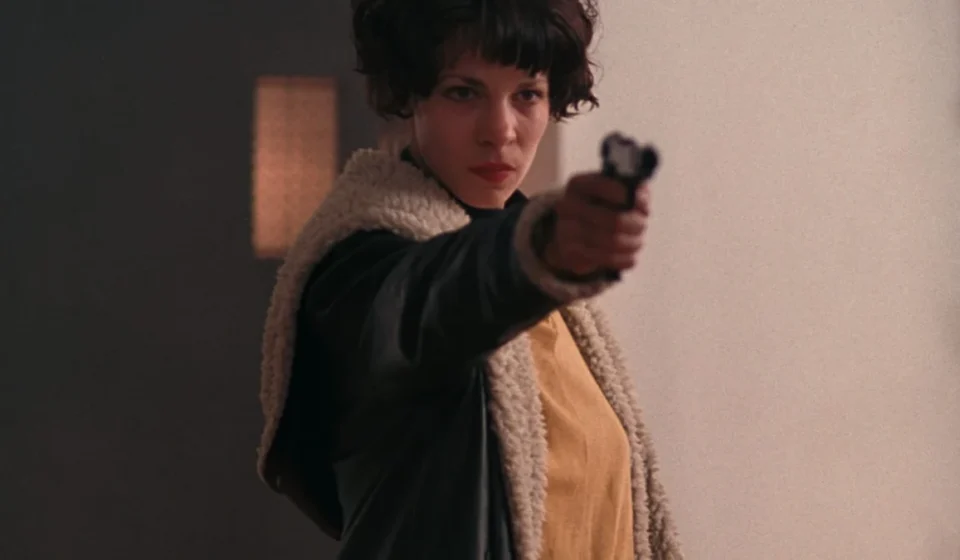
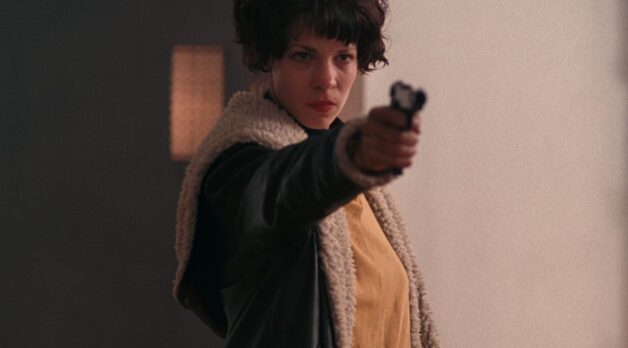
The narrative of I Shot Andy Warhol centers on the trajectory of Solanas, portrayed with a raw, deadpan intensity by Lili Taylor. Solanas, a woman existing on the fringes of the downtown art world, is depicted not merely as a would-be assassin, but as a brilliant, volatile, and deeply misunderstood intellectual. Her primary legacy—the SCUM Manifesto—is presented in the film as both a document of profound societal critique and a symptom of her encroaching desperation.
The film meticulously charts Solanas’s attempts to secure a foothold in a scene dominated by the ephemeral, camera-ready narcissism of Warhol’s "Factory." As she hawks her manifesto for two dollars to men and one dollar to women, she navigates a landscape where she is perpetually denied agency—by publishers, by artistic gatekeepers, and ultimately, by the man who represents the very establishment she seeks to dismantle.
A Chronology of a Cultural Collision
The film’s structure follows the slow-burn disintegration of Solanas’s mental and professional life. Harron captures the mid-to-late 1960s with a sensory precision that avoids the trap of romanticized nostalgia.
- The Marginalization: We follow Solanas as she attempts to get her play, Up Your Ass, produced. It is here that we witness the systematic exclusion of her voice from the cultural conversation.
- The Orbit: Solanas enters the Factory, a space that Harron portrays as a "dream world" underpinned by stark realism. The interaction between Solanas and Warhol (Jared Harris) is the film’s engine; it is a collision of two vastly different modes of existence—the hyper-visible artist versus the ignored radical.
- The Breaking Point: The film avoids the trap of the "villain origin story." Instead, it portrays the shooting not as a singular explosion of madness, but as the inevitable conclusion of a person pushed into a corner by a culture that could not metabolize her anger.
- The Legacy: The film concludes by acknowledging the SCUM Manifesto’s evolution from a fringe radical pamphlet to a foundational, albeit controversial, feminist text.
Visual Restoration and Aesthetic Integrity
The recent 4K restoration, supervised by cinematographer Ellen Kuras, offers a new window into the film’s visual language. In a recent interview, Harron noted the brilliance of Kuras’s original lighting, which managed to balance the "grunginess" of the era with a cinematic beauty that feels grounded rather than stylized.
"It looks both gritty and beautiful—but not too beautiful, which is important," Harron explains. By stripping away the visual polish often found in modern period pieces, the restoration highlights the use of natural light and negative space—a technique Harron borrowed from the documentary photography of Diane Arbus. This aesthetic choice ensures that the film remains a "living document" rather than a polished museum exhibit.
Supporting Data: The Cast and The Sound of the Sixties
The film’s atmosphere is bolstered by a soundtrack featuring the seminal sounds of the era, including Yo La Tengo and Pavement. When Lou Reed famously denied Harron permission to use Velvet Underground tracks, the director pivoted, enlisting John Cale to compose the score. This substitution proved fortuitous, lending the film an original, haunting quality that distinguishes it from other biopics of the era.
The supporting cast—including Martha Plimpton, Michael Imperioli, and a transformative Stephen Dorff as Candy Darling—breathes life into the Factory. These characters are not mere caricatures; they represent the "hungry-for-attention" cohort that Warhol both cultivated and eventually discarded, providing a stark contrast to Solanas’s own inability to conform to the Factory’s transactional social dynamics.
Official Perspectives: Harron on Authority and Ambiguity
When asked about the "truth" behind the SCUM Manifesto—whether it was satire, madness, or a sincere political tract—Harron remains firm in her refusal to provide a definitive answer.
"Categorizing it as satire almost keeps it in a safe place it doesn’t really belong in," she says. "It’s both brilliant and fantastically well-written but also disturbing and awful at moments."
Harron’s approach to the subject matter is intentionally non-binary. She avoids the "hero vs. villain" dichotomy, choosing instead to present Warhol as a flawed human being capable of both sensitivity and coldness. This perspective extends to the character of Solanas, whom Harron treats with a degree of empathy that was rare for female filmmakers in the 1990s. "My heart responds to loners, outsiders, people who have been disregarded or despised," Harron reflects.
Implications: A Relevant Rage
The rerelease of I Shot Andy Warhol comes at a time when the nature of "feminist rage" and the policing of women’s voices are once again at the forefront of the cultural zeitgeist. Harron notes the irony of the current moment, where the "backlash" against feminism has reached a fever pitch.
The Digital Parallel
The film raises pertinent questions about how Solanas might have fared in the digital age. Harron suggests that today’s landscape—with its decentralized platforms and "do-it-yourself" fame—might have provided Solanas with the voice she lacked in 1968. Yet, this potential is tempered by the toxic elements of internet culture, where discourse is often flattened by irony and performative cruelty.
Gender and Essentialism
Harron also addresses the complex intersection of Solanas’s ideology and modern trans-inclusive feminism. While acknowledging that Solanas held an essentialist view of biology based on her academic background, Harron defends the right of contemporary audiences to find their own meaning in the text. "I think people get what they need from a text like that," Harron says. "I’m happy with that."
Conclusion: A Timeless Provocation
Ultimately, I Shot Andy Warhol is not just a film about an assassination; it is a film about the cost of exclusion. By refusing to simplify Valerie Solanas, Mary Harron created a work that refuses to age. As the film finds a new audience in this 4K restoration, it continues to demand that we look at those the culture deems "unmetabolizable."
Harron’s work remains a reminder that the most dangerous individuals are often not the ones lurking in the shadows, but the ones who have been made invisible by the light of the establishment, and who, in their desperate reach for recognition, are willing to shatter the status quo entirely.