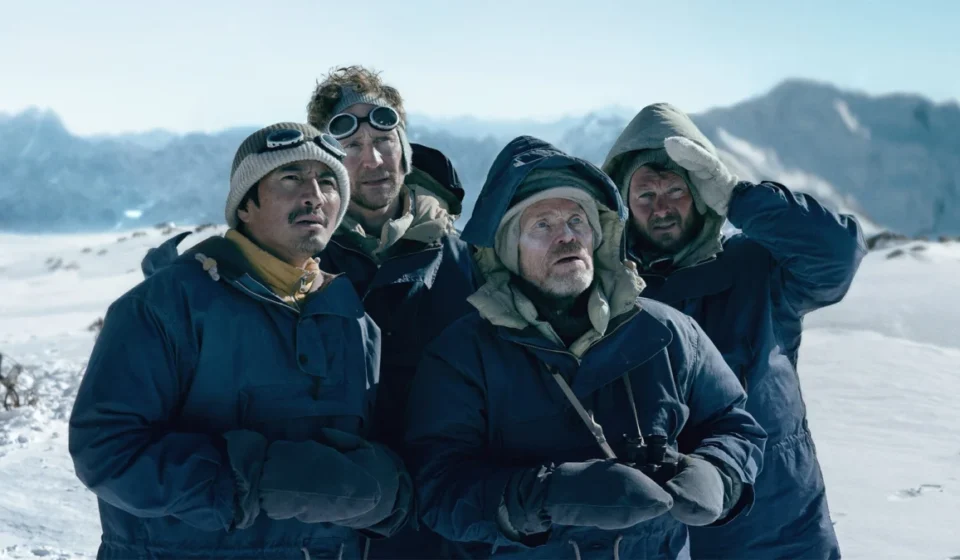

By Alex Billington | September 5, 2026
For over a decade, the cinematic representation of Mount Everest has often felt hollow—a collection of green screens, artificial frost, and a persistent, tired focus on the colonial legacy of European explorers. That changed this week with the arrival of Tenzing, the first narrative feature from acclaimed documentary filmmaker Jennifer Peedom. Having followed Peedom’s career since her blistering 2015 documentary Sherpa, I can state with absolute certainty: this is not merely a film about climbing. It is a seismic shift in how we tell the history of the world’s highest peak.
The Core Narrative: Reclaiming the Ascent
Tenzing arrives as the definitive, unflinching account of the first successful summit of Mount Everest in May 1953. While history books have spent seventy-three years largely lionizing the British Empire’s role in the expedition, Peedom’s film pivots the spotlight toward the man who made the impossible possible: Tenzing Norgay.
Born in Tibet and deeply rooted in the Khumbu Himalayas, Tenzing was far more than a "porter" or a guide. He was a master mountaineer whose grit and spiritual connection to the mountain—which he knew as Chomolungma—drove the expedition forward. Alongside the New Zealander Edmund Hillary, Tenzing didn’t just reach a summit; he redefined the boundaries of human endurance. Through a screenplay penned by the masterful Luke Davies (Lion, Beautiful Boy), the film strips away the jingoistic veneer of the 1953 British expedition to reveal a raw, human story of partnership, sacrifice, and the unspoken struggle of the indigenous people who serve as the backbone of Himalayan mountaineering.
A Chronology of Ambition: From Darjeeling to the Peak
To understand the weight of Tenzing, one must understand the man’s trajectory. The film meticulously tracks Norgay’s life, beginning with his upbringing in a Buddhist monastery. Unlike his contemporaries, Tenzing was a man of the mountains by birthright, not by choice.
- The Early Years: The film explores his departure from the Khumbu region to Darjeeling, which served as the epicenter for Himalayan climbing in the early 20th century.
- The 1952 Forerunner: Before the glory of 1953, there was the failed Swiss expedition of 1952. It was here that Tenzing honed his craft as a lead climber, proving he possessed skills that rivaled, and often surpassed, his European counterparts.
- The 1953 Expedition: The heart of the film details the British expedition led by Col. John Hunt (played with cold precision by Willem Dafoe). It is here that the film’s central conflict—the fight for recognition—is ignited. Hunt’s eventual decision to give Tenzing "equal billing" is presented not as an act of charity, but as a hard-won necessity for survival.
- The Final Push: The climactic ascent is captured with a harrowing, claustrophobic intensity that makes the viewer feel the thin air and the biting frost of the Death Zone.
Supporting Data: The Craft Behind the Spectacle
The technical achievement of Tenzing cannot be overstated. In an era where blockbusters rely heavily on CGI, Peedom took a radical approach: she shot the film on location. Utilizing the rugged, unforgiving terrain of New Zealand and actual sequences filmed on the slopes of the Himalayas, the production team, led by Director of Photography Stefan Duscio, created a visual language that feels tactile and dangerous.
- The Performance: Genden Phuntsok, a Tibetan actor, delivers what is arguably the performance of the year. He captures Tenzing’s iconic, disarming smile—a smile that concealed profound exhaustion and determination—with a subtlety that anchors the entire production.
- The Duo: Tom Hiddleston’s portrayal of Sir Edmund Hillary is equally compelling. Eschewing the caricature of the "Great British Hero," Hiddleston plays Hillary as the "runt of the team"—a man whose own outsider status as a New Zealander allowed him to bond with Tenzing in a way the English officers could not.
- The Soundscape: Composer Rebekka Karijord provides a score that feels ancient and ethereal, echoing the spiritual significance of the mountain while driving the pulse-pounding rhythm of the ascent.
Official Perspectives and Historical Correction
The film’s production was guided by a commitment to historical authenticity that involved consultation with the Sherpa community and Norgay’s descendants. Peedom’s work functions as a corrective lens for the historical record. For decades, the narrative was centered on the "conquest" of Everest by the British. By shifting the focus to the Sherpa perspective, Tenzing mirrors the real-world shift in Himalayan politics—the same shift documented in Peedom’s Sherpa, where local climbers successfully organized to demand agency over their own lives and the mountain’s safety.
"It’s not just about the summit," Peedom noted in recent press cycles. "It’s about the wives waiting at home, the children who grow up in the shadow of the peaks, and the economic reality that forces these men into the most dangerous job on Earth." By giving these voices equal weight, the film transcends the sports genre.

Implications: The ‘Oppenheimer’ of Mountain Cinema
The cultural implications of Tenzing are profound. Much like Christopher Nolan’s Oppenheimer or Damien Chazelle’s First Man, this film utilizes a massive, historical canvas to explore internal, human dilemmas. It asks difficult questions: What is the cost of ambition? Who owns the glory of a discovery? And what does it mean to be a "hero" in a culture that historically denies you that title?
Peedom has succeeded in making a film that feels both timeless and urgently modern. It challenges the "European explorer" trope that has dominated mountain cinema since the silent film era. By highlighting the systemic biases of the 1953 expedition, the film forces the audience to confront the colonial architecture of historical achievements. It is a scathing, yet deeply compassionate, critique of how we curate history.
The Verdict: A Masterpiece of Endurance
Tenzing is, quite simply, one of the most significant films of the decade. It stands as a testament to the fact that the most thrilling stories are not those we invent, but those we have been too blinded by bias to see clearly.
The film’s final act—a breathtaking sequence of arrival and realization—is handled with a restraint that is rare in modern studio filmmaking. There is no triumphant orchestral swelling that obscures the moment; there is only the wind, the heavy breathing of two men, and the realization that they have changed the world.
For those who have waited for a film that honors the majesty of the Himalayas while respecting the people who call them home, Tenzing is the answer. It is a work of profound empathy, technical mastery, and, ultimately, a triumph of human spirit.
Rating: 9.5/10
Technical Credits and Production Notes
- Director: Jennifer Peedom
- Screenplay: Luke Davies
- Starring: Genden Phuntsok, Tom Hiddleston, Willem Dafoe
- Cinematography: Stefan Duscio
- Score: Rebekka Karijord
- Production Context: Filmed on location in New Zealand and the Himalayas. This is Peedom’s narrative debut following an acclaimed career in documentary filmmaking.
Historical Context: The 1953 Everest Expedition
The 1953 British Mount Everest expedition was the ninth mountaineering expedition to attempt the first ascent of the mountain. Led by Colonel John Hunt, the expedition was a major national endeavor for the United Kingdom, coming shortly after the loss of their colonial grip on India. While the expedition is historically synonymous with Hillary and Norgay, the internal politics of the climb were fraught with tension regarding the status of Sherpas as full members of the team versus support staff. Tenzing successfully dramatizes these tensions, reminding modern audiences that the path to the top was paved by more than just ice axes and oxygen tanks; it was paved by social negotiation and the endurance of the marginalized.