A Modern Fable of Faith and Crime: Behind the Scenes of Father Joe at the Venice Film Festival

The Venice Film Festival, a storied bastion of global cinema, recently played host to the high-profile unveiling of Father Joe, an action-thriller that promises to blend the gritty atmosphere of 1990s New York with the theological weight of a moral crusade. While the film’s ensemble cast and high-octane premise generated significant buzz on the Lido, the premiere was marked by the notable absence of one of its most legendary stars: Al Pacino.
Main Facts: A Clash of Titans in Little Italy
Father Joe is an ambitious project that marks the directorial debut of Barthélémy Grossmann. Set against the backdrop of 1990s Manhattan’s Little Italy, the film serves as a stylized exploration of faith, redemption, and the moral ambiguity of the human condition.
The narrative centers on the titular character, played by Kiefer Sutherland—a man of the cloth who is, by all traditional metrics, “a man of God unlike any other.” Rather than confining his influence to the pulpit, Sutherland’s Father Joe wages a clandestine, single-handed war against the city’s organized crime syndicates, effectively turning the criminal underworld into his own unorthodox congregation.
Opposing him is the character played by Al Pacino, a formidable and enigmatic mob boss whose criminal empire inevitably collides with the priest’s vigilante mission. Completing the central triad is Ever Anderson, who portrays a young woman navigating the treacherous intersection of danger and potential redemption under Joe’s watchful guidance. The film is written and produced by the influential French filmmaker Luc Besson, whose distinct aesthetic and pacing are reportedly woven into the fabric of this “modern fable.”
Chronology: From Conception to the Lido
The journey of Father Joe began in the creative orbit of Luc Besson, who sought to craft a narrative that felt both grounded in historical reality and elevated by philosophical inquiry. The project moved from the script phase to production under the guidance of Grossmann, who was given the mandate to capture the specific, claustrophobic intensity of 1990s Little Italy.
The production timeline was kept relatively quiet, allowing the cast and crew to focus on the technical demands of the action-thriller genre. Following the wrap of production, the film was selected for the prestigious Venice Film Festival.
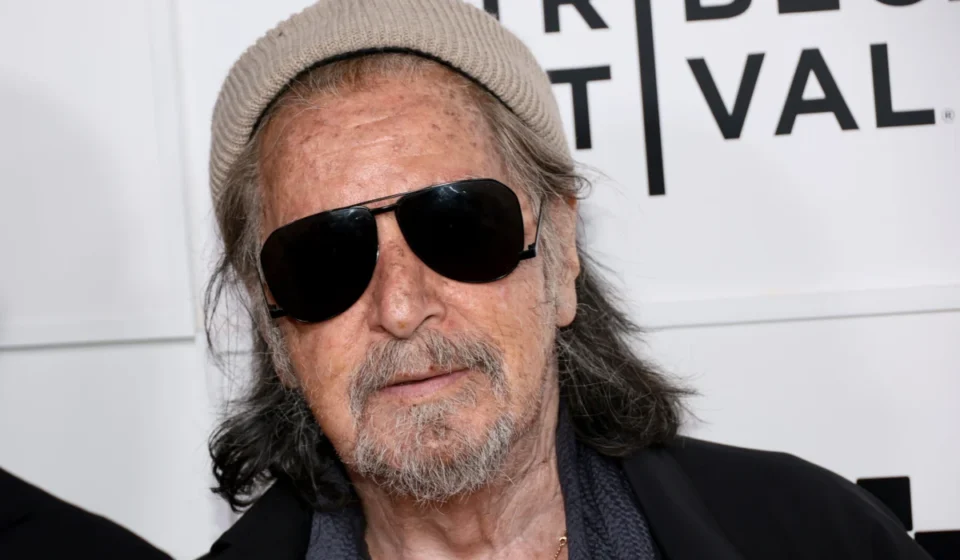
At the premiere, the absence of Al Pacino was addressed through a pre-recorded video message. Clad in sunglasses and appearing in a relaxed, informal setting, Pacino expressed his deep affection for the festival. “I wish I was there with all of you in Venice, which is great and lovely,” Pacino remarked in the clip. “I’ve had films there. I’ve been there. I’ve experienced it.” He went on to offer his best wishes to his collaborators, specifically name-dropping Luc Besson and his co-star Kiefer Sutherland, acknowledging the collaborative energy that fueled the production.
Supporting Data: The Artistic Vision
The creative synergy behind Father Joe is defined by a unique dynamic between the seasoned veteran, Besson, and the debutant, Grossmann. Besson, known for his work on global blockbusters like The Fifth Element and Lucy, as well as his recent directorial venture, a Dracula remake, adopted a surprisingly hands-off approach to the production.
“The good thing is I’m also a director,” Besson explained to the press in Venice. “I don’t want to be bothered when I’m a director, so I tried not to bother [Grossmann]. I’m on the back of Barthélémy. As long as he doesn’t have a problem, I’m not there.”
For Kiefer Sutherland, the primary draw was the opportunity to work with a filmmaker he had long admired from afar. “I was a huge, huge fan,” Sutherland noted. “Luc had made films I wish I had been in. I thought, ‘That is the kind of movie I should be making.’ But he never hired me. Very fortunately, he thought of me for this idea.” Sutherland described the film as a meditation on the age-old conflict of “good vs. evil,” a theme that resonates throughout the film’s narrative arcs.
Official Responses and Public Context
The film’s presence at Venice has also invited a necessary conversation regarding the involvement of Luc Besson. A central figure in French cinema for decades, Besson has weathered significant controversy in the #MeToo era. He was accused of rape by Belgian-Dutch actor Sand Van Roy, a case that garnered international headlines and sparked intense debate regarding power dynamics within the European film industry.
However, it is a matter of legal record that Besson was cleared of all charges. The inclusion of his work in major festivals like Venice suggests a path toward reintegration into the industry’s top tier, though the discourse surrounding his history remains a persistent element of his public profile.
The production team, however, has chosen to focus primarily on the artistic merit of Father Joe. Grossmann has been vocal about the film’s intent, describing it as a piece of cinema that seeks to strip away the artifice of morality to expose the raw complexity of the human spirit. The casting of Pacino—an icon whose career is synonymous with the exploration of the American criminal psyche—lends the film a weight that validates the directors’ ambitions.
Implications: The Future of the Action-Thriller Genre
The implications of Father Joe reaching the screen are manifold. Firstly, it represents a high-stakes test for Grossmann. Transitioning from the producer’s chair to the director’s seat is a significant professional evolution, and doing so under the direct mentorship of a figure as commercially successful as Besson places him under intense scrutiny.
Secondly, the film marks a continuation of the "prestige action" trend. By embedding a moral, character-driven story within a crime-thriller framework, Father Joe attempts to bridge the gap between festival-circuit intellectualism and mainstream commercial appeal. The presence of established stars like Pacino and Sutherland ensures that the film will attract a wide demographic, but its success will ultimately depend on whether it can deliver on its promise of a "modern fable."
Finally, the reception at Venice indicates that there is still a robust appetite for stories that confront the duality of the human experience. Whether the film ultimately succeeds as a commentary on faith and corruption or serves primarily as an entertaining genre piece remains to be seen. However, the energy displayed by the cast and the clear, distinct vision described by the production team suggest that Father Joe is not intended to be a fleeting cinematic experiment, but rather a significant entry in the catalogs of its participants.
As the festival winds down, the legacy of Father Joe begins its transition from the red carpet to the global audience. With a script that hinges on the collision of two powerful forces—one of the spirit, one of the street—the film stands as a testament to the enduring power of the collaboration between veteran visionaries and new voices. Whether or not the audience finds the "redemption" promised in the film’s logline, the sheer star power and the thematic weight of the project ensure that it will be a major talking point in the film industry for the remainder of the year.
The absence of Al Pacino at the premiere may have been a missed opportunity for the press, but his supportive message serves as a reminder that even the most seasoned legends continue to find value in the process of storytelling. As the film moves toward its general release, the industry will be watching closely to see if this modern fable finds its congregation.