The Return of the Mumblecore Maestro: Joe Swanberg on ‘The Sun Never Sets’ and Navigating a Changed Indie Landscape

Editor’s note: This interview was originally published on March 16, 2026, following the premiere at the 2026 SXSW Film & TV Festival. The Independent Film Company will release the film in limited theaters on Friday, August 28, 2026, with a wider expansion to follow.
For nearly a decade, the indie film world felt a peculiar silence where the voice of Joe Swanberg should have been. As the undisputed godfather of "mumblecore"—that low-budget, high-improvisation aesthetic that defined the mid-2000s—Swanberg was once a prolific force, churning out intimate, character-driven studies of human connection with almost mechanical regularity. From the raw, handheld honesty of 2005’s Kissing on the Mouth to the star-making turn of Greta Gerwig in 2007’s Hannah Takes the Stairs, Swanberg was the architect of a specific brand of American realism.
Yet, after the 2017 release of his Netflix gambling drama Win It All, Swanberg seemed to recede from the director’s chair. While he remained active, his focus shifted toward his critically acclaimed Netflix anthology series Easy, which wrapped its third and final season in 2019, as well as acting roles and the management of his Chicago-based video store, Analog.
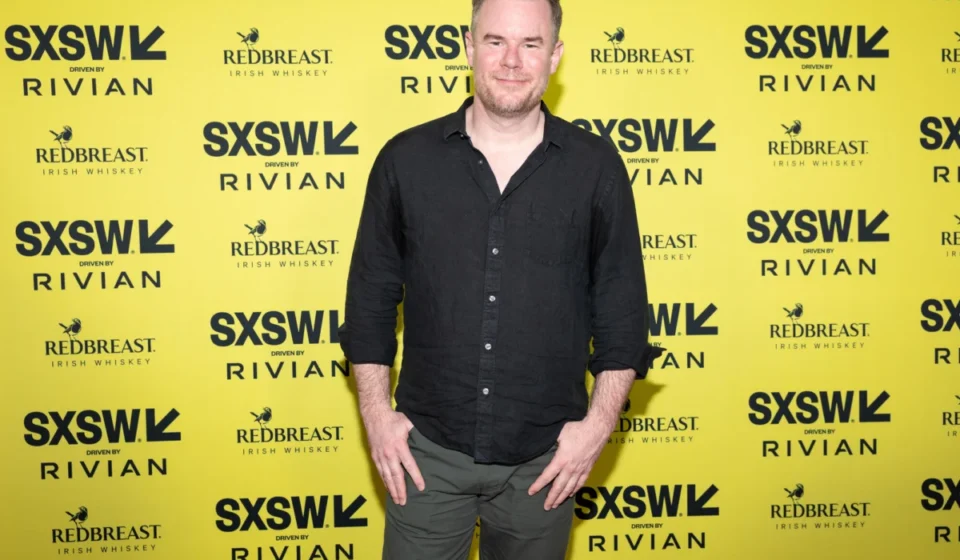
Now, with his return to feature filmmaking in The Sun Never Sets, Swanberg is re-emerging into a cinematic landscape that looks vastly different from the one he left behind. The film, which features career-best performances from Dakota Fanning, Jake Johnson, and Cory Michael Smith, is already garnering significant critical heat. As he navigates the festival circuit at SXSW, the director finds himself in the unfamiliar position of a veteran re-learning the mechanics of a transformed industry.

A Career in Evolution: From Netflix to Alaska
The path to The Sun Never Sets was anything but conventional. Shot on location in Alaska on 35mm film, the project marks a return to the director’s roots of collaborative, character-focused storytelling.
The story follows Wendy (Fanning), a woman whose age-gap relationship with a divorced hedge fund manager, Jack (Johnson), is fracturing. In a moment of existential crisis, Jack suggests they take a break, leading Wendy back into the orbit of her toxic ex-boyfriend, Chuck (Smith). The result is a messy, deeply human exploration of romantic ambiguity, set against the stark, ethereal backdrop of the Alaskan wilderness.
For Swanberg, the gap between his last feature and this one was not a result of "slacking off," but rather a period of creative reassessment. "I had the greatest time of my life making Easy," Swanberg told IndieWire. "Coming off of that show, it was difficult to imagine ever having it that good again. Netflix was so awesome to work for. My executives loved the show, gave me total freedom. I felt supported."
The transition away from that "golden era" was accelerated by the global pandemic and personal life changes, including his divorce from fellow filmmaker Kris Rey. "I didn’t have a career strategy," he admitted. "I’ve been producing a lot, acting a lot, and I opened a video store in Chicago. When I look back on those years, I was busy the whole time. It was funny to be back on set and be like, ‘Wow, I haven’t made a feature in forever.’"

The Shifting Sands of Independent Finance
One of the most significant challenges facing independent directors today is the near-total evaporation of the acquisition-heavy model that defined the 2010s. Swanberg, who once navigated the indie circuit with surgical precision, acknowledges that the "buyer" landscape has been fundamentally altered by the rise of in-house streaming productions.
"By 2019, I went back to that group of investors here in Chicago and said, ‘You guys, I don’t know what’s going on out there,’" Swanberg recalled. "It was clear to me that streamers were going to start producing in-house rather than acquiring at festivals. I purposefully stepped out of the game at that point."
Returning to the festival circuit to sell The Sun Never Sets, Swanberg likens his current state to that of a "first-time feature director." He notes that while he and longtime collaborator Jake Johnson were able to secure the necessary financing to produce the film, the climate for "adult-oriented, introspective drama" remains precarious. "There are a lot of people at these companies I probably have never met," he said. "The rumblings I’m hearing is that they are moving toward acquisitions again, at least on the feature side. Maybe their in-house productions aren’t going the way they wanted."
The Intimacy Dilemma: A Post-#MeToo Reassessment
Perhaps the most striking evolution in the film industry since Swanberg’s departure is the standardization of the intimacy coordinator—a role designed to ensure safety and comfort during scenes of sexual intimacy. Swanberg’s earlier work was synonymous with a specific, ad-libbed sexual frankness. Today, he views the integration of these protocols with a mix of pragmatism and skepticism.

"I’ve worked with them as an actor, not as a director, and it made me feel weird," Swanberg confessed. "As long as the intimacy coordinators are being hired by the studio, my view of their role is that their job is to coerce the actors into doing things, as opposed to advocate on their behalf against the studio."
For The Sun Never Sets, Swanberg did not utilize an intimacy coordinator, stating that his actors—who have a long history of working with him—expressed a desire to work directly with him instead. "I asked about it on this movie, and my actors did not want that," he noted. He posits that a more ethical model for the industry would be for actors to hire their own intimacy advocates, independent of the studio’s payroll, much like they hire agents or managers.
Personal Resonance and the Anatomy of Relationships
While The Sun Never Sets is not a direct autobiography, it is deeply informed by the seismic shifts in Swanberg’s own life. The concept of the film—a woman caught between a stable, older partner and a more adventurous ex—sprang from his post-divorce experiences in 2019.
"I really came out of the end of my relationship with Kris feeling like I never want to get married again," he said. "I was in that relationship for 20 years; we were 18 to 38. I felt a little old and almost calcified."

He channeled these feelings into a screenplay that explores the complexities of non-monogamy and the feeling that "neither one is the answer, but if I can just date both of them, together they kind of complete my life." Even though the film does not explicitly frame itself as a "polyamory movie," Swanberg views it as a vital exploration of modern romantic structures. "This is what I would show to somebody who was confused about that," he said. "Doesn’t it make sense to you that she could fully love Jake but also fully love Corey?"
Implications for the Future
The reception of The Sun Never Sets at SXSW signals that there is still a robust, hungry audience for the kind of low-stakes, high-emotion realism that Swanberg helped pioneer. However, the director remains steadfast in his refusal to chase the studio dollar or succumb to the pressures of conventional development.
When asked about his past attempts to pivot to big-budget studio comedies—projects he ultimately walked away from—he remained clear about his priorities. "I’ve never really been money-driven," he explained. "I recognize the gap between the movies that I still really love, that I’ve made, and the ones that I feel whatever about is really about how passionate I was at the time."
As he looks toward his next project, Swanberg remains a director committed to the "portraits" of daily life. Whether the industry is ready to return to the model of acquisition-driven indie cinema remains to be seen, but for Joe Swanberg, the goal is simple: to keep making work that feels honest, personal, and profoundly human.

In a world of blockbusters and algorithmic content, the return of the mumblecore master feels not just like a nostalgic nod to the past, but a necessary reminder of the power of the small-scale, intimate human story. As The Sun Never Sets prepares for its late-August release, the conversation around the film suggests that audiences are still looking for the kind of messy, unvarnished truth that only someone like Swanberg can provide.