From Ashes to Apex: The Evolution of Kaiju Cinema in ‘Godzilla Minus Zero’

In the pantheon of cinematic monsters, few entities command the cultural weight of Godzilla. Following the global phenomenon of 2023’s Godzilla Minus One, director Takashi Yamazaki has returned with a visceral, haunting, and technically ambitious follow-up: Godzilla Minus Zero. While the 2023 predecessor was hailed for its emotional core, the new installment leans into the franchise’s darker impulses, earning the series’ first R-rating. As the film prepares for its theatrical release on November 6, it stands as a testament to the enduring power of the kaiju genre to reflect the deepest anxieties of the human condition.
The Narrative Landscape: A Fragile Peace Broken
Set two years after the devastating events of Godzilla Minus One, the sequel shifts focus toward the struggle for normalcy in a scarred post-war Japan. The narrative centers on the fractured family unit of former kamikaze pilot Kōichi Shikishima (Ryunosuke Kamiki), Noriko (Minami Hamabe), and their adopted daughter, Akiko (Sae Nagatani).
While survivors like Kenji Oda (Hidetaka Yoshioka) utilize the post-tragedy environment to rebuild society, this tenuous peace is shattered by the arrival of a new, dragon-like beast. The film introduces a complex moral dilemma: is the resurrection of Godzilla—a force of pure destruction—a necessary evil to combat a greater, extraterrestrial threat? The tension between utilizing a known monster to defeat an unknown terror serves as the film’s primary dramatic engine, forcing characters to debate whether the price of salvation is too high.

Chronology of Production and Aesthetic Vision
The production of Godzilla Minus Zero was marked by a commitment to sensory immersion. Breaking with tradition, it is the first Japanese production in the franchise to be shot for IMAX, a decision that Yamazaki insists was essential to the film’s sonic and visual landscape.
The production timeline saw Yamazaki and his team prioritizing "extreme visual representation." During the planning phases, the creative team recognized that to convey the gravity of post-war trauma and the sheer brutality of a kaiju attack, they could not rely on the softened imagery of earlier entries. "I felt, especially for the themes that we were exploring and tackling, to properly communicate that, we could not run away from an R rating," Yamazaki explained.
The technical team went to extraordinary lengths to achieve a sense of realism. This included recording actual aircraft engine noises and placing microphones in mountain dams to capture the resonance of monster roars. The goal was to bypass the "sugarcoated" visuals often associated with creature features in favor of a raw, unflinching look at the physical toll of atomic-era conflict.

Supporting Data: Sonic and Visual Innovations
The film’s reliance on IMAX is not merely a marketing gimmick; it is an aesthetic choice rooted in evolutionary biology. Yamazaki notes that he wanted to replicate the primal fear of being hunted—a "sonic threat" that predates civilization.
"I think back to when we were monkeys and predators would chase after us," Yamazaki said. "That’s the type of fear I wanted people to experience… Before you see the kaiju, you hear them." By utilizing the unique acoustics of natural environments, the sound team created a soundscape where the threat is felt in the bones of the audience long before it appears on screen.
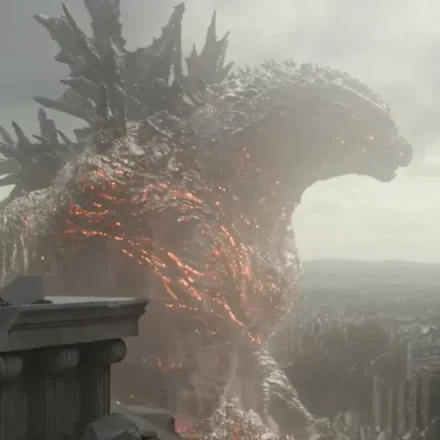
Furthermore, the design of the new kaiju, Ghidorah, represents a fusion of traditional lore and modern biological horror. Eschewing a singular origin, the creature’s design incorporates elements from deer, hawks, tigers, and even human voices. This amalgamation, coupled with an assimilation-based power set reminiscent of John Carpenter’s The Thing, allows Ghidorah to serve as a constant, evolving threat that adapts to its environment.

Official Responses and Thematic Intent
Director Takashi Yamazaki has been vocal about the "ceremonial" nature of his filmmaking, viewing the creation of a Godzilla movie as a form of kagura—a dance to appease the gods and process societal worries. In Godzilla Minus Zero, the "imbalance" being addressed is the lingering trauma of war and the human tendency toward repetitive cycles of hatred.
The Role of Human Characters
Characters like Kanji Murakami (Min Tanaka) provide the film with a volatile, emotional spine. Murakami represents the destructive nature of unchanneled trauma, serving as a cautionary tale of what happens when a survivor allows their rage to dictate their future. Yamazaki posits that the film is a reflection of the era in which the original Godzilla was born—a time defined by the existential dread of nuclear warfare.
The Influence of Cinematic History
Yamazaki openly cites influences that transcend the kaiju genre, including:

- Alfonso Cuarón’s Children of Men: Used to justify the use of long, continuous takes. These sequences eliminate the "binary" of escaping or dying, forcing the audience to remain present in the horror of the scene.
- D.W. Griffith’s Intolerance: An inspiration for the film’s central thesis—that small acts of human kindness within a family unit can serve as a contagious, positive force in a world defined by systemic apathy.
Implications for the Future of the Franchise
The implications of Godzilla Minus Zero are significant. By successfully integrating R-rated content with high-concept sci-fi, the film pushes the boundaries of what a blockbuster can be. It challenges the notion that the genre must remain accessible to all ages to be successful, proving that audiences are ready for a more mature, meditative, and visceral exploration of these icons.
The film suggests that the "answer" to the world’s problems isn’t necessarily a more powerful weapon, but rather the fostering of human empathy. As the Shikishima family unit navigates the chaos, their attempt to maintain a sliver of normalcy becomes the film’s most powerful act of resistance.
A Legacy of Rebirth
Godzilla Minus Zero does more than just pit monsters against one another; it complicates the catharsis of the creature clash. By presenting restraint and peacekeeping as having their own "reverential power," Yamazaki has elevated the material into a modern tragedy.

As the film makes its debut, it stands as a culmination of over 30 years of storytelling. It honors the mythologies of the past while subverting them, ensuring that the King of the Monsters remains a relevant, terrifying, and deeply human mirror for our own fractured world. Whether or not this film will trigger a new wave of adult-oriented kaiju cinema remains to be seen, but for now, it marks a definitive, thunderous evolution in the history of the genre.
Release Information:
Godzilla Minus Zero is distributed by GKIDS and is scheduled for a wide theatrical release on Friday, November 6. The film’s reception at the New York Film Festival has already set a high bar for critical expectations, with many reviewers pointing to its sound design and thematic depth as the gold standard for the series moving forward.