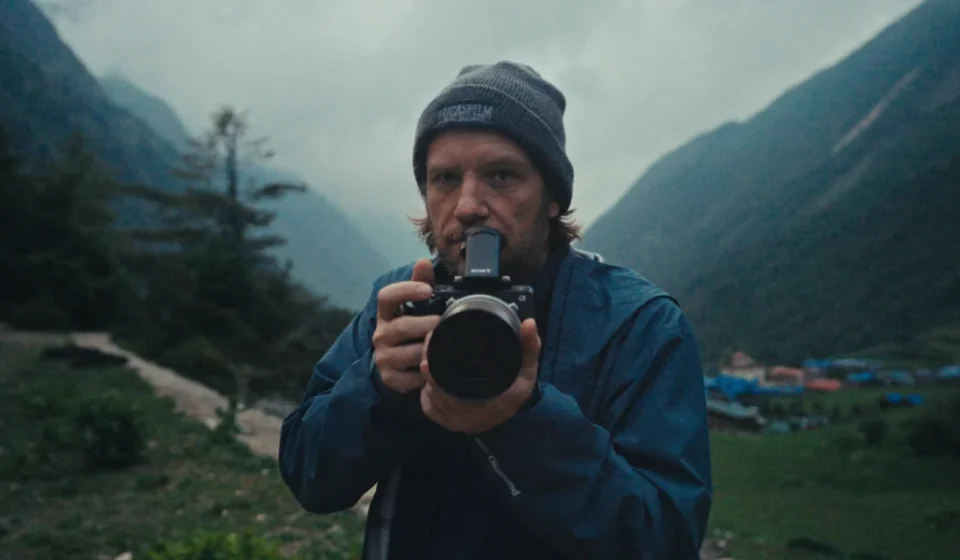
The New Frontier of Guerrilla Cinema: Sony Launches the FX5 Full-Frame Powerhouse

In an industry where the scale of production is often equated with the quality of the final image, Sony has signaled a radical shift in philosophy. With the launch of the new Cinema Line FX5, the manufacturer is challenging the necessity of massive, resource-heavy film sets. This compact, full-frame powerhouse combines 5K Open Gate acquisition with internal 16-bit X-OCN recording, effectively shrinking the footprint of high-end digital cinema without sacrificing an ounce of professional latitude.
For visionary director Gareth Edwards—the creative force behind The Creator, Rogue One: A Star Wars Story, and the upcoming Jurassic World: Rebirth—the FX5 is not merely a tool; it is a paradigm shift. To test the camera’s limits, Edwards took the system to the diverse environments of Cambodia, Thailand, and Nepal, proving that the era of “run-and-gun” filmmaking has entered a new, sophisticated dimension.
Main Facts: A Technical Marvel in a Compact Shell
At the heart of the FX5 lies a newly engineered, fully stacked Exmor RS CMOS sensor. Paired with the cutting-edge BIONZ XR2 processor and a dedicated AI unit, the camera offers a performance envelope that was, until recently, reserved for massive, production-grade cinema cameras.
Key specifications include:
- Resolution and Frame Rates: 5K at up to 60 fps, 4K at up to 120 fps, and Full HD at 240 fps.
- Dynamic Range: Rated at over 15 stops in S-Log3, providing a seamless roll-off from highlights to shadows.
- Triple Base ISO: ISO 800, 4000, and 12,800, allowing for unprecedented low-light versatility.
- Internal RAW: The first in the FX series to record 16-bit scene-linear X-OCN internally, offering three tiers of data-efficient compression (LT, C1, and C2).
- Open Gate Recording: Full-sensor 3:2 acquisition, providing maximum flexibility for framing, cropping, and anamorphic lens utilization.
A Chronology of Exploration: From ‘The Creator’ to the Himalayas
To understand the evolution of the FX5, one must look at the precedent set by The Creator (2022). During that production, Edwards and cinematographers Greig Fraser and Oren Soffer utilized the Sony FX3 to traverse 80 locations across Southeast Asia. By opting for a minimal footprint, they moved away from traditional, rigid production structures, allowing for an exploratory, organic process.
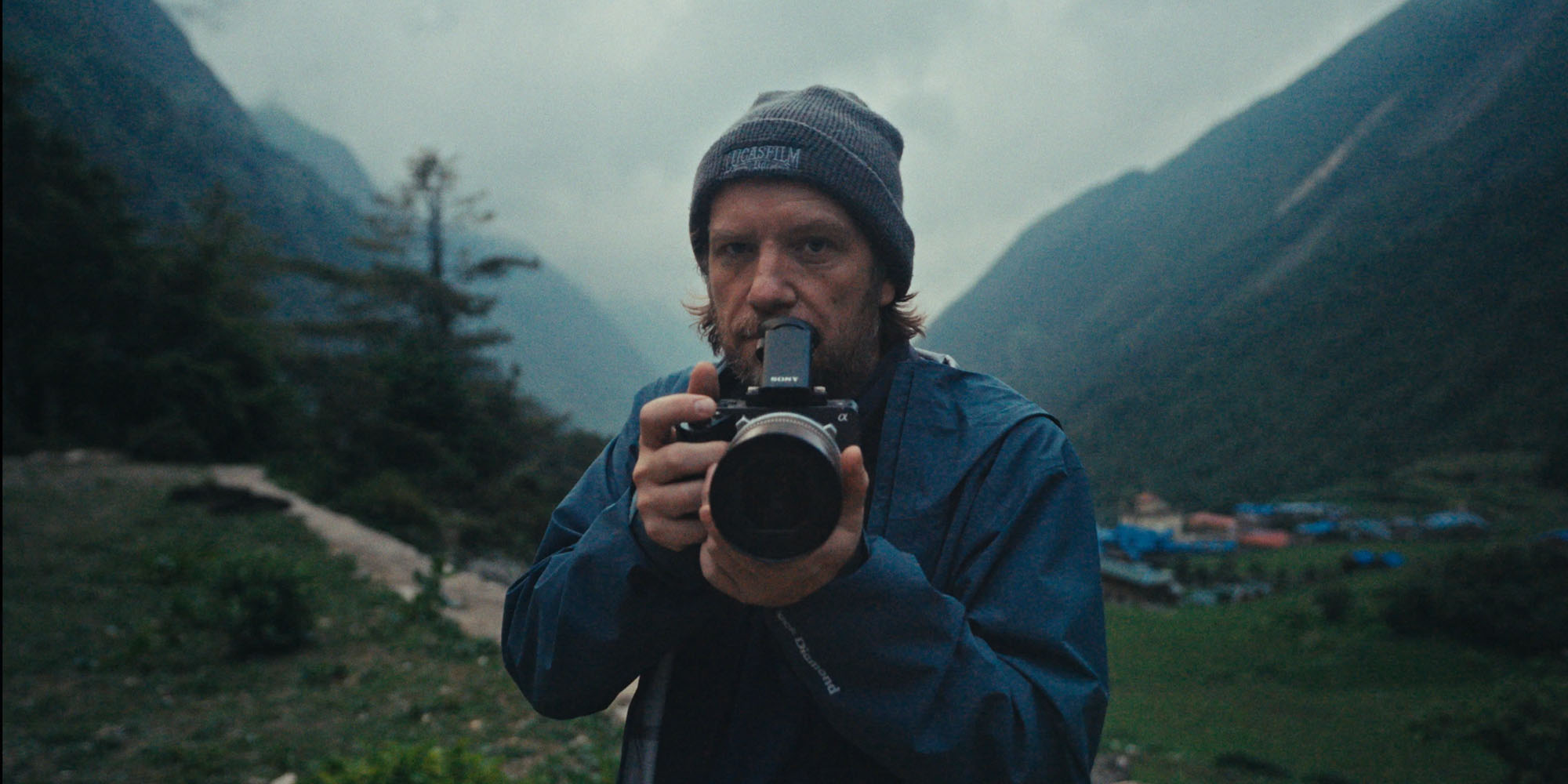
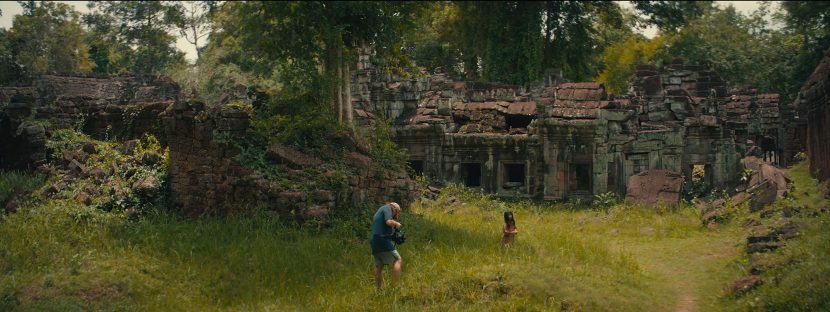
The FX5 is the natural evolution of that workflow. In a one-week testing window, Edwards and his lean crew moved between urban centers, ancient temples, and rugged Himalayan altitudes. The logistical simplicity was startling: the entire production kit was condensed into just three bags—one for the camera, one for a compact dolly/slider, and one for essential accessories.
Edwards, who received the camera only a week before the shoot, relied on his intimate knowledge of the locations he scouted for The Creator. "If I had a gun to my head and someone said, ‘You’ve got a day or so to shoot loads of great images, where would you go?’ I’d immediately say Kathmandu in Nepal, and then a close second, Cambodia," he noted. The week-long expedition saw the camera survive temperature fluctuations ranging from 35°C in tropical heat to -5°C in the thin air of the Himalayas, validating the camera’s robust, dust- and moisture-resistant construction.
The iPhone as the Director’s Nerve Center
Perhaps the most disruptive aspect of Edwards’ workflow is the abandonment of the traditional external monitor and video transmitter. Utilizing the Sony Monitor & Control 3.0 application, Edwards configured an iPhone as his primary viewfinder.
By leveraging the iPhone’s high-brightness display and utilizing MagSafe magnets, Edwards could shift his monitor from the gimbal to his wrist, mimicking the convenience of a wristwatch. Because the FX5 transmits images directly over Wi-Fi, the need for bulky, power-hungry video transmitters and dedicated field monitors was entirely eliminated.
"The iPhone is so bright and the battery is so good, it’s better than any five-inch field monitor you could get," Edwards remarked. This configuration meant he could power the camera directly from the gimbal’s handle, eliminating the need for external V-mount batteries or cumbersome rigs. The result was a system that remained lightweight enough to hold with one arm, allowing for fluid, spontaneous camera movement.
Supporting Data: Low Light and Sensor Versatility
The inclusion of three base ISOs (800, 4000, and 12,800) combined with Dual Gain Shooting technology allows the FX5 to thrive in unpredictable lighting. For Edwards, the ISO 4000 setting became his "daylight" standard. When paired with the camera’s internal variable ND filters, he could move from bright, high-contrast exteriors to dim interiors without pausing to swap filters or reconfigure the lens.
As the "magic hour" descended upon the landscape, shifting to ISO 12,800 proved transformative. "Essentially, if I could see it with my eye, I knew the camera could see it," Edwards stated. The high-sensitivity performance showed remarkably low noise, with Edwards noting that the grain structure at 12,800 was cleaner than anything he had experienced on previous cameras.
Furthermore, the integration of internal de-squeeze for 1.3x, 1.5x, 1.6x, 1.8x, and 2x anamorphic optics allowed Edwards to utilize vintage glass for its "painterly" character while still capturing the crisp, 5K detail required for modern exhibition.
Official Responses and Strategic Vision
Sony’s design strategy for the FX5 focused on "hiding in plain sight." By creating a system that looks more like a tourist’s camera than a professional cinema rig, the manufacturer is enabling filmmakers to gain access to environments that would typically be inaccessible due to permits, costs, or disruption.
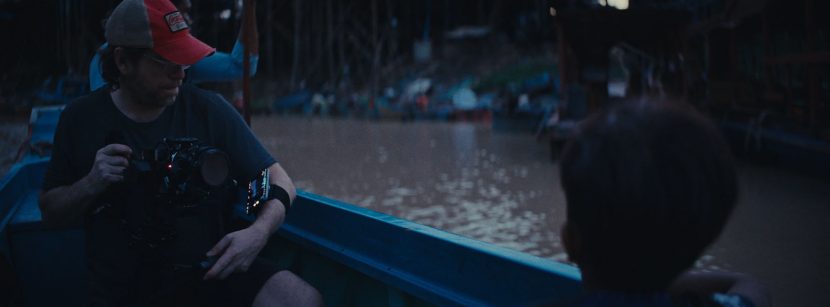
In a poignant example, Edwards recounted entering a Himalayan monastery during a Buddhist ceremony. Because he carried only a small, unobtrusive camera, he was able to document the moment without the subjects altering their behavior for a film crew. "You hide in plain sight," he explained. "You can be shooting for a movie that gets a theatrical release, but you just look like a tourist."
Implications for the Industry
The release of the FX5 signals a shift in the hierarchy of film production. It suggests that the future of high-end cinema may not lie in larger sensors or higher resolution, but in the freedom of movement and the ability to capture authentic human behavior.
- Production Workflow: The shift toward internal 16-bit X-OCN and the elimination of external recorders will significantly reduce the time and cost associated with DIT (Digital Imaging Technician) roles and data management.
- Post-Production: The ability to record 5K X-OCN means that cinematographers have unprecedented latitude in the color suite. Edwards noted that he performed zero "power windows" or keys in post; the footage was robust enough to handle the desired look directly from the camera’s internal LUTs.
- The Future: With Sony already promising a massive firmware update for August 2027—including high-frame-rate X-OCN and vertical-shooting interfaces—the FX5 is positioned to grow alongside the evolving needs of content creators.
In conclusion, the Sony FX5 is a technological "TARDIS"—smaller on the outside than the massive potential it contains within. As Gareth Edwards eloquently put it, the camera provides the "buzz" of knowing you are capturing images that will be seen by millions, all while retaining the agility of a solo traveler. It is a bold statement that the most powerful tool in cinema is no longer the biggest one, but the one that gets out of the way of the story.
The FX5 is set to arrive in early August 2026, with the body-only configuration priced at A$7,849, marking a new, accessible entry point for high-end cinematic storytelling.