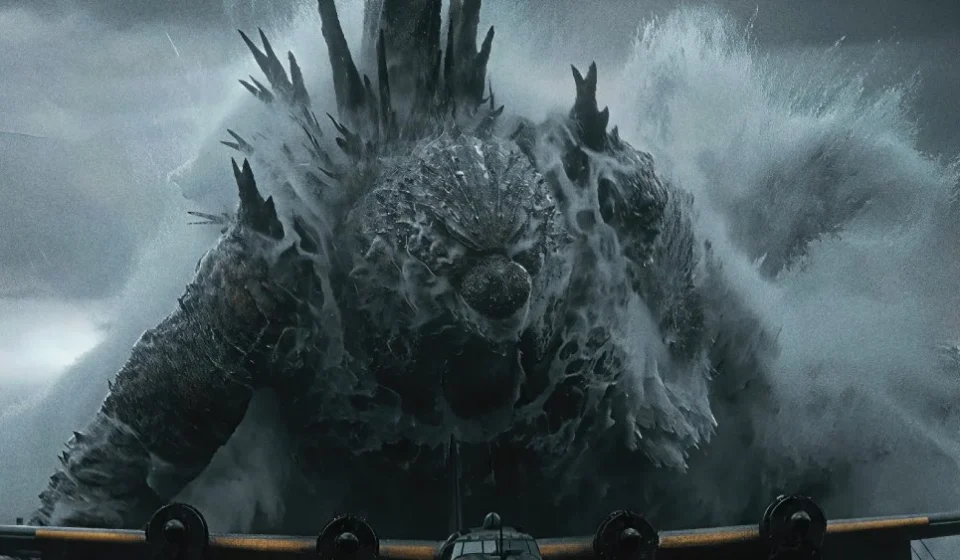

In a weekend defined by a clash between a Japanese titan and a beloved children’s literary icon, the results at the North American box office have provided a staggering narrative: size truly does matter. Godzilla Minus Zero, the latest entry in the venerable kaiju franchise, has stomped over the competition, leaving Warner Bros.’ The Cat in the Hat struggling in its wake. This weekend’s box office performance serves as a testament to the shifting appetites of modern audiences, who are increasingly drawn to high-octane, premium theatrical experiences over traditional family-fare comfort.
The King of the Monsters Ascends
The headline story of the weekend is undoubtedly the explosive debut of Godzilla Minus Zero. Opening to a commanding $30.5 million from 3,254 theaters, the film has cemented itself as a cultural phenomenon. While it fell slightly short of the initial Sunday estimates of $31.6 million, the film successfully secured its place in the record books as the largest opening for a live-action foreign-language film in North American history, soundly eclipsing the long-standing record held by the 2002 martial arts masterpiece Hero ($17.8 million).
The success of Godzilla Minus Zero is not merely a result of brand recognition; it is a masterclass in modern distribution. The film has benefited from a near-perfect storm of critical acclaim—boasting a 90% score on Rotten Tomatoes—and an “A” grade on CinemaScore, indicating deep audience satisfaction.
The Premium Format Factor
A significant driver of this success has been the aggressive utilization of Premium Large Formats (PLFs). As the first Japanese production ever filmed specifically for IMAX, Godzilla Minus Zero saw 40% of its domestic gross—a massive $12.7 million—originate from IMAX screens alone. When factoring in other premium formats like Dolby, a staggering 74% of the film’s total ticket sales came from high-end, immersive viewing experiences. This trend underscores a broader market shift: audiences are increasingly willing to pay a premium price point for the spectacle of a "must-see" theatrical event.
A Stumble for a Classic: The Cat in the Hat
In stark contrast to the roar of the kaiju, the arrival of The Cat in the Hat was met with a muted response. Debuting at $20 million across 4,003 locations, the animated adaptation of Dr. Seuss’s seminal work has struggled to find its footing. Despite earning an “A” grade on CinemaScore, which suggests that those who did show up enjoyed the film, the critical reception was tepid, landing at 45% on Rotten Tomatoes.
With a production budget of $92 million, the film’s domestic opening is a concerning sign for Warner Bros. The studio, which has recently navigated a complex merger with Paramount Skydance, has endured a grueling year marked by high-profile financial disappointments, including Digger, The Bride!, and Supergirl. For The Cat in the Hat to become profitable, it will require significant longevity in theaters or a robust performance in ancillary markets, such as digital sales, streaming, and international television licensing. Industry analysts, including FranchiseRe’s David A. Gross, suggest that the film’s best hope for recovery lies in these secondary revenue streams rather than the theatrical box office.
A Chronology of Success and Failure
To understand the current state of the industry, one must look at the recent trajectory of these properties.
- 2003: The original live-action The Cat in the Hat, starring Mike Myers, opened to $38 million. It ultimately stalled with $134 million, falling short of its $100 million-plus budget.
- 2018–2023: Recent Seuss adaptations like The Grinch and The Lorax set a high bar for family-friendly box office returns, capitalizing on the prestige of the Illumination brand.
- 2023: The release of Godzilla Minus One marked a turning point. With an opening of $11.4 million and a total global haul of $113 million, it proved that Japanese-language sci-fi could achieve mainstream success in the West.
- The Present: Godzilla Minus Zero takes the mantle, proving that the foundation laid by its predecessor was not a fluke but the beginning of a sustained, high-revenue era for the franchise.
Official Responses and Strategic Implications
The distribution teams behind these films have offered contrasting perspectives on the weekend’s outcomes. Chance Huskey, VP of distribution for Gkids—the firm responsible for bringing the Toho-produced Godzilla Minus Zero to U.S. shores—credited the success to a collaborative, targeted campaign. "This landmark release is the result of a thoughtful campaign by Gkids and Toho that emphasized the ‘must-see’ intensity of the theatrical experience," Huskey stated.
Meanwhile, the industry at large is looking toward the upcoming holiday season with cautious optimism. Total weekend revenue reached $114 million, representing an 86% increase over the same period last year. Year-to-date revenues have now climbed to $8.6 billion, 20% higher than the same point in 2025. Paul Dergarabedian of Rentrak noted that these figures are "another encouraging sign" as the industry heads into a high-stakes November, which will feature heavy hitters like the Hunger Games prequel Sunrise on the Reaping and the Disney-animated Hexed.
Beyond the Blockbusters: Niche Successes
While the battle for the top spot dominated the headlines, other films carved out significant niches.
Searchlight’s Wild Horse Nine, a dark comedy directed by Martin McDonagh and starring John Malkovich and Sam Rockwell, opened in 8th place with $6 million. Its performance is being watched closely as a bellwether for its awards-season prospects. Similarly, the Indian epic Ramayana: Rise of a Legend made history with a $12.1 million four-day opening, marking the widest North American release for an Indian production to date. While its $500 million combined production budget is astronomical, the film is expected to recoup its costs through its massive domestic appeal in India, where it has already pulled in $32 million.
Perhaps the most impressive story of fiscal efficiency is A24’s documentary You Can See Everything. Produced for a modest $7 million, the Elizabeth Holmes profile has amassed $79.8 million domestically, proving that a compelling, zeitgeist-capturing narrative remains one of the most reliable assets in cinema.
The Road Ahead
As the industry looks toward the end of the year, the "Godzilla effect" serves as a stark reminder of the current theatrical hierarchy. Audiences are increasingly prioritizing films that offer spectacle, critical validation, and a sense of communal event-viewing. For family films like The Cat in the Hat, the path to profitability is narrowing, forcing studios to rethink their release strategies and lean more heavily into the "long tail" of home media and digital distribution.
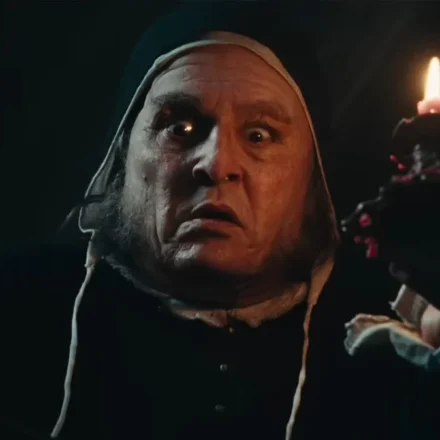
With major releases on the horizon—including Johnny Depp’s Ebenezer and the star-studded Focker in Law—exhibitors remain hopeful that the momentum generated this weekend will sustain the industry through the holidays. For now, however, the crown belongs to the king of the monsters, proving that in the modern cinematic landscape, the most powerful force is a well-marketed, high-quality event film that demands to be seen on the biggest screen possible.