
As the cinematic world turns its gaze toward the historic Lido for the Venice Film Festival, a parallel revolution is unfolding in the digital shadows. The third edition of the Reply AI Film Festival has officially unveiled its competitive selection, marking a significant milestone in the integration of generative artificial intelligence into the traditional language of film. With a record-shattering 3,000 submissions hailing from 76 countries, the festival has solidified its position as the premier global platform for exploring the intersection of human intuition and algorithmic precision.
The Vanguard of Digital Storytelling: The Main Facts
The Reply AI Film Festival is more than a mere showcase; it is a laboratory for the future of visual media. This year, the competition has distilled thousands of entries down to 10 final works, each serving as a testament to the transformative power of AI tools in the hands of creative storytellers.
The festival’s climax is scheduled for September 6 at the Match Point Arena, situated at the prestigious Venice Tennis Club. It is here that the industry will gather to witness the crowning of the best AI-driven short film, a moment that carries increasing weight as major studios and independent auteurs alike grapple with the role of AI in production, post-production, and beyond.
A Jury of Cinematic Titans
The prestige of the festival is anchored by a jury panel that bridges the gap between classic Hollywood craftsmanship and the cutting edge of digital innovation. Presiding over the jury is Italian maestro Gabriele Salvatores, whose career spans decades of critical acclaim, including his 1991 Academy Award for Best International Feature for Mediterraneo. His recent 2024 film, Naples to New York, further underscores his status as a director perpetually interested in the human condition.
Joining Salvatores is a formidable roster of industry veterans:
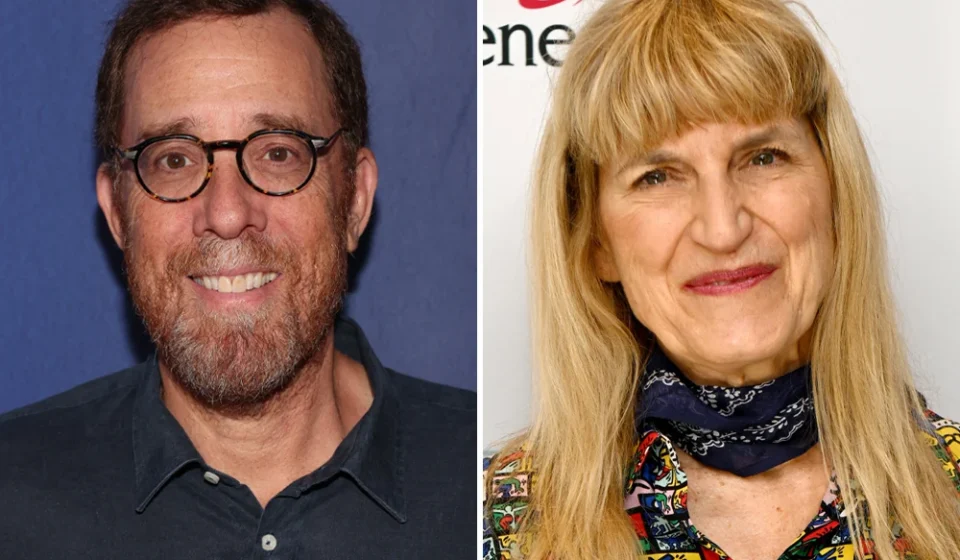
- Rob Minkoff: The visionary director of Disney’s The Lion King, whose understanding of animation and narrative structure is unparalleled.
- Catherine Hardwicke: The Twilight director, known for her ability to define visual aesthetics that capture the zeitgeist.
- Giacomo Mineo: A London-based VFX supervisor whose technical expertise, evidenced by his work on Christopher Nolan’s The Odyssey, provides the jury with a deep understanding of the technical architecture behind these AI films.
- Christina Lee Storm: A veteran of Netflix and DreamWorks who now serves as the head of the narrative studio at Secret Level, an AI-native entertainment entity. Her presence signifies the industry’s shift toward specialized AI-driven production houses.
- Nils Hartmann: A prolific Italian producer and former EVP at Sky Studios Italy, renowned for shepherding gritty, high-stakes television such as Gomorrah.
The Evolution of the Competition: A Chronology of Growth
The trajectory of the Reply AI Film Festival reflects the rapid acceleration of AI technology itself. In its inaugural year, the festival acted as an experimental fringe event. By its second year, it began attracting serious professional interest as AI tools like Midjourney, Runway, and Sora began to stabilize.
Now, in its third year, the festival has shifted from "proof-of-concept" projects to fully realized narratives. The journey from 3,000 submissions—a massive influx compared to previous years—highlights a democratization of high-end filmmaking. Where once a visual effects budget in the millions was required to craft a dystopian future or a surrealist dreamscape, these 10 finalists have proven that the barrier to entry has been drastically lowered, provided the creator possesses the requisite vision to guide the machine.
Categories of Excellence: Beyond the Screen
The festival has introduced a sophisticated award structure that acknowledges both artistic merit and ethical responsibility. The "AI for Good Award," held in collaboration with the International Telecommunication Union (ITU), stands as a centerpiece. This accolade recognizes the film that most effectively aligns with the United Nations Sustainable Development Goals (SDGs), signaling that the festival intends to hold AI to a standard of societal contribution.
Simultaneously, the "Reply AI Studios Grand Prix" focuses on the technical and creative zenith of the medium. This prize is reserved for the project that demonstrates the highest level of innovation—effectively rewarding those who push the boundaries of what these algorithms can generate.
Selected Works: A Glimpse into New Realities
The 10 selected shorts are characterized by their exploration of what organizers describe as "a new phase of imagination." These films are not just using AI to replace traditional techniques; they are using it to birth new languages of visual expression.
- "A Face Only a Mother Could Love" (Robert Gaudett): A poignant study of a Parisian dancer, the film utilizes AI to blur the lines between observation and intimacy. It chronicles the life of a recluse whose world is forever changed by the persistent presence of a mysterious woman in a park.
- "Kev" (Mike Bennion): This intimate British production explores the sensory world of the visually impaired. It is an exercise in empathy, using AI-generated textures and soundscapes to recreate the subjective experience of blindness.
- "Website" (Jiaze Li): A high-concept sci-fi piece from China, this short posits a world where reality is shaped by the act of observation. It is a meta-commentary on the very tools used to create it: the AI observer influencing the reality of the screen.
- "Centenerian Kindergarten" (2xLabs): Perhaps the most visually ambitious of the group, this film paints a harrowing picture of 2090. In a world defined by birth rate collapse, four centenarians revolt against a facility that uses AI to enforce a state of artificial, sterile happiness. It is a searing critique of the very technology that made the film possible.
The Implications: Where AI Meets the Soul
The existence of this festival at the Venice Film Festival—the world’s oldest film festival—carries profound implications for the future of global cinema. For years, the industry has viewed AI with a mixture of existential dread and guarded curiosity. The Reply AI Film Festival offers a third path: integration.
The Human-AI Symbiosis
The core message emerging from this year’s selection is that the "human" element is not disappearing; it is changing. The director’s role is evolving from a traditional craftsman to an "AI curator." The 10 finalists demonstrate that while an algorithm can generate a frame, only a human can decide which frame captures the nuance of a dancer’s loneliness or the cold efficiency of a dystopian kindergarten.
Ethical Considerations
The inclusion of the "AI for Good Award" suggests that the festival is acutely aware of the ethical minefield surrounding generative media. By incentivizing films that support UN sustainability goals, the organizers are attempting to steer the conversation toward AI as a force for global literacy, environmental awareness, and social cohesion, rather than just a tool for content saturation.
The Shift in Hollywood Production
The presence of executives like Christina Lee Storm on the jury is evidence of a tectonic shift. Traditional production houses are watching the work of these independent artists to see how AI can streamline pre-production, optimize visual effects, and reduce costs. The techniques being pioneered by these 10 filmmakers will likely find their way into the next generation of blockbuster cinema within the next 24 to 36 months.
Conclusion: A New Language of Vision
As the Venice Film Festival prepares to host the announcement of the winners on September 6, the air is thick with anticipation. The Reply AI Film Festival has successfully moved the needle from "what can AI do?" to "what should we say with AI?"
The works selected for this year’s edition are not just technical demonstrations; they are stories of humanity—of blindness, of connection, of rebellion, and of the search for truth in a reality that is increasingly mediated by machines. Whether the winner is a dystopian warning or a tender portrait of human emotion, the real victory belongs to the evolution of the medium itself. We are witnessing the birth of a new visual vernacular, one that promises to redefine the boundaries of the possible for generations of filmmakers to come.