

Welcome to Trekspertise, our ongoing series analyzing the intricate technologies, historical narratives, and creative choices that define the sprawling Star Trek universe.
In the annals of science fiction, few antagonists have been as meticulously crafted for the singular purpose of destruction as the Jem’Hadar. Introduced during the second season of Star Trek: Deep Space Nine (DS9), this species redefined the stakes of the franchise. While the Klingons provided a code of honor and the Borg offered a terrifying collective existential threat, the Jem’Hadar presented a chillingly modern horror: the total weaponization of biology. They were not merely soldiers; they were a manufactured commodity, a disposable military asset designed to serve the expansionist ambitions of the Dominion.
The Genesis of a Slave Race: Main Facts and Origins
To understand the Jem’Hadar, one must first understand the political landscape of the Gamma Quadrant. Deep Space Nine distinguished itself from its predecessors by moving away from the "planet-of-the-week" exploration model, opting instead for a gritty, serialized look at a station caught between a post-occupation Bajoran society and the looming shadow of the Dominion.
The Dominion, led by the shape-shifting Founders, established a hierarchy of control. At the top sat the Founders, worshipped as deities. The Vorta served as the administrative class—diplomats, scientists, and middle-managers who enforced the will of the Founders. And at the bottom, the blunt instrument of the Dominion’s will, were the Jem’Hadar.
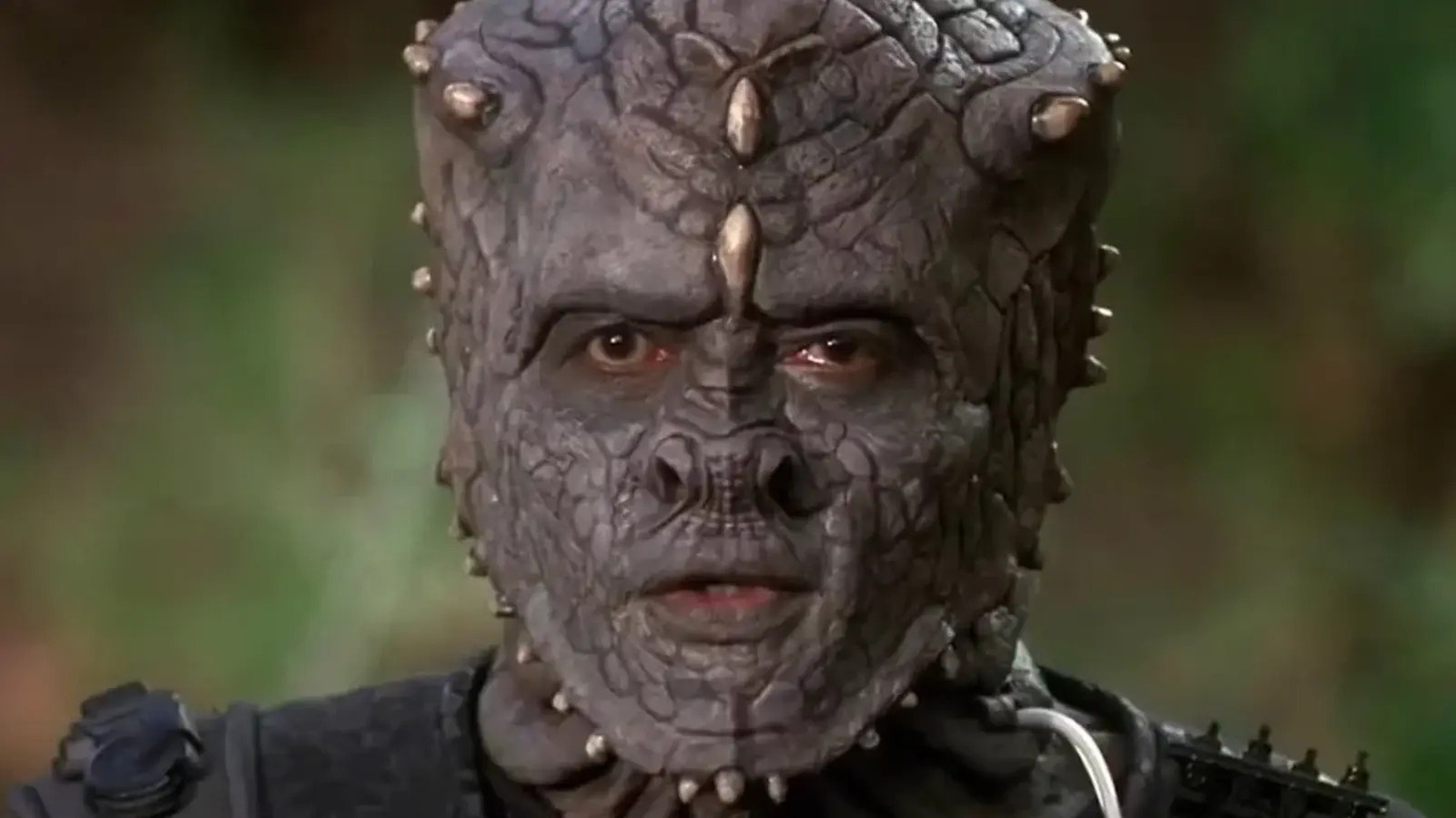
The Jem’Hadar are, fundamentally, a product of aggressive genetic engineering. They possess no childhood in the traditional sense. They are birthed in pressurized chambers, reaching full physical maturity and tactical competence within three days. From the moment they emerge, they are pre-programmed with language, combat doctrine, and a religious fervor for the Founders that borders on the pathological. They do not sleep, they do not require sustenance in their adult years, and they are incapable of reproduction. They are, in the purest sense, a "living weapon" meant to expire the moment they cease to be useful.
The Mechanics of Totalitarian Control: The Ketracel-White Addiction
The most insidious aspect of the Jem’Hadar’s existence is their biological dependence on ketracel-white. As revealed throughout Deep Space Nine, the Jem’Hadar were engineered to lack a specific isogenic enzyme necessary for survival. This enzyme is provided exclusively via ketracel-white, a substance that functions as both a stimulant and a tether.
This addiction ensures absolute obedience. Even if a Jem’Hadar soldier were to harbor doubts about their mission—a rarity given their programming—the physical agony of withdrawal creates a physiological "kill switch." The Vorta hold the supply, and therefore, they hold the power. As writer Robert Hewitt Wolfe noted in the Deep Space Nine Companion, the more one understands the biology of the Jem’Hadar, the more tragic and horrifying their existence becomes. They are a species without an inner life, existing solely in a state of perpetual service and chemical dependency.
Chronological Evolution: From Dominion Dogs to 32nd-Century Allies
The Dominion War Era (24th Century)
During the peak of the Dominion War, the Jem’Hadar were the scourge of the Alpha Quadrant. Their combat style—often involving cloaking devices on their attack ships and a "victory is life" ethos—pushed the Federation to its breaking point. During this period, the Jem’Hadar were strictly hierarchical. A "First" (the highest-ranking officer in a unit) would command his soldiers, answering to the Vorta, who in turn answered to the Founders. Any sign of deviation from this chain of command was met with summary execution.
The Post-War Transition
Following the collapse of the Dominion, the status of the surviving Jem’Hadar became one of the great open questions of the post-war era. Without the Founders to provide the white, many units were left to face the slow, agonizing death of withdrawal. While the series did not explicitly detail the Federation’s intervention, the values of Starfleet suggest a humanitarian effort to provide the enzyme or, eventually, a cure to break their genetic shackles.
The 32nd Century: A New Horizon
Fast-forward 850 years, and the status of the Jem’Hadar has shifted in ways that would have been unimaginable to Sisko or Odo. As seen in Star Trek: Starfleet Academy, the Jem’Hadar have transcended their origins as sterile slaves. We are introduced to characters like Lura Thok, a First Officer with a Klingon mother and a Jem’Hadar father.
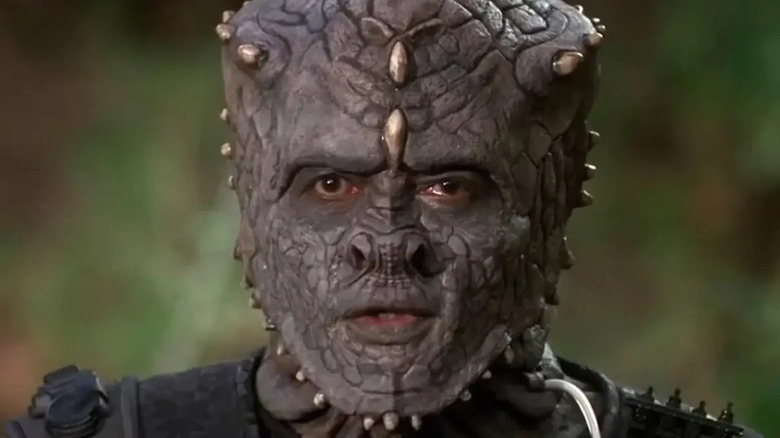
This reveal is monumental. It indicates that the species eventually overcame the genetic sterility imposed by their creators. By the 32nd century, the Jem’Hadar have integrated into the broader galactic society, even forming cultural and familial bonds with the Klingons. They have preserved their warrior ethos—the mantra "victory is life" persists—but they have evolved from a manufactured tool into a self-determining culture.
Supporting Data: The Anatomy of a Warrior
To appreciate the Jem’Hadar as a feat of speculative engineering, one must look at their physiological advantages:
- Rapid Maturation: The ability to reach adult combat proficiency in 72 hours allows the Dominion to replace losses at a rate impossible for standard biological species.
- No Sleep Requirement: By eliminating the need for rest, the Dominion gained a force that could maintain a 24/7 operational tempo, creating a massive tactical advantage in long-term sieges.
- Enhanced Sensory Perception: Jem’Hadar are noted for their exceptional focus and their ability to detect movement and environmental changes that standard humanoids might miss.
- Cloaking Capabilities: Their ships, which utilize advanced cloaking technology, were a primary reason the Dominion was able to dominate the early stages of the conflict.
Official Responses and Creative Implications
When Deep Space Nine creators first conceived the Jem’Hadar, they were looking for a way to break the "Star Trek mold." Unlike the Romulans or the Cardassians, who had complex political motivations and diplomatic nuance, the Jem’Hadar were designed to be the "hard" problem. They were the physical manifestation of a lack of free will.
Showrunner Ira Steven Behr and his team often used the Jem’Hadar to explore the ethics of war. Is it moral to fight an enemy that has no choice but to kill you? Can a soldier who is born to be a weapon ever truly be free? The transition from the mindless drones of the 24th century to the nuanced, individualistic figures like Lura Thok in the 32nd century suggests a narrative arc of redemption. It allows the franchise to move away from the "genetically engineered monster" trope and toward a more hopeful vision of a post-oppression future.
Implications for the Future of the Trek Universe
The evolution of the Jem’Hadar serves as a mirror for the Federation’s own growth. In the 24th century, the Federation was wary and fearful of the Jem’Hadar. By the 32nd century, they are collaborators and colleagues. This shift reflects a central tenet of the Star Trek ethos: that even the most damaged, programmed, and weaponized lives can find a path toward autonomy.

Furthermore, the introduction of mixed-species lineages—such as the "Line of Kah-Baj"—opens up fascinating storytelling possibilities. If the Jem’Hadar can now reproduce and have integrated into the Klingon Empire, what does this mean for the cultural identity of the Gamma Quadrant species? Do they still feel the "call" of the white, or have they truly moved past the chemical dependency that defined their ancestors?
Ultimately, the Jem’Hadar remain one of the most compelling legacies of Deep Space Nine. They remind us that history is not static, and that even the most rigid biological engineering can, given enough time and liberty, be rewritten by the force of life itself. As we continue to explore the 32nd century, the Jem’Hadar stand as a testament to the idea that, regardless of how one is created, it is the choices made after the "birth" that truly define a species.