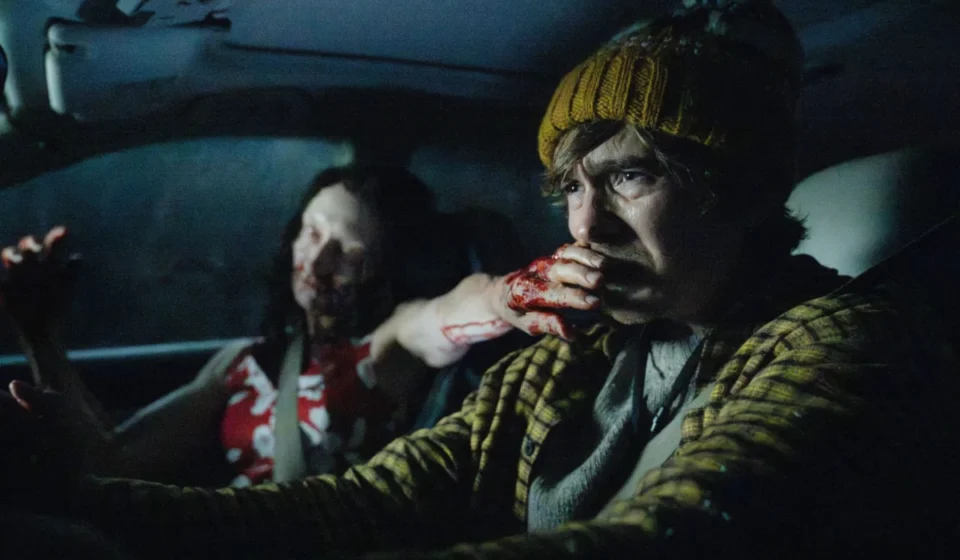
The Methodical Descent: Zach Cregger’s ‘Resident Evil’ and the Art of Humanizing Horror

For filmmaker Zach Cregger, the transition from the claustrophobic, viral success of Barbarian to the expansive, high-stakes landscape of a global intellectual property like Resident Evil has been nothing short of a "buzzer-beater." With his latest directorial effort hitting theaters on September 18, Cregger finds himself at a personal and professional crossroads, mirroring the very themes of existential uncertainty that define his latest protagonist.
After the critical and commercial success of last year’s Oscar-winning Weapons—a film that masterfully turned the disappearance of 17 children into a harrowing exploration of trauma—Cregger has pivoted to the iconic Capcom survival-horror universe. Yet, even as he helms a massive franchise, his focus remains stubbornly, intimately human.
A Protagonist Out of His Depth: Introducing Bryan
At the heart of Cregger’s Resident Evil is Bryan, played by Austin Abrams. Unlike the hardened tactical soldiers or super-powered protagonists often found in the long-running video game series, Bryan is a slacker medical courier. He is not a commando; he is a regular person thrust into an environment that is not merely hostile, but actively designed to make his survival an arduous, logic-defying puzzle.

"I’m more interested in watching an everyman than a commando," Cregger explains. "This whole world is kind of pitted against this guy. It’s not just that it’s infested with zombies and mutants; the environment itself is trying to make his progress arduous. He thinks he’s in a horror movie of his own because he’s faced with this really scary situation that he’s not prepared for. Then, he gets interrupted by an actual horror movie."
The film opens with an emotional, high-stakes phone call between Bryan and his girlfriend—a sequence that serves as the narrative anchor for the chaos that follows. While Sony has kept the specifics of this relationship and the nature of their argument under tight wraps, Cregger emphasizes that the scene is essential to understanding why the audience should care about Bryan. Before the Raccoon City nightmare begins, Bryan had a life he valued, and the sudden, violent disruption of that life serves as the film’s core emotional engine.
Chronology of a Creative Sprint
The journey to the screen has been as frantic as the film’s pacing. Cregger admits that the production timeline was incredibly tight, with the final cut of the film being locked less than a week before the press junkets began.

"I’m exhausted, I’ll be honest with you," Cregger said during a recent interview. "I finished the movie less than a week ago. It was a real buzzer-beater, so I came right out of just the frantic, mad dash to get this thing polished up and out the door in time for the deadline."
The film’s production structure, particularly its opening, reflects this intensity. The first thirty minutes play out as one continuous, unbroken sequence. The camera begins by tightly tracking Bryan over his shoulder, trapping the viewer in his limited perspective, before slowly expanding into the wider, more propulsive style that defined the most kinetic sequences of Weapons.
For fans of the game series, Cregger promises a departure from the "pray-and-spray" action tropes of previous adaptations. Instead, he leans into the core mechanics of the original games: resource management, slow-burning dread, and the sheer, agonizing difficulty of navigating a hostile space.

Supporting Data: The Cregger-Abrams Synergy
The collaboration between Cregger and 30-year-old actor Austin Abrams has become the creative backbone of both Weapons and now Resident Evil. In Weapons, Abrams played James, a thief and drug addict whose morally gray actions—including attempting to sell information about missing children—somehow resulted in a character the audience couldn’t help but root for.
"And yet everybody adored him and wanted to just put him in their pocket and take him home," Cregger said of the character. "I was like, ‘OK, there’s some magical quality about this guy that you can’t help but just root for him.’"
This chemistry led to a "joyful rhythm" on set, where director and actor would watch playback, "giggle like maniacs," and refine their approach to the material. When Resident Evil moved from concept to reality, casting Abrams was, according to Cregger, "not even a debate."

Abrams’ performance in Resident Evil swaps the gritty, desperate criminality of Weapons for a kind of "kinder shade" of desperation. He plays a man forced to navigate the mechanics of survival—using machine guns, managing inventory, finding keys—with the clumsy, panicked mistakes that a real person would make under extreme adrenaline.
Official Responses and Industry Context
Sony Pictures is banking heavily on Cregger’s unique voice to revitalize the Resident Evil brand, moving away from the established heroes of the franchise to focus on the "everyman" experience. This shift represents a significant gamble for the studio, but one that aligns with current trends in horror, where grounded, character-driven narratives are increasingly favored over CGI-heavy spectacle.
For his part, Cregger is philosophical about the outcome. "All I can do is just hope that people connect with it the way that I do," he stated. "And if they do, wonderful. And if they don’t, hopefully I’ll be able to make another movie and try again. I have to recognize what is in my control and what’s not in my control and make peace with that."

His reflection on his own life—now in his forties, childless, and at a "crucial fork in the road"—informs the central question of the film: Does one embrace a terrifying but transformative change, or do they "dig in their heels" and attempt to freeze time in a comfortable, albeit impossible, stasis?
Implications: A New Era for Survival Horror
The implications of Cregger’s approach are significant for the horror genre. By treating Resident Evil as a "plotting, methodical journey into hell" rather than a standard blockbuster, Cregger is positioning the film as a bridge between the high-concept arthouse horror he cultivated in Barbarian and the massive scale of a legacy franchise.
Furthermore, the film arrives at a pivotal moment in Austin Abrams’ career. With Resident Evil in September and the upcoming release of Brian Duffield’s Whalefall—where he plays a diver swallowed by a sperm whale—the actor is becoming the face of a very specific, high-stress subgenre: the "trapped in a biohazard" thriller.

As the release date of September 18 approaches, the industry is watching to see if Cregger’s synthesis of grounded emotional development and intricate puzzle design will resonate with a global audience. For the filmmaker, the project has already succeeded in its primary goal: it forced him to look at his own life and choices through the lens of a character who has no choice but to move forward.
"The movie’s done and I can’t change it," Cregger concluded. "If I really sit and think about it, I’m sure I could work myself into some sort of an anxious state, but also: I love the movie."
With the final edit complete and the marketing machine in full swing, the burden of control has officially shifted from the filmmaker to the audience. Whether this adaptation becomes the definitive Resident Evil experience remains to be seen, but it is clear that Cregger has treated the material with the same level of care and visceral intensity that earned him his place as one of the most exciting auteurs in modern horror. As the countdown to September 18 begins, one thing is certain: the journey into Raccoon City will be unlike any that has come before it.