The Mythic Architect: Christopher Nolan’s ‘The Odyssey’ Reimagines the Ancient Epic for the Modern Age

Christopher Nolan has built a career upon the architecture of time, manipulating the linear progression of human experience to explore the mechanics of regret, ambition, and the inexorable pull of home. With his latest feature, The Odyssey—a raw, visceral, and thunderous adaptation of Homer’s foundational epic—the modern world’s most dominant auteur finally arrives at the source code. By tackling the pre-Christian myth from which his previous blockbusters seem to have been birthed, Nolan has crafted a film that feels both ancient and alarmingly contemporary.
At this stage in the director’s illustrious career, one might expect a retelling of a 2,800-year-old poem to feel redundant. Instead, Nolan delivers a work that burns with such urgent, tactile intensity that the audience can practically smell the cinders of Troy.
Main Facts: A Structural Marvel
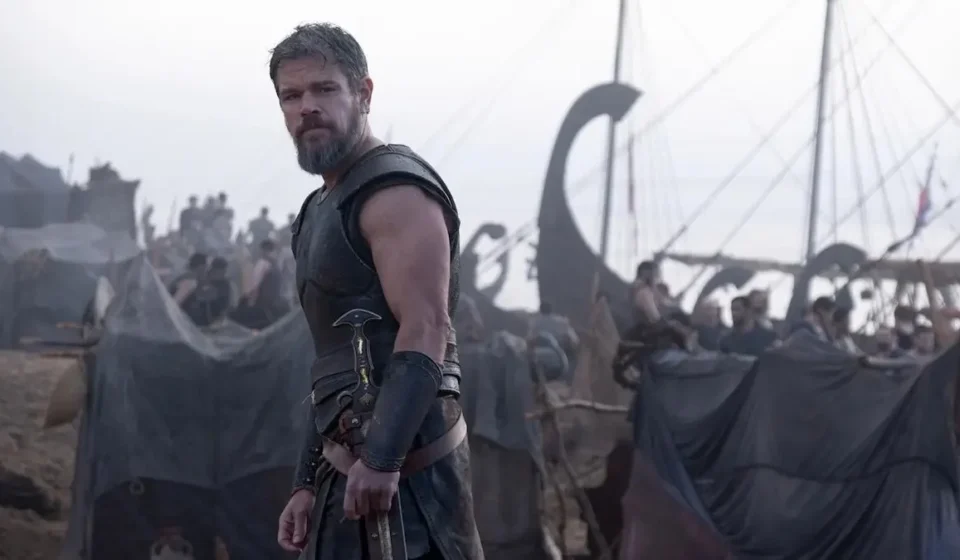
The Odyssey is a dense, nonlinear saga centered on a hyper-capable yet profoundly heartsick protagonist: the King of Ithaca, Odysseus. Played by Matt Damon in what is arguably the most defining performance of his career, Odysseus is a man whose professional obligations—the brutal, tactical demands of war—have alienated him from his humanity and his family.

For Nolan, the film serves as a thesis statement on his long-standing fascination with "the mechanics of the world." While the director is a noted rationalist, he manages to reconcile the supernatural elements of Homer’s text—the sixty-foot cyclops, the sentient whirlpools, and the descent into the underworld—with a grounded, hyper-real aesthetic. The film is a technical marvel, utilizing practical effects that prioritize texture and weight over digital gloss. A standout sequence, in which Samantha Morton’s character transforms a man into a pig, serves as a masterclass in tactile, grotesque cinema.
The Chronology of a Hero’s Return
The film begins in medias res, true to the Homeric tradition, but with a pacing that reflects the frantic energy of an IMAX production. The opening 25 minutes are a blitz of information. Editor Jennifer Lame cuts through the early chapters of the sprawling epic with a ferocity that suggests the physical constraints of the IMAX film platter itself.
The narrative shifts between two primary timelines:

- The Present (Ithaca): Penelope (Anne Hathaway) holds the throne in a state of weary, embittered resilience. She is surrounded by a horde of boorish suitors, led by a magnificently disdainful Robert Pattinson as Antinous. Their patience is thin, and the threat of civil collapse is imminent as they wait for a king who many believe is dead.
- The Past (The Voyage): We follow Odysseus’s retreat into the intoxicating, brain-fogging embrace of the nymph Calypso (Charlize Theron). Through flashbacks, the audience witnesses the tactical brilliance and moral compromise that defined his tenure in the Trojan War—the very events that haunt his psyche and delay his return home.
Supporting Data and Creative Choices
The film’s dialogue is strikingly unadorned. By utilizing a cast of primarily British actors speaking in American accents, Nolan strips away the "liberal arts" prestige that has crusted over the story for centuries. The goal is clear: to render the myth as a blunt-force, visceral experience.
- Cinematography: Hoyte van Hoytema’s lens captures the grit of Iceland and the Mediterranean with a foreboding, earthy quality that emphasizes the isolation of the sea.
- The Score: Ludwig Göransson’s musical composition is a triumph. By oscillating between the delicate, plucked strings of an ancient lyre and the thunderous, industrial resonance of heavy gongs, the music acts as a bridge between the mythic past and the cold, structural present of the film.
- The Cast: Matt Damon’s performance as Odysseus is the anchor. He portrays the character as a complex, oscillating figure—arrogant, sensitive, guilt-stricken, and ultimately, deeply human. His chemistry with the supporting ensemble, including Tom Holland’s Telemachus and John Leguizamo’s Eumaeus, provides the film with its emotional heartbeat.
Official and Critical Perspectives
While classical scholars might be startled by the sublimation of gods like Zeus and Poseidon into social mores or natural weather phenomena, the film has been met with critical acclaim for its narrative audacity.
Nolan’s decision to move away from the "supernatural" as a primary driver of the plot forces the viewer to confront the theme of xenia—the ancient Greek law of hospitality. The film posits that the world burns not because the gods are angry, but because men betray one another. By framing the Trojan War as a violation of this golden rule, Nolan bridges the gap between ancient tragedy and his own cinematic explorations of human frailty.

Implications: The Legacy of a Master
The implications of The Odyssey for Nolan’s filmography are profound. It acts as a companion piece to Oppenheimer; whereas the latter film showed us the birth of the destroyer of worlds, The Odyssey shows us the man who, having already destroyed his world, is trying to find the pieces of his soul in the wreckage.
Nolan’s work suggests that we are trapped in a "temporal pincer movement" of our own making. Just as his characters in Tenet or Interstellar struggle against the inevitability of the future, Odysseus struggles against the inevitability of his own history. The film suggests that the power to change one’s fate is less important than the clarity required to understand it.
As the story concludes, we are left with the chilling realization that civilization is a cycle of entropy. We forget our past, and we repeat our mistakes. We do not fear the fire until we have seen it ourselves. The Odyssey serves as a mirror held up to the audience: we are the suitors, we are the soldiers, and we are the wanderers.

In the final assessment, Nolan has not merely adapted a poem; he has synthesized a philosophy. He has proven that even in an age of digital noise, there is still room for the mythic, the heavy, and the profound. The film, which hits theaters on July 17, is a towering achievement that will undoubtedly be discussed for as long as we continue to tell stories about the long, difficult road back to where we began.
Grade: A-
Universal Pictures will release ‘The Odyssey’ in theaters on Friday, July 17.