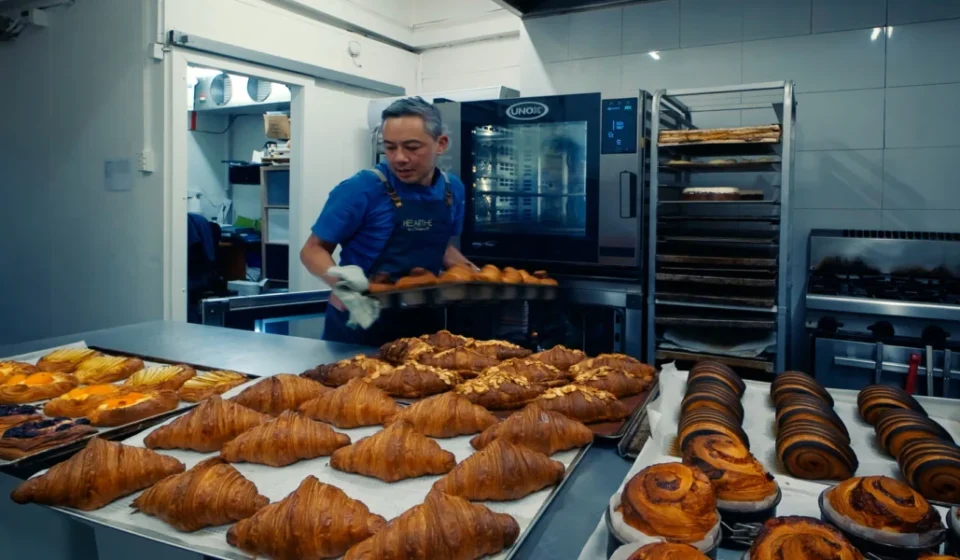
Bridging the Immersive Divide: The First Full Conversion of Apple Immersive Video for Conventional Cinema

In the rapidly evolving landscape of digital cinematography, the challenge of "format agility" has long plagued content creators. Filmmakers often find themselves forced to choose between cutting-edge, platform-specific immersive experiences and traditional, wide-reach theatrical or streaming releases. Until now, the burgeoning world of Apple Immersive Video (AIV)—designed specifically for the spatial constraints and head-tracking capabilities of the Apple Vision Pro—remained an island, largely inaccessible to audiences without a headset.
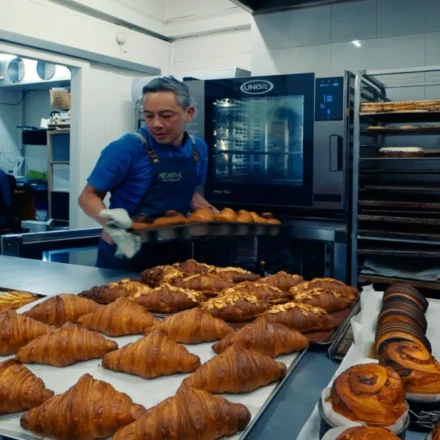
Main Course Films (MCF) has shattered this barrier. More than a year after the debut of their documentary short, Thé Fine Dining Bakery, the production house has released what is being hailed as the world’s first full-length conversion of an AIV film into a conventional, non-immersive 4K Scope format (2.40:1 aspect ratio). By integrating high-fidelity 7.1 surround sound and carefully re-engineered visual framing, MCF has provided a blueprint for how immersive content can survive and thrive in a 2D world.

The Core Challenge: From Spatial Freedom to Controlled Framing
The primary hurdle in converting immersive video is fundamental: AIV gives the viewer agency. In an immersive environment, the director guides the eye, but the viewer dictates the pan and tilt. In a conventional format, the filmmaker must reclaim that control.
"In Apple Immersive, the pan and tilt are controlled by the viewer in real-time," explains Ben Allan, ACS CSI, co-founder of MCF and the project’s cinematographer, colorist, and sound mixer. "The images are composed to give them the freedom to look where they want while subtly guiding them to notice the important things. Converting to a traditional format involves translating that fluid, 180-degree guidance into formal, decisive framing."

This process is not merely technical; it is deeply conceptual. Clara Chong, the film’s writer, director, and editor, notes that the biological nature of AIV consumption—where spatial depth and peripheral vision play a role in narrative pacing—meant that the team had to rethink how a story breathes when confined to a screen.
A Chronology of the Conversion
The path to this release was a year-long iterative process. The original immersive documentary was completed in mid-2025, shot using the URSA Cine Immersive camera. While the original version continues to reach audiences via the Fovii and Theatre streaming platforms for the Apple Vision Pro, the demand for a wider, non-headset release necessitated a sophisticated, proprietary workflow.

Phase 1: The ProRes Foundation (Late 2025 – Early 2026)
The team initially rendered the film directly from BRAW camera originals. Recognizing the need for a more stable, metadata-rich pipeline, they moved to a workflow involving stereoscopic 3D ProRes pre-renders. This allowed them to retain essential camera metadata, such as the Inter-Lens Pupil Distance (ILPD) and motion data, which are critical for maintaining visual integrity during the conversion.
Phase 2: Technical Re-engineering (Mid-2026)
Using DaVinci Resolve Studio, the team created a new 4K UHD project at 30 fps. They specifically avoided 60 fps to maintain a "filmic" quality, opting for a 3:1 frame rate conversion from the original 90 fps source to ensure a cleaner, more natural cadence.

Phase 3: The "Un-Distort" Strategy (Late 2026)
The team employed two distinct methods in the Fusion VFX page to translate the fisheye lens space of the URSA Cine Immersive into a flat, 2.40:1 frame. One method utilized the "Immersive Patcher" for technical precision; the other combined transform and lens distortion nodes to introduce "organic imperfections." These minor optical artifacts were added intentionally to emulate the feel of traditional glass, preventing the final output from appearing overly digital or sterile.
Supporting Data and Technical Workflow
The technical success of the project hinged on the team’s ability to manage massive data sets without losing color fidelity. By utilizing the DaVinci Wide Gamut (DWG) Intermediate color space, MCF was able to maintain the high-dynamic-range requirements of the original 1000-nit PQ master while efficiently mapping the project down to a Rec.709 output for broad compatibility.

Audio: The Fairlight Breakthrough
Perhaps the most complex hurdle was the sound. Apple Spatial Audio (ASAF) is an object-based format that bears little resemblance to channel-based surround sound. Simply routing an ASAF bus to a 7.1 output would result in a muddy, unusable mix because the spatial processing (reverb, EQ, and loudness) is baked into the ASAF object distance calculations.
To solve this, Ben Allan utilized a "patch-bay" methodology inspired by his years in analog television. Using the Loopback application by Rogue Amoeba, the team created virtual outputs for the ASAF Master Bus, essentially "re-recording" the mix in real-time. By isolating stems for dialogue, foley, music, and ambient effects—and exporting room tones as 7.1 Ambisonics—the team created a 7.1 surround mix that required minimal post-processing, successfully preserving the spatial integrity of the original immersive experience.

Official Perspectives: The Creative Philosophy
Clara Chong emphasizes that the team resisted the urge to "re-shoot" the film in their minds. "We decided not to attempt to make this the film that we would have shot on a traditional camera," she explains. "It is the AIV film, carefully reformatted for normal displays."
This philosophy extended to the editing suite. While many filmmakers might choose to cut the film differently for a 2D release, MCF imposed a self-limiting rule: they would not change the timing or introduce new angles that didn’t exist in the source material. Instead, they focused on pacing. Because immersive scenes can feel "slow" on a flat screen, the team split long immersive shots into multiple, tighter cuts—alternating between wide shots and close-ups—using only the data available within the original 180-degree frame.

"Techniques like looking room, head room, and the rule of thirds all play their normal roles," Chong added, noting that once they embraced the 2.40:1 Scope aspect ratio, the compositions finally "clicked" into place.
The Implications for the Industry
The release of this converted short marks a pivotal moment for producers and distributors. For over a year, the industry has questioned the viability of immersive cinema, fearing that high-budget productions would be trapped within the walls of a VR headset.

By demonstrating that a high-quality, 2D, 7.1-surround-sound version can be derived from an AIV project without sacrificing artistic intent, Main Course Films has lowered the barrier to entry for the format. This "conversion-first" strategy provides a safety net for investors: an AIV project is no longer a niche, one-platform experiment, but a versatile asset that can be broadcast on television, shown in cinemas, and enjoyed in spatial headsets simultaneously.
This development is likely to accelerate the adoption of the URSA Cine Immersive camera and similar technologies. As the industry looks toward a future where "spatial" is a native capture format rather than an add-on, the ability to pivot between immersive and traditional exhibition will become a mandatory skill set for modern cinematographers.

For now, Thé Fine Dining Bakery stands as the proof of concept. It is not just a documentary about a bakery; it is a successful experiment in bridging the gap between the viewer who wears the screen and the viewer who watches it. As the team at MCF continues their collaboration with fxguide to explore these technical frontiers, the message to the industry is clear: the future of cinema is immersive, but it doesn’t have to be exclusive.