Beyond the Blade: Why Jane Schoenbrun’s ‘Teenage Sex and Death at Camp Miasma’ is a New Horror Landmark

For the dedicated horror devotee, the genre is rarely just about the jump scares or the body count. It is an origin story. Ask any horror fan about their genesis, and they will likely describe a forbidden ritual: sneaking a peek at a VHS tape in an older sibling’s collection, keeping the television volume at a whisper during a late-night cable broadcast, or stumbling upon a cult classic while mindlessly cycling through a digital guide.
Director Jane Schoenbrun, known for their haunting examinations of identity and digital-age alienation, understands this primal connection better than perhaps any other filmmaker working today. With their latest feature, Teenage Sex and Death at Camp Miasma, Schoenbrun delivers a sexy, satirical slasher that serves as the centerpiece of their loose "screen trilogy." Combining the ethereal, introspective dread of We’re All Going to the World’s Fair with the raw, confident stylistic evolution of I Saw the TV Glow, this film stands as the most joyful, personal, and provocative entry in their career to date.
The Premise: A Meta-Slasher for the Modern Age
The film centers on Kris, portrayed with brilliant, twitchy vulnerability by Hacks star Hannah Einbinder. Kris is a rising star in the independent film scene, having gained critical acclaim at Sundance for an experimental debut that reimagined the iconic Psycho shower scene entirely from the perspective of the shower curtain.
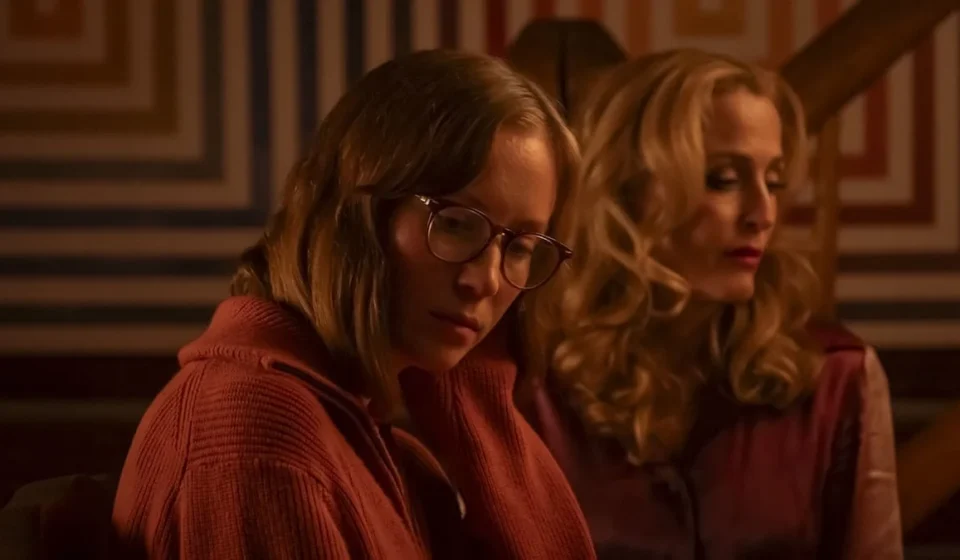
Capitalizing on her newfound industry capital, Kris is tapped to direct a "woke" reboot of the defunct, trashy 1980s slasher franchise Camp Miasma. However, Kris is not interested in a hollow IP cash-grab. She is obsessed with the franchise’s original "final girl," Billy Presley. Played with a transcendent, mercurial energy by Gillian Anderson—a performance that feels like a collision between Dolly Parton’s country charm and the tragic artifice of Norma Desmond—Billy has spent decades in self-imposed exile.
Kris travels to the frozen, isolated reaches of the Pacific Northwest, specifically to Camp Tivoli, the original shooting location, to coax the reclusive star out of retirement. What she finds is not a fading celebrity, but an artist. Billy has retreated from the world of acting to create abstract, Mark Rothko-esque paintings of the franchise’s gender-fluid, spear-wielding antagonist, "Little Death" (Jack Haven). When Kris attempts to steer the conversation toward the "work" of the reboot, Billy delivers the film’s most disarming line: "We’re already working."
A Chronology of Discovery and Desire
The narrative structure of Teenage Sex and Death at Camp Miasma unfolds like a fever dream, moving from the clinical, sterile world of modern Hollywood to the claustrophobic, tactile intimacy of Billy’s cabin.
Act I: The Pursuit of the Icon
The first act establishes Kris as a character defined by her work rather than her life. She is a 29-year-old in a polyamorous relationship who uses her intellectualization of film as a shield against her own anxieties regarding intimacy. Her decision to trek into the wilderness to find Billy is framed not just as a professional endeavor, but as a quest to reconcile her own identity with the horror films that shaped her.
Act II: The Cabin Confessional
The middle portion of the film shifts into a chamber piece. As the two women rewatch the original Camp Miasma film, the barrier between viewer and subject dissolves. Kris recognizes the same look in Billy’s eyes that she has felt in her own—a profound, lingering sense of otherness. Through the consumption of "gas station delicacies" and late-night discourse, the two engage in a process of mutual discovery. Schoenbrun uses this space to explore how horror functions as a mirror for queer desire. The film suggests that the "Little Death"—the killer—is a manifestation of the very desires Kris is terrified to acknowledge.
Act III: The Convergence of Fear and Ecstasy
The final act is where Schoenbrun’s mastery of tone shines. The film leans into the absurdity of the slasher genre while maintaining a high level of emotional stakes. A sequence involving a chaotic Zoom call that spirals into a psychological breakdown echoes the intensity of World’s Fair, while a bizarrely sensual scene involving a KFC dinner forces the audience to rethink the role of consumption—both literal and metaphorical. The climax, featuring a chase through the woods set to a haunting needle-drop, serves as a masterclass in tension and release.
![‘Teenage Sex and Death at Camp Miasma’ – A New Masterpiece from Jane Schoenbrun [Fantasia Review]](https://www.dreadcentral.com/wp-content/uploads/2026/06/Teenage-Sex-and-Death-at-Camp-Miasma.jpg)
Supporting Data: Why This Film Matters
The cultural significance of Teenage Sex and Death at Camp Miasma lies in its ability to dismantle the "final girl" trope while simultaneously celebrating it.
- The Performance of Hannah Einbinder: Einbinder’s portrayal of Kris is a revelation. She manages to balance the character’s intellectual arrogance with a deeply relatable, awkward yearning. Her performance grounds the film’s more surreal elements, making the audience feel every inch of her existential crisis.
- The Artistry of Gillian Anderson: Anderson’s turn as Billy Presley is arguably the most complex performance of her career. By playing a character who has been discarded by the industry yet has found liberation in the "monstrous" imagery of her past, she provides a bridge between the classic slasher era and contemporary queer horror.
- The Aesthetic of "Little Death": The antagonist, played by Jack Haven, is a departure from the masked killers of the 80s. As a gender-fluid entity, Little Death represents the fluidity of identity that the film explores. The decision to make the killer an object of artistic obsession rather than just a source of violence is a brilliant subversion.
Official Responses and Industry Context
Industry buzz surrounding the film has been electric since its festival debut. Critics have lauded Schoenbrun’s ability to weave dense, academic concepts regarding gender, transness, and the "gaze" into a narrative that remains consistently entertaining.
"I don’t think anyone would have expected the words ‘joy’ and ‘playful’ to be used in a Jane Schoenbrun review," one critic noted during the Fantasia Fest press junket. "But that is precisely what makes this their most dangerous and effective film. It’s not just critiquing the genre; it’s inviting us to enjoy it with a newfound clarity."
Schoenbrun themselves has stated in recent interviews that the film is a love letter to the "trash" that saves us. By embracing the low-brow aesthetics of the slasher genre—complete with practical effects and campy sensibilities—Schoenbrun argues that our deepest, most formative experiences with art often happen in the places the high-brow establishment deems unworthy of attention.
Implications: The New Wave of Queer Horror
The implications of Teenage Sex and Death at Camp Miasma are significant for the horror landscape. First, it cements the trend of the "meta-horror" film as a vehicle for personal trauma and identity exploration. Gone are the days when slashers were merely about survival; they are now about the evolution of the self.
Second, the film challenges the industry’s approach to reboots. By centering the story on the human cost of a franchise—the way a role can haunt an actor and the way an audience can obsess over a character—Schoenbrun offers a scathing yet affectionate critique of Hollywood’s IP-driven obsession.
Finally, the film serves as a gateway. Just as Kris was shaped by the original Camp Miasma, the audience is invited to look at their own "scary" obsessions with a sense of wonder. The film suggests that if we stop fearing the parts of ourselves that feel "monstrous" or "deviant," we might find that those are the exact parts that make us fully alive.
Conclusion
Teenage Sex and Death at Camp Miasma is a triumph of tone, performance, and thematic depth. It is, by turns, a hilarious satire of the entertainment industry, a poignant study of the actor-viewer relationship, and a visceral, terrifying slasher that doesn’t shy away from the blood.
Jane Schoenbrun has achieved something rare: a film that feels like a cult classic before the credits have even finished rolling. Whether it’s the meticulously curated soundtrack, the biting dialogue, or the iconic, haunting imagery of the Little Death, the film is destined to linger in the minds of viewers long after they leave the theater. For those who grew up in the dark, watching things they weren’t supposed to, this film is the homecoming you didn’t know you needed. One thing is certain: after this, the local dive bar won’t be complete without a Little Death pinball machine.