The Weight of What Might Have Been: Nanni Moretti’s "It Will Happen Tonight" and the Aesthetics of Nostalgia

Introduction: The Paradox of the "Old-Fashioned" in Modern Cinema
The term "old-fashioned" is a linguistic chameleon. In the right context, it evokes the comforting warmth of a handwritten letter, the artisanal perfection of a classic cocktail, or the nostalgic aroma of a grandmother’s rice pudding. It suggests a craftsmanship that transcends the ephemeral nature of modern trends. However, in the high-stakes arena of international cinema—specifically within the hallowed halls of the Venice Film Festival—the term can take on a more perilous hue.
When Alberto Iglesias’s lush, sweeping score first emanates from the speakers at the opening of Nanni Moretti’s latest competition entry, It Will Happen Tonight (L’Abbaglio), the audience is immediately transported into a world that feels disconnected from the gritty realism or high-concept experimentation typical of contemporary festival fare. As the camera sweeps across a sun-drenched coastline to capture a couple locked in a cinematic embrace, the film veers away from classicism and heads toward something more "fusty." Moretti, a titan of Italian cinema, has crafted a work that is unapologetically sentimental, navigating the treacherous waters between timeless romance and dated melodrama.
Core Narrative: A Multi-Generational Tale of What Might Have Been
Based on the short story collection Hungry Heart by the acclaimed Israeli novelist Eshkol Nevo, It Will Happen Tonight is quintessential Moretti. It explores the "fork in the road"—those singular, often quiet moments where a life-altering decision is made, for better or worse. The film centers on Matteo (played with effortless charm by Louis Garrel) and Greta (the luminous Jasmine Trinca).
The two meet casually, almost accidentally, at a time when both are already committed to other partners. They are the embodiment of "star-crossed" in a mundane, modern sense. Over the course of several decades, they remain tethered to one another by the invisible thread of memory, constantly wondering if the lives they are leading are merely placeholders for the life they should have shared.
Unlike Celine Song’s 2023 masterpiece Past Lives, which treated the concept of "In-Yun" (providence) with a quiet, intellectual restraint, Moretti’s film dives headlong into the kind of lightweight romance that feels increasingly rare—and perhaps increasingly out of place—in the current landscape of prestige cinema. While Past Lives refused to sentimentalize the "what if," It Will Happen Tonight leans into it with a heavy hand, utilizing every tool in the melodramatic toolkit to tug at the heartstrings of its audience.
A Chronological Odyssey: The Seven-Year Itch and the Passage of Time
The film’s structure is defined by its rhythmic leaps through time. Moretti employs a bold chronological strategy, jumping seven years, then another seven, and finally three, to chart the evolution of his protagonists.
The First Decade: Fractured Foundations
The story begins with Matteo in a relationship with Thea (Malin Åkerman), a Norwegian woman who is pregnant and deeply resistant to the idea of moving from Oslo to Rome. The tension is exacerbated by Matteo’s mother, Agnese (Angela Finocchiaro), a character that some critics have noted feels like a "paper-thin" trope of the intrusive Italian matriarch. Agnese bluntly informs Thea that she is unfit for motherhood.
The breaking point occurs shortly after their son, Gregorio, is born. Upon arriving in Rome, Thea watches from the airport exit as Matteo’s boisterous family completely ignores her presence. In a moment of quiet, devastating clarity, she turns back toward the gates, leaving her baby and her life with Matteo behind. Simultaneously, in Mumbai, Greta is faced with a public proposal from her boyfriend, Carlo (Edoardo Purgatori). Unable to commit, she calls her father (played by Nanni Moretti himself) to rescue her from the situation.
The Middle Years: San Sebastián and the Springsteen Connection
Seven years later, the paths of Matteo and Greta cross again in a moment of cinematic serendipity. While playing tennis with his brother Antonio (Andrea Lattanzi), Matteo sees Greta—radiant in a white dress—step onto the court. The music swells, the camera lingers in slow-motion, and the "love at first sight" trope is deployed with full force. However, the obstacle remains: Greta is married to Federico (Antonio De Matteo) and has a daughter, Anna (Elena-Marie Cicone).
This middle segment is marked by a bizarrely extended sequence in San Sebastián. Matteo travels there with his dying father, Olivier (Hippolyte Girardot), to attend a Bruce Springsteen concert. The film lingers on "The Boss’s" performances of "Hungry Heart" and "Because the Night," while Olivier engages in a subplot involving a hotel receptionist that many have criticized as being played for "poor laughs." The sequence concludes with Olivier’s death on the flight back to Rome, a moment foreshadowed by a non-diegetic piano score that leaves little to the imagination.
The Final Act: The Apartment of Memories
Another seven years pass before Matteo and Greta have a "meet-cute" in a café. Now, the roles are reversed: he is married to his father’s former doctor, Cristina (Elena Lietti), and she has three children. Despite the passage of nearly two decades, the obsession remains. They eventually embark on a passionate affair in Olivier’s old apartment—a space conveniently left vacant for years, serving as a dusty sanctuary for their rekindled flame. The film’s resolution requires yet another three-year jump, leading to a conclusion that many seasoned cinemagoers will likely see coming from the opening credits.
Artistic and Production Elements: Music, Casting, and Source Material
The production value of It Will Happen Tonight is undeniably high, reflecting Moretti’s status in the industry.
- The Score: Alberto Iglesias, known for his frequent collaborations with Pedro Almodóvar, provides a score that is lush and emotive. However, its constant presence has been a point of contention, with some suggesting it over-emphasizes emotions that the script should have carried more subtly.
- The Lead Performances: Louis Garrel and Jasmine Trinca are the film’s greatest assets. Garrel brings a melancholic, "eminently likeable" quality to Matteo, while Trinca manages to ground Greta even when the script veers into the fantastical. Their chemistry is the engine that keeps the film moving through its slower, more "fusty" passages.
- The Source Material: By adapting Eshkol Nevo, Moretti attempts to bridge the gap between Middle Eastern literary sensibilities and Italian cinematic traditions. While the core themes of Nevo’s work—longing, regret, and the complexity of the human heart—are present, they are filtered through Moretti’s specific, often self-indulgent lens.
Critical Reception and Thematic Controversies: Between Sentimentality and Insensitivity
While the film is expected to be a significant hit with domestic Italian audiences—who have long championed Moretti’s brand of humanistic storytelling—international critics have been more divided.
The "Passé" Problem
A recurring critique of the film is its reliance on tropes that feel outdated. The "Viagra-joking" elderly father and the overbearing mother-in-law are archetypes that feel more at home in a 1990s sitcom than a 2024 Palme d’Or or Golden Lion contender. In a world of cinema that is increasingly sensitive to nuance and subverting expectations, Moretti’s adherence to these "paper-thin" characterizations has been labeled as "passé."
The San Sebastián Controversy
The most significant point of contention involves a scene in San Sebastián. Greta, wearing aging prosthetics for a film role, is frantically searching for her daughter, Anna. When the child is found, she is seen whispering to a young Roma girl who is covered in flies. Critics have pointed out the inherent offensiveness of this imagery, suggesting that Moretti uses the "street child" as a prop to convey Anna’s troubled inner life without offering any context or humanity to the Roma character. This sequence, which is never explained or revisited, has been cited as a major lapse in directorial judgment.
Implications for Moretti and the Future of Festival Melodrama
It Will Happen Tonight serves as a fascinating case study in the evolution of a "Maestro." Nanni Moretti has spent decades as the conscience of the Italian left, known for his biting satire (The Caiman) and his deeply personal meditations on grief (The Son’s Room). This latest work suggests a retreat into a more comfortable, perhaps less challenging form of filmmaking.
For the Italian Market
Domestically, the film is poised for success. It offers a star-studded cast, beautiful Mediterranean locations, and a story about the enduring power of love. For an audience that has grown up with Moretti, this "old-fashioned" approach may be exactly what they desire—a cinematic "comfort food" that doesn’t demand the intellectual labor of more contemporary, abstract works.
For the International Festival Circuit
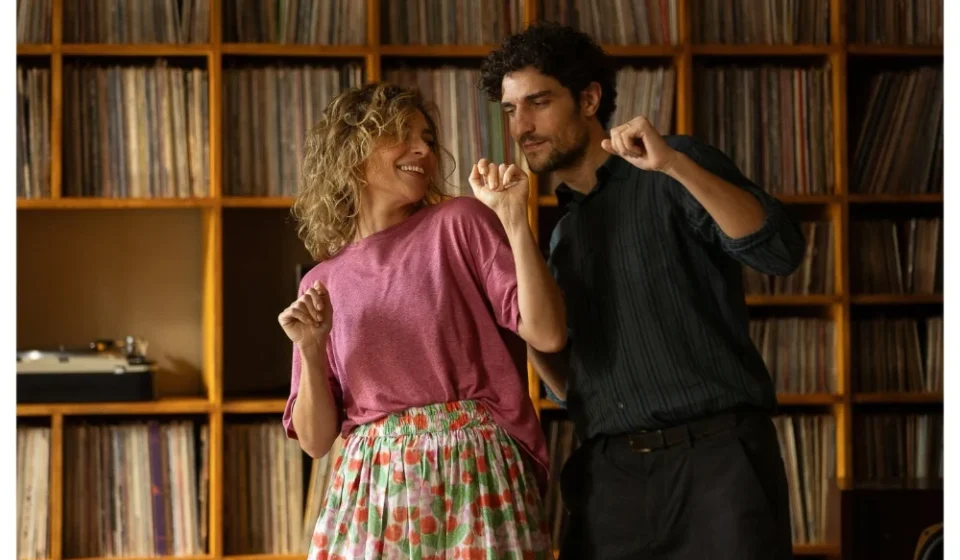
On the global stage, however, the film’s reception raises questions about the criteria for festival selection. Does a "legacy" director like Moretti receive a pass for work that might be dismissed if it came from a newcomer? The comparison to Past Lives is particularly telling; it suggests that the "missed connection" genre has moved on, favoring psychological depth over sweeping musical swells and cutesy fantasy dance numbers (such as the film’s sequence set to The Rolling Stones’ "She’s a Rainbow").
Final Reflection
Ultimately, It Will Happen Tonight is a film caught between eras. It is a work of undeniable technical skill and genuine heart, yet it is hampered by a refusal to evolve its visual and narrative language. Whether one finds it "nice" or "dowdy" depends entirely on one’s tolerance for cinematic sentimentality. As the credits roll on Matteo and Greta’s decades-long journey, one is left with the sense that while Moretti is still a master of the "old-fashioned," the world around him has started to look for something a bit more modern.