

In the annals of cinema, few directors have pursued the "impossible" with as much fervor as Christopher Nolan. From the bending streets of Inception to the haunting silence of space in Interstellar, Nolan has consistently eschewed the path of least resistance. However, his 2026 adaptation of Homer’s The Odyssey represents a tectonic shift in his career. With a budget of $250 million and an unprecedented commitment to IMAX 70mm film, Nolan has attempted to bridge the gap between ancient mythology and modern physical reality, creating a cinematic experience that feels less like a digital fantasy and more like a visceral, captured historical record.
The Genesis of a Myth: Main Facts and Production Philosophy
The core premise of Nolan’s The Odyssey is simple yet technically gargantuan: to translate the supernatural elements of Homer’s epic—monsters, gods, and impossible landscapes—into tangible, photorealistic assets. Starring Matt Damon as the weary, battle-hardened Odysseus, the film documents the hero’s ten-year trek from the scorched ruins of Troy to the shores of Ithaca.
Unlike the contemporary trend of relying on digital green-screen environments, Nolan demanded that the film be shot entirely with IMAX 70mm cameras. This decision is not merely aesthetic; it dictates the entire visual language of the production. By forcing the cast and crew to work within the constraints of real-world physics, Nolan and visual effects supervisor Andrew Jackson (working alongside the masters at DNEG) created an environment where the "supernatural" is grounded in natural phenomena.
The film’s central conceit is that the "gods" are not shimmering, ethereal beings, but manifestations of the terrifying, untamed forces of the ancient world. Storms, volcanic eruptions, and geological anomalies serve as the backdrop for Odysseus’s trauma, ensuring that the audience perceives the divine influence as something physically threatening rather than digitally aestheticized.
Chronology of a Production: From Greece to the Soundstage
The production of The Odyssey was as arduous as the hero’s journey itself. The project began in earnest in 2024, with location scouting focused on the Mediterranean.

The Greek Phase (Early 2025)
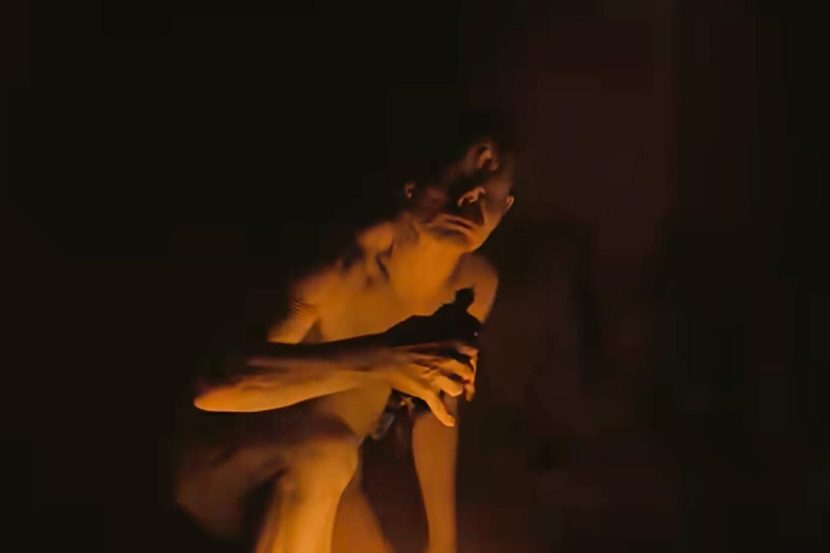
The crew traveled to Nestor’s Cave in Greece, a location steeped in local folklore. It was here that the team confronted the challenge of Polyphemus, the one-eyed Cyclops. Rather than relying on a motion-capture performer in a spandex suit, Nolan opted for a hybrid approach. The legendary theatrical performer Bill Irwin, known for his ability to embody non-human physicality, was outfitted in sophisticated, full-body practical prosthetics.
To achieve the sense of a sixty-foot giant, the camera team employed rigorous forced-perspective techniques. While Irwin provided the movement and the voice in real-time on set—giving Matt Damon and his fellow actors a genuine presence to react to—the visual effects team later layered in digital enhancements to ensure the scale remained consistent. This interplay between practical puppetry and post-production refinement allowed the cast to deliver performances grounded in genuine fear rather than staring at a tennis ball on a stick.
The Post-Production Integration (Late 2025 – Early 2026)
Following the location photography, the focus shifted to DNEG’s studios. Here, the "invisible effects" philosophy took hold. Instead of replacing the footage, the VFX team was tasked with extending it. By using plates of the Greek landscape and integrating them with the studio-shot puppets, the team maintained the grain, texture, and light-quality of the IMAX 70mm film.
Supporting Data: The Craft of Illusion
The technical success of The Odyssey rests on three distinct pillars:
- Practical Puppetry and Prosthetics: Bill Irwin’s portrayal of the Cyclops remains the centerpiece of the film’s creature work. By keeping the creature "physical," Nolan bypassed the "uncanny valley" that often plagues digital character animation.
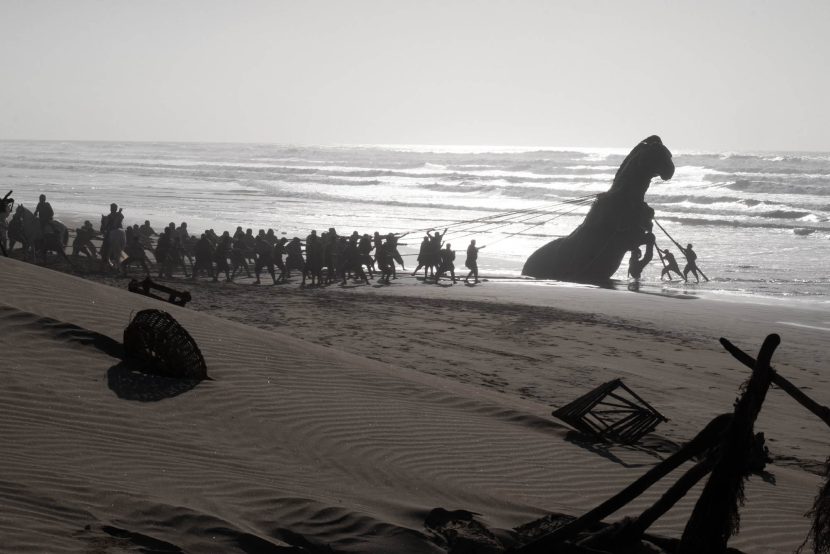
- Forced Perspective and Stunt Work: The Laestrygonian giants, described in the text as mountain-sized, were realized through a combination of seven-foot-tall stunt performers and meticulously scaled miniatures. By shooting these sequences in-camera, the lighting matches the natural environment, creating a level of cohesion that digital-only scenes often lack.
- IMAX 70mm Integration: The sheer resolution of IMAX film provides a depth of field that makes the smallest details—the sweat on Damon’s brow, the grit of the sand, the texture of the Cyclops’ skin—feel hyper-real.
Official Responses and the "Nolan Discourse"
The release of The Odyssey has reignited a long-standing tradition within the film community: the "Nolan Debate." Much like his previous films, The Odyssey has become a Rorschach test for critics and fans alike.
In the latest installment of the VFXShow podcast, industry veterans Matt Wallin, Jason Diamond, and Mike Seymour engaged in a spirited, and at times contentious, breakdown of the film’s technical merits. The consensus, if one can call it that, is that Nolan has achieved something technically revolutionary, even if the artistic choices remain polarizing.
"We don’t agree," noted Mike Seymour during the episode. "And we never will. That is the Nolan effect."
The debate centers on a fundamental question: Is the quest for total practical realism a constraint or an asset? Some argue that the reliance on physical props limits the scope of the mythological elements, while others contend that the tactile nature of the film is the only thing that makes the monsters feel truly dangerous in a modern cinematic landscape saturated with weightless CGI.
Implications: The Future of the Epic
What does The Odyssey mean for the future of blockbuster filmmaking? By proving that a high-budget mythological epic can be anchored in the "old ways" of filmmaking—prosthetics, puppets, and location shooting—Nolan may have signaled a pivot point for the industry.
1. The Death of the "Digital-Only" Epic
The success of The Odyssey suggests that audiences are craving a return to physical stakes. While digital effects remain an essential tool, the "invisible" approach—where VFX serves to hide the seams of a practical effect rather than create the scene from scratch—is likely to become the new gold standard for high-budget features.
2. The Resurgence of IMAX 70mm
Nolan has once again championed the large-format experience. By pushing IMAX 70mm into the realm of fantasy, he has proven that the format is not just for landscapes or historical dramas; it is a tool for storytelling that can handle the nuance of character-driven fantasy.
3. The Human Element
Perhaps the most significant implication is the return of the actor to the center of the spectacle. When Matt Damon is acting opposite a sixty-foot puppet voiced by Bill Irwin, the performance becomes the anchor of the film. The industry may find that the best way to scale up the stakes of a film is not to increase the pixels on the screen, but to increase the physical reality of the performance.
Conclusion: A Mythic Disagreement
As The Odyssey continues its theatrical run, the discourse surrounding it shows no signs of slowing. Whether one views the film as a masterpiece of tactile storytelling or an over-ambitious experiment in physical limitations, one thing remains certain: Christopher Nolan has once again forced the world to look at the process of filmmaking with fresh eyes.
For those interested in a deep dive into the technical wizardry of the film, the latest episode of the VFXShow provides an essential, if argumentative, look behind the curtain. As the hosts—Matt Wallin, Jason Diamond, and Mike Seymour—navigate the intersection of puppetry, prosthetics, and digital sorcery, they confirm what we have known for years: while we may never reach a consensus on Nolan’s methods, we are endlessly fascinated by the results.
The voyage continues, the debates rage on, and the Cyclops, in all his practical, terrifying glory, remains waiting in the cave.