The Haunting Echoes of Obsession: Inside Andrea Pallaoro’s ‘The Echo Chamber’

In the rarefied air of the 2026 Venice Film Festival, few projects have generated as much intellectual fervor as Andrea Pallaoro’s latest feature, The Echo Chamber. A project steeped in cinematic mythology, the film serves as the final screenplay written by the late, legendary Bernardo Bertolucci. It is a work that feels less like a contemporary drama and more like a fever dream—a lush, claustrophobic, and devastatingly intimate exploration of the intersection between addiction, codependency, and the terrifying void of human intimacy.
The Premise: A Portrait of Destructive Desire
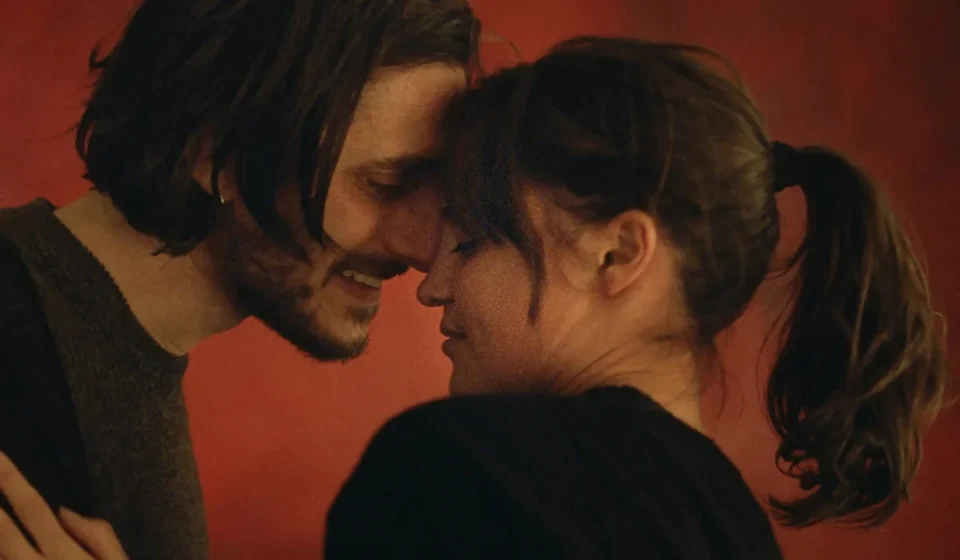
The Echo Chamber centers on Leo, a music producer living in the opulent, velvet-lined isolation of London’s Eaton Place. Played with a haunting, catatonic intensity by Luca Marinelli, Leo is the archetype of the "modern heartbreak": devastatingly handsome, perpetually unavailable, and fundamentally incapable of sustained emotional connection. He is the kind of man who, in the post-coital silence of a stranger’s bed, will casually mention his inability to sleep next to another person, effectively shattering the vulnerability of the moment.
The film serves as a character study of a man for whom emotional closeness is a death sentence. Leo is a man drowning in his own privilege, battling a drug addiction that is both his escape and his anchor. Opposite him stands Anne (Alicia Vikander), a medical doctor whose professional exterior masks a deeply codependent, unrequited obsession. She is the caretaker, the enabler, and, eventually, the voyeur, navigating a relationship that exists entirely within the confines of Leo’s posh, suffocating apartment.
A Chronology of Decay: From Pain to Opioids
The narrative structure of The Echo Chamber is as fragmented as the psyches of its protagonists. The film opens with a visceral, jarring sequence: the thumping, anthemic pulse of Jamie xx’s 2015 EDM track "Gosh" blares over the screen as we witness the aftermath of a near-fatal overdose. It is a stark, modern introduction to a film that otherwise feels untethered from time.
Following this opening salvo, Pallaoro masterfully employs a non-linear approach to unravel the history of Leo and Anne’s entanglement. We are transported back to the origin of their bond: a chronic, mysterious back injury that led Leo to seek out Anne’s osteopathic care. What began as a clinical relationship rapidly devolved into a dark, gravitational pull.
As the timeline progresses, the audience learns the extent of Anne’s manipulation. Pallaoro reveals that Anne, perhaps sensing that her hold over the mercurial Leo was slipping, began supplying him with the very opioids that kept him sedated, broken, and—crucially—within her orbit. It is a terrifying dance of control; she is willing to debase herself, providing the fuel for his self-destruction, simply to ensure that he remains present.
The Architecture of Misery: The Bertolucci Influence
To understand The Echo Chamber, one must acknowledge the ghost of Bernardo Bertolucci. Adapting the master’s final script, Pallaoro leans into the melodramatic excesses and the "kinky-depressed" sexuality that defined the Italian auteur’s career. The film is set almost entirely within one flat, a decision that evokes the suffocating, crumbling intimacy of Last Tango in Paris.

However, while Brando and Schneider’s flat was a site of ruin, Leo’s apartment is a temple of high-end, Euro-chic elegance. Every sweater is folded with precision; every piece of furniture is a statement of taste. This visual contrast—the abject misery of the characters against the backdrop of immense wealth—creates a sense of "aestheticized despair."
The cinematography by Diego García plays a vital role here. The camera acts as a silent, often static observer. There are moments where this stillness is a liability, leaving the audience yearning for a rawness that the film’s "exquisite" composition seems to deliberately deny. The characters are kept, as if in a jar on ice, their raw emotions muffled by the pristine environment they inhabit.
Supporting Players and Symbolic Bridges
While the film is fundamentally a two-hander between Marinelli and Vikander, the inclusion of Susan Sarandon as Ava—a legendary, faded ’80s songstress—adds a layer of ethereal, if slightly detached, melancholy. Ava is a woman whose voice has been eroded by time, yet whose commitment to her art remains fanatical.
Sarandon’s performance is polarizing. She occupies a space that feels somewhat removed from the grounded, domestic decay of the main plot. At times, her musical interludes feel closer to a melancholic karaoke than a professional performance. Yet, as the film enters its third act—a "deus ex melodrama" stretch—Sarandon serves as a crucial emotional conduit. She is the only character who seems to recognize the tragedy of the situation, bridging the gap between the film’s cold, stylistic detachment and the operatic tragedy that awaits the protagonists.
Implications: The Nature of Codependency
The Echo Chamber is not merely a film about addiction; it is a clinical dissection of control. The title itself suggests a feedback loop: a space where impulses, once shouted, return to the source, distorted and magnified. Pallaoro explores how the need to be needed can be as corrosive as the need for the substance itself.
The film’s final act, where it veers into a tragic, inescapable entanglement, raises uncomfortable questions about the ethics of caregiving. When does love become a cage? When does the act of "saving" someone become an act of keeping them in a state of permanent vulnerability? Pallaoro does not offer easy answers. Instead, he presents a scenario where the tragedy is inevitable—a binary outcome of a relationship built on the shifting sands of dependency.
Critical Assessment and Industry Impact
Luca Marinelli’s performance stands as the film’s cornerstone. Already established as one of Italy’s finest actors following his turns in Martin Eden and The Eight Mountains, Marinelli brings a level of vulnerability to Leo that is rare in contemporary cinema. He captures the "masculine melancholy" of a man who is both a victim of his own hedonism and a predator of his own heart.

For Alicia Vikander, The Echo Chamber represents a significant return to form. After a string of roles in which she seemed lost in mismatched ensembles, Pallaoro has given her a role that demands the depth and complexity she famously displayed in Irma Vep. Her portrayal of Anne—simultaneously insecure, watchful, and deeply manipulative—is the engine that drives the film’s tension.
From an industry perspective, the film is a bold statement on the endurance of the "90s arthouse spirit." In an era dominated by high-concept franchises, Pallaoro’s commitment to a slow-burn, character-driven narrative—even one as "blazingly unsubtle" as this—is a breath of fresh air.
Conclusion: A Masterpiece of Perversion
The Echo Chamber is, at its core, a film about the beauty of wreckage. It is moody, deliciously perverse, and, in its own Euro-chic way, a fitting tribute to the legacy of Bertolucci. While it may occasionally feel too detached for its own good, the sheer intensity of the performances and the audacity of the storytelling make it a standout entry in the 2026 festival circuit.
The film does not shy away from the ugliness of its subject matter. It invites the audience into a space of voyeurism—we watch Leo in his most private, humiliating moments, and we watch Anne as she orchestrates his slow decline. It is a film that demands to be felt, even when it is difficult to watch.
As The Echo Chamber seeks U.S. distribution, it stands as a testament to the fact that cinema, at its best, is an echo chamber of our own deepest, most repressed anxieties. It is a mesmerizing, deeply sad, and unapologetically bold piece of work that will likely be debated and dissected long after the lights in the theater have dimmed.
Grade: B+