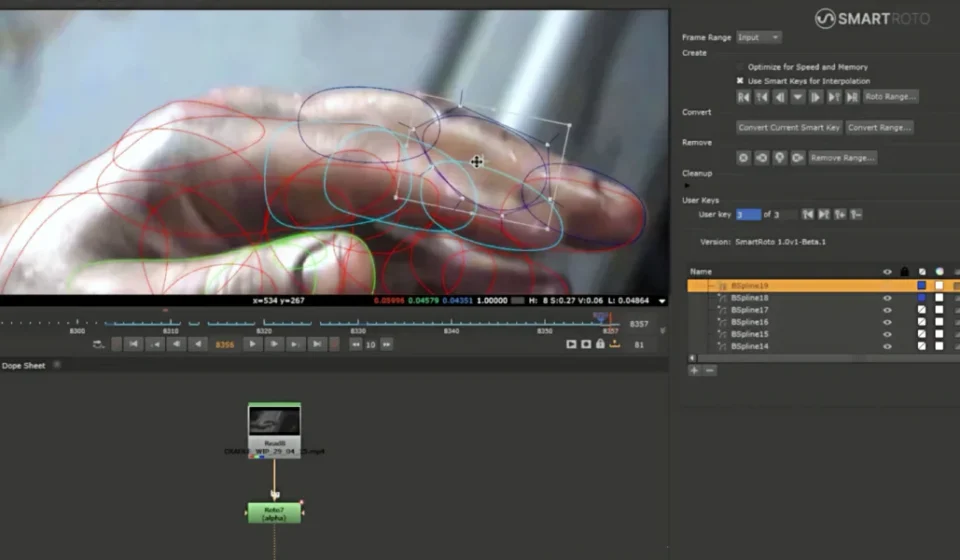

Rotoscoping—the painstaking, frame-by-frame tracing of objects to separate them from their background—has long been the "tax" paid by visual effects artists. It is a fundamental task that is as essential as it is loathed. For decades, it has been the primary barrier to entry for junior artists and a source of burnout for veterans. Today, that landscape shifts significantly as Foundry, the industry-standard software developer, officially launches SmartRoto, a new AI-powered plugin for the Nuke ecosystem designed to automate the grunt work of rotoscoping without sacrificing the precision that high-end VFX demands.
The Core Concept: Augmentation, Not Replacement
The most critical distinction to make about SmartRoto is what it is not: it is not a "magic button" that spits out a finished matte. It is not an automated matting tool that attempts to guess the silhouette of a character from scratch.
"This isn’t a magic bullet; it doesn’t do the full spline creation for you," explains Adam Cherbetji, Foundry’s Director of Product for AI Research. "It’s about accelerating the keyframing process. There is so much artist intuition that goes into the breakdown of a subject into smaller, articulated shapes. While that planning phase is time-consuming, the truly grueling part is the manual keyframing of those shapes across the timeline. That is exactly where we focused our efforts."
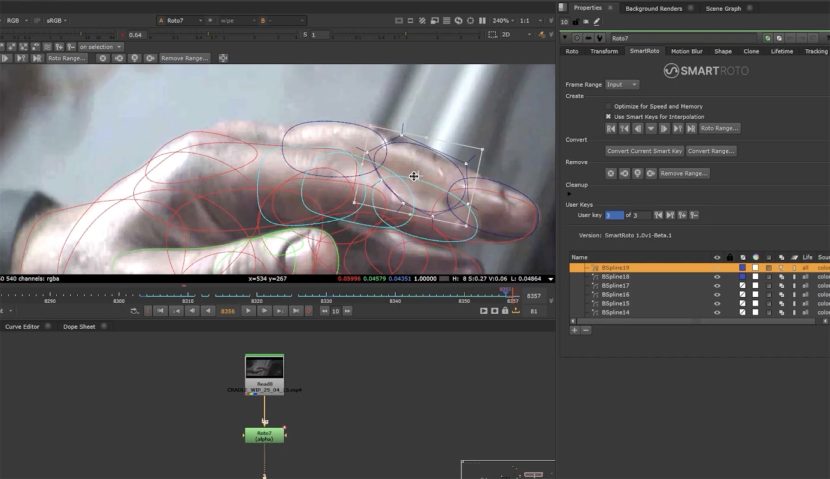
In the SmartRoto workflow, the artist remains the architect. They define the "logical" shapes—the human head, the torso, the limbs—on a clean frame where the subject is clearly defined. Once these splines are drawn, SmartRoto takes over the role of a digital assistant, handling the tedious task of moving, deforming, and animating those shapes across the remainder of the sequence.
A Two-Tiered Keyframe System: Smart Keys vs. User Keys
At the heart of SmartRoto’s effectiveness is its proprietary two-tier keyframe architecture. The system distinguishes between "Smart Keys" and "User Keys," a hierarchy that ensures the artist never loses control.
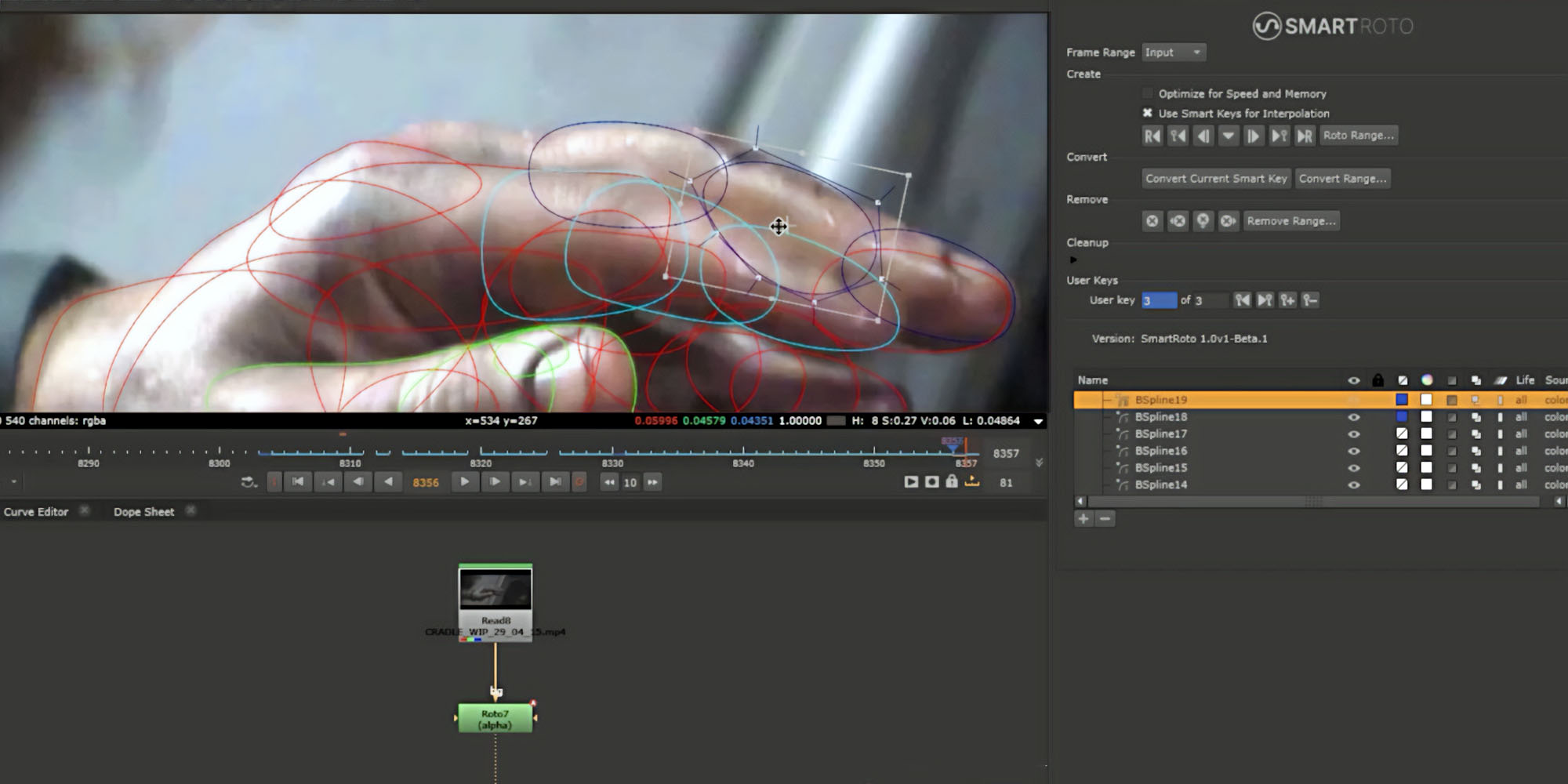
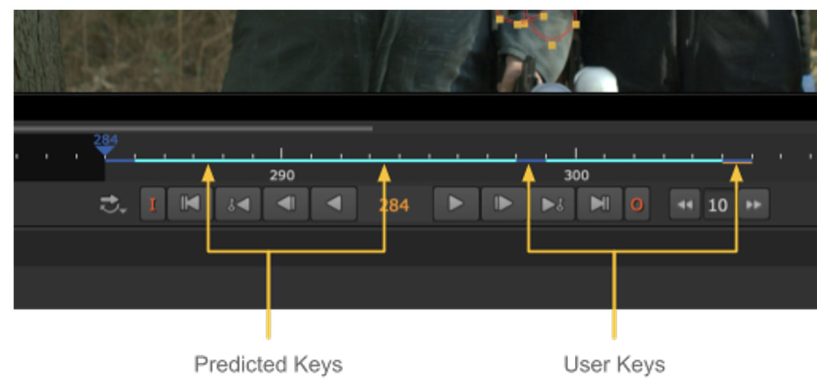
- User Keys: These are the artist-defined anchor points. When a user manually adjusts a spline to perfectly frame an edge, that frame becomes a "User Key." The system treats these as absolute truth—they are never overwritten by the AI.
- Smart Keys: These are the frames generated by the machine learning model based on the interpolation between User Keys and the analysis of image features.
This methodology allows for a non-destructive workflow. If an artist creates a shape on frame 1 and frame 100, they can ask SmartRoto to fill in the gaps. If the AI’s prediction on frame 50 is slightly off, the artist simply adjusts the spline. That adjustment "promotes" frame 50 to a User Key. The model then re-runs its calculations, incorporating this new data point to refine the surrounding range.
This feedback loop is the system’s greatest strength: the artist is constantly guiding the model rather than fighting it. There is no scenario where the result is so catastrophic that the artist must revert to a blank canvas. Fixes are always incremental adjustments, never full redos.
Chronology of Development: A Four-Year Journey
The release of SmartRoto is the culmination of years of rigorous research. Foundry’s interest in the problem dates back over six years, when the company first explored the viability of AI-driven rotoscoping in partnership with academic institutions like the University of Bath and industry partners like DNEG.
However, the initial attempts at using standard computer vision techniques—specifically optical flow—fell short. "Optical flow breaks down at the edge," Cherbetji notes. "And the edge is exactly where you need the most precision in VFX."
The current version of SmartRoto was built from the ground up starting four years ago. Foundry’s internal research team took a unconventional approach: they ignored standard segmentation models, which often produce "fuzzy" or pixel-bound masks that are difficult to edit. Instead, they built a bespoke model trained on high-quality, professional-grade roto data.
To ensure commercial safety and data integrity, the model was trained exclusively on licensed, high-quality footage. Furthermore, in an era of cloud-based AI, Foundry made the strategic decision to ensure the model runs entirely locally. No frames are uploaded to the cloud, and the model maintains a relatively light footprint, requiring approximately 8GB of VRAM, making it accessible for standard professional workstations.
Supporting Data and Real-World Validation
To test the efficacy of the tool, Foundry conducted a two-week blind study involving professional roto artists. The artists were tasked with completing a variety of shots using both traditional Nuke rotoscoping tools and the new SmartRoto plugin, with the order of tasks randomized to remove bias.
The results were statistically significant. By the end of the second week, artists were, on average, twice as fast, with some instances showing a four-fold increase in efficiency. However, the qualitative data was perhaps more telling. "Artists reported they never wanted to go back to manual rotoscoping," says Cherbetji.
Benjamin Bratt, a noted compositor and author of Rotoscoping: Techniques and Tools for the Aspiring Artist, participated in the beta testing phase. His assessment reflects the sentiment of many industry veterans: "I’m shocked at how good SmartRoto is. It uses the principles of traditional rotoscoping and incorporates an intuitive, easily adaptable keyframe approach. It meshes perfectly with manual practices, and the ability to fix auto-generated keys without starting from scratch is a game-changer."
Implications for the VFX Industry
SmartRoto arrives at a pivotal moment in the industry. While automated matting has existed in various forms, the challenge has always been the "three-way tension" of VFX: maintaining edge precision, ensuring temporal coherence (the stability of the matte over time), and keeping the final output in an editable format.
Most existing solutions prioritize the speed of the mask but ignore the necessity of the vector spline. By staying within the spline-based ecosystem, SmartRoto ensures that the output is compatible with the standard VFX pipeline, where compositors need to manipulate shapes, add motion blur, or refine silhouettes at a sub-pixel level.
The emergence of competing technologies—such as OTOY’s RotoShop, which attempts to fit splines to segmentation masks using a differentiable vector rasterizer—highlights that the industry is in a race to solve the "rotoscoping problem."
However, Foundry’s approach is fundamentally distinct. By choosing to propagate the artist’s own splines rather than trying to fit vectors to a pre-existing pixel-based segmentation mask, Foundry is betting that the artist’s intent should be the primary driver of the AI, not the other way around.
Pricing and Availability
SmartRoto is now available as a plugin for Nuke, NukeX, Nuke Studio, and Nuke Indie. Foundry has opted for a subscription model, priced at US$499 per year. The licensing options include both node-locked and floating licenses, catering to both freelance artists and large-scale studio environments.
As visual effects continue to push the boundaries of what is possible on screen, the tools used to create those images must evolve. With SmartRoto, Foundry is signaling that the future of VFX isn’t about removing the artist from the process; it’s about removing the tedium so the artist can focus on the final, creative 10% of the work—the part that truly matters.