
By Alex Billington
July 27, 2026
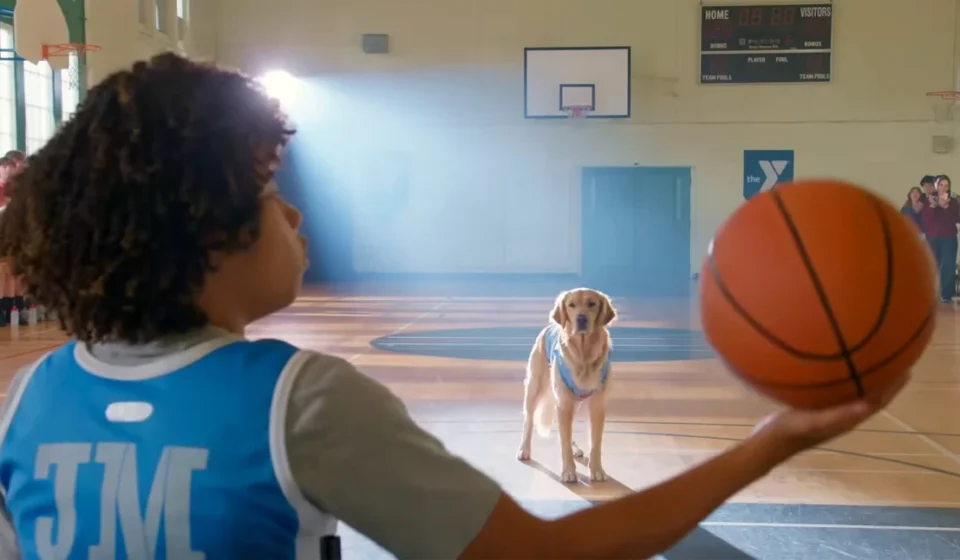
"Guess who’s back?!" With those three words, the internet was sent into a nostalgic frenzy this week as Cineverse unveiled the first official teaser trailer for Air Bud Returns. Nearly three decades after the original golden retriever captivated audiences by proving that "there’s no rule that says a dog can’t play basketball," the franchise is mounting a major comeback. This isn’t just another direct-to-video spinoff; it is a full-scale "legacy sequel" designed to capitalize on the 30th anniversary of the property that defined the sports-comedy genre for a generation of millennials.
The Main Facts: Bridging Generations
Directed by Robert Vince—the mastermind behind the extensive Air Bud and Buddies cinematic universe—Air Bud Returns attempts a delicate balancing act. It functions as both a heartfelt reboot and a meta-commentary on the enduring legacy of the 1997 classic.
The plot centers on Jacob (Aydin Artis), a grieving 14-year-old boy who moves into his late father’s childhood home in the sleepy town of Fernfield. While struggling to navigate his new life, Jacob discovers a relic of his father’s past: an original VHS copy of the 1997 Air Bud movie. The discovery serves as a catalyst, leading him to a stray golden retriever with an uncanny knack for sinking three-pointers.
The film features a diverse ensemble cast, including Tracy Ifeachor, Edwin Lee Gibson, Tyler Labine, Erik Gow, and Maxim Swinton. However, the true stars are Charlie and Summer, two new golden retrievers selected following a highly publicized nationwide casting search held in the summer of 2025. After an initial delay, the film is now slated to "bark" into theaters on January 22, 2027.
A Chronological Odyssey: From 1997 to 2027
To understand the significance of Air Bud Returns, one must look at the trajectory of the franchise over the last 29 years.

The Golden Era (1997–2003)
The original Air Bud hit theaters in August 1997, grossing over $27 million against a modest budget and sparking a cultural phenomenon. The film was praised for its sincerity and the remarkable training of Buddy, the original dog actor who played the role. The success led to Air Bud: Golden Receiver (1998) and a steady stream of sports-themed sequels involving football, soccer, and baseball.
The "Buddies" Expansion (2006–2014)
Following the passing of the original Buddy, the brand underwent a massive shift. Under the guidance of Robert Vince and Air Bud Entertainment, the focus moved to the "Buddies" franchise—a series of direct-to-video adventures that saw the talking puppies explore space, Halloween, and treasure hunting. While critically polarized, these films were commercial juggernauts in the home video market, solidifying the brand’s presence in every household with young children.
The Modern Pivot (2015–2026)
As the streaming era took hold, the franchise experimented with television series like Pup Academy and Super Pupz. However, the decision to return to the big screen in 2027 suggests a strategic shift. By leaning into the "legacy sequel" trend—a trope popularized by films like Top Gun: Maverick or Ghostbusters: Afterlife—Cineverse is banking on the fact that the children who watched the original on VHS are now parents themselves, eager to share that same magic with their own kids.
Supporting Data: The Mechanics of a Legacy Sequel
The production of Air Bud Returns is a masterclass in modern franchise management. The decision to cast two dogs, Charlie and Summer, ensures that the production schedule remains efficient while honoring the welfare of the animals—a critique that often dogged early 2000s animal cinema.
The "Meta" Gamble
Critics have already begun comparing Air Bud Returns to the recent Anaconda comedy remake featuring Paul Rudd and Jack Black. These films operate on a "meta" layer: the characters in the movie are aware of, or interact with, the legacy of the original. In Air Bud Returns, the use of the actual 1997 VHS tape as a plot device is a deliberate emotional anchor. It bridges the gap between the film’s internal world and the audience’s lived reality, acknowledging that the original movie is a piece of cultural history.
The Talent Behind the Lens
Robert Vince remains the central architect of the brand. His filmography, ranging from Spymate to Monkey Up, shows a filmmaker deeply committed to the "family-friendly sports comedy" niche. His return as both writer and director provides a sense of continuity that is often missing in franchise reboots. By retaining control, Vince ensures the tone remains consistent with the previous decades of storytelling, avoiding the jarring stylistic shifts that often plague studio-driven reboots.

Official Responses and Creative Vision
In promotional materials, the studio has emphasized that the goal of Air Bud Returns is "healing." Producer Anna McRoberts noted in a press statement that the story of Jacob’s grief is meant to reflect the real-world connection fans have to the original film.
"The story of Air Bud has always been about overcoming the impossible," McRoberts stated. "By bringing the story back to Fernfield and focusing on a new generation, we aren’t just remaking a movie; we are inviting a new generation to fall in love with the same spirit of hope that made the original so special."
The cast has similarly echoed this sentiment. Aydin Artis, who plays the lead, mentioned in a behind-the-scenes interview that working with the dogs taught him more about patience and connection than any acting coach ever could. "There is a raw, unscripted element to working with Charlie and Summer," Artis noted. "When they hit a shot, it isn’t CGI. It’s real. And I think audiences can feel that authenticity."
Implications: Can Nostalgia Sustain a Franchise?
The implications of Air Bud Returns are significant for the broader film industry. If the movie succeeds, it validates the "legacy sequel" model for lower-budget, family-oriented content. It suggests that even brands primarily relegated to the "direct-to-video" bargain bin in the 2010s have significant theatrical equity if managed correctly.
The Risk of Saturation
However, there is a risk. Audiences are increasingly wary of "reboot fatigue." While the nostalgia factor is high, the film faces stiff competition in the January 2027 window. The success of the project will depend entirely on whether it can move beyond being a "gimmick" and stand on its own as a compelling sports drama.
Cultural Impact
Should Air Bud Returns strike a chord, it may redefine how intellectual property (IP) is handled by smaller studios. Cineverse is positioning this not as a cheap cash-in, but as a "prestige" project within its own specific genre. If the film performs well, we can expect a new wave of 90s family favorites to receive the "legacy treatment."

Conclusion: Looking Ahead to 2027
As we await the January 22nd release, the teaser trailer serves as a litmus test for the public’s appetite for this specific brand of wholesome, canine-led storytelling. The sight of a golden retriever hitting a buzzer-beater is, perhaps, exactly the kind of simple, unpretentious joy that modern cinema is missing.
Whether you are a lifelong fan of the original or a parent looking for a movie to introduce to your own children, Air Bud Returns represents a rare moment where a franchise attempts to honor its roots while looking forward. The court is ready, the dogs are trained, and the stakes—both for the fictional Timberwolves and the real-world producers—have never been higher.
Is it a cynical cash grab or a heartfelt tribute? The answer likely lies somewhere in between. But as the trailer fades to black, one thing is certain: the spirit of the world’s most famous basketball-playing dog is far from retired. We will see if the magic remains when the film officially hits theaters early next year.