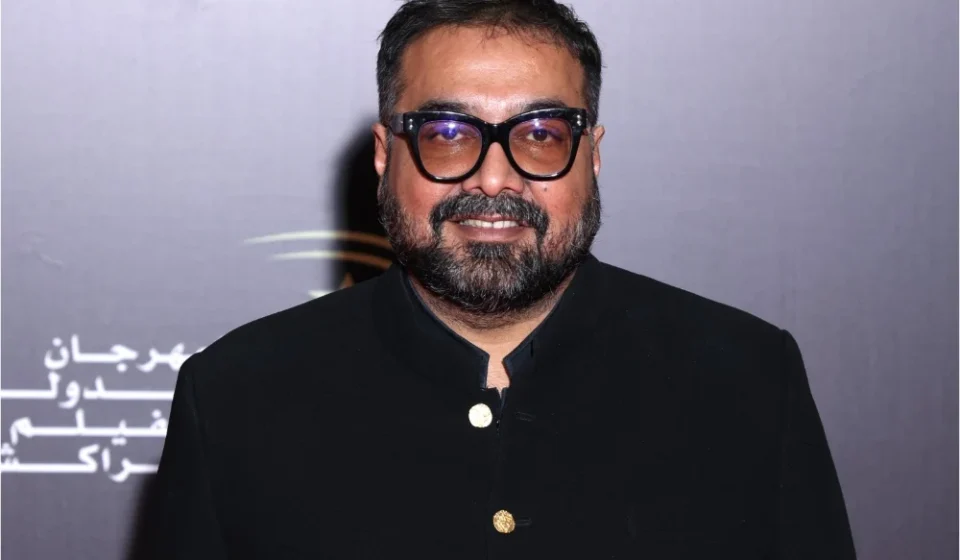
The Future of the Frame: Anurag Kashyap on Authenticity, AI, and the Evolution of Cinema at MIFFest

At the Malaysia International Film Festival (MIFFest) this year, the spotlight is not merely on the films being screened but on the dialogue surrounding the shifting tectonic plates of global cinema. Presiding over the jury is Indian auteur Anurag Kashyap—a filmmaker whose career has been defined by his refusal to conform to the polished artifice of traditional Bollywood. As he prepares to lead a masterclass titled "Unfiltered Realism," Kashyap finds himself in a position of mentorship, though he is quick to clarify that his role is not that of a sage dispensing final truths, but rather that of an inquisitive explorer searching for the next frontier of storytelling.
The Search for a New Cinematic Language
For a director whose latest feature, Bandar, marks a highly anticipated return to the director’s chair, the festival environment serves as both a podium and a laboratory. Speaking to Variety on the sidelines of the event, Kashyap articulated a clear objective for his tenure as jury president: the discovery of a new cinematic lexicon.
"As jury president, what I’m really looking for is a new cinematic language," Kashyap explains. "I’m interested in seeing how younger filmmakers tell stories in ways my generation couldn’t."
This desire for novelty stems from an acute awareness that the tools of the trade have evolved at an unprecedented velocity. For a generation of filmmakers who cut their teeth on 35mm film or early digital setups, the current landscape—dominated by generative AI, the ubiquitous nature of social media, and the sheer saturation of content—presents a fundamental challenge to traditional narrative structures.
Chronology of a Career: From Underground to Icon
To understand Kashyap’s perspective, one must look at the arc of his career. Emerging in the early 2000s, Kashyap was instrumental in ushering in a wave of gritty, visceral, and uncompromising Indian cinema. His works—such as Black Friday, Gangs of Wasseypur, and Ugly—often bypassed the song-and-dance spectacles of mainstream Indian film, choosing instead to dive deep into the underbelly of urban and rural life.
- The Early Period (2000–2005): Marked by struggle against censorship and financial constraints, this era cemented his reputation as an outsider.
- The Breakthrough (2006–2012): The success of Gangs of Wasseypur proved that hyper-local, regional storytelling could achieve both critical acclaim and a cult global following.
- The Institutionalization (2013–Present): Kashyap moved into a producer-mentor role, fostering a new generation of indie talent, while continuing to direct features that push the boundaries of the Indian censor board’s comfort zones.
Throughout these decades, his mantra remained consistent: "Staying real isn’t a choice. Whether I’m directing, producing, or acting, you have to stay real. Only then can you fully play out reality and truly engage your audience."
Supporting Data: The Fragmentation of the Audience
Kashyap’s observations are bolstered by current industry trends. The global film market is undergoing a crisis of attention. According to recent industry reports, the average viewer’s attention span has plummeted, exacerbated by the short-form content boom on platforms like TikTok and Instagram Reels.
The "streaming paradox" is another critical data point in Kashyap’s analysis. While streaming platforms have democratized access to cinema, they have simultaneously created a "paradox of choice," where the abundance of content makes it increasingly difficult for independent, auteur-driven films to find an audience.
Kashyap notes that this is a pan-Asian phenomenon. "South Korea, Japan, China, and India all have mature film industries," he observes. "But we’re all facing the same problem—audiences have shorter attention spans, and streaming platforms have created endless choices." This fragmentation means that the "water cooler moment"—the cultural consensus around a specific film—is becoming a relic of the past, forcing filmmakers to rethink how they anchor their stories in a transient digital landscape.
The Myth of Visual Style as Authenticity
A recurring theme in Kashyap’s critique of modern cinema is the confusion between "aesthetic" and "authenticity." In an era where high-end production values are increasingly accessible through digital cinematography and post-production software, many filmmakers mistake a "gritty" look for a "gritty" story.
Kashyap argues that his own early work was perceived as "authentic" not because he sought a specific visual style, but because he was forced into it by budgetary constraints. "Authenticity has never been about visual style," he clarifies. "It’s about the emotional truth of the narrative."
He believes that the most globally resonant films are those that are most stubbornly local. By anchoring a story in the specific cultural, linguistic, and social realities of a region, a filmmaker inadvertently creates a universal connection. He rejects the idea of "branding" authenticity; for him, it is an involuntary byproduct of honest filmmaking.
Official Responses and Industry Implications
The implications of Kashyap’s stance are significant for the future of independent cinema. By focusing on "Unfiltered Realism," he is challenging the industry to move away from the algorithmic trend-chasing that currently dominates green-lighting processes.
Festival organizers and industry analysts have noted that Kashyap’s presence at MIFFest signifies a pivot toward substantive discourse. The festival, which aims to bridge the gap between Asian filmmakers and global markets, sees in Kashyap a figure who can bridge the generational divide.
The industry at large is currently grappling with how to integrate AI without sacrificing the human soul of filmmaking. Kashyap’s approach—to treat these tools as secondary to the core narrative truth—offers a measured path forward. Rather than fearing the technological shift, he suggests that filmmakers should use it to augment their vision, provided the foundation of their story remains rooted in human experience.
The Masterclass: A Two-Way Street
As Kashyap prepares for his masterclass, he is remarkably transparent about his own uncertainty. He views the session not as a lecture, but as a reciprocal exchange. In a world that demands experts to have all the answers, Kashyap finds power in admitting that he, too, is still learning.
"I have many questions myself as well," he admits. "I’m hoping to find some answers, have meaningful conversations during the festival, and maybe discover another clue about the future of cinema."
This humility is perhaps the defining trait of his career. By positioning himself as a student of the craft, he encourages younger filmmakers to discard the pressure of creating "perfect" content. Instead, he advocates for a return to the messy, unpredictable, and raw process of capturing life on camera.
Conclusion: The Uncharted Path
The cinematic landscape of 2024 is vastly different from the one Anurag Kashyap entered two decades ago. The challenges of shorter attention spans, technological disruption, and the oversaturation of content are formidable. Yet, as he engages with the next generation of filmmakers at MIFFest, there is a sense of cautious optimism.
Authenticity, in Kashyap’s view, remains the only currency that does not devalue. As he continues to search for a new cinematic language, he invites the world to look beyond the filters, the algorithms, and the corporate mandates of the streaming era. For those who choose to listen, the message is clear: the future of cinema will not be defined by the tools we use, but by the courage with which we observe the world around us. Whether through the lens of a smartphone or a high-end cinema camera, the goal remains the same—to find the truth, strip away the artifice, and hold a mirror up to the human condition.