Reclaiming the Lens: Gerda Taro and the Cinematic Resurrection of a War Photography Pioneer

The name Robert Capa has long been synonymous with the birth of modern war photojournalism. For decades, the "Capa" legend—a dashing, fearless American photographer documenting the horrors of the Spanish Civil War and World War II—remained one of the most enduring myths of the 20th century. However, as history is revisited through a more critical lens, the singular silhouette of Capa has begun to split, revealing a partnership that was as much a professional fabrication as it was a romantic tragedy.
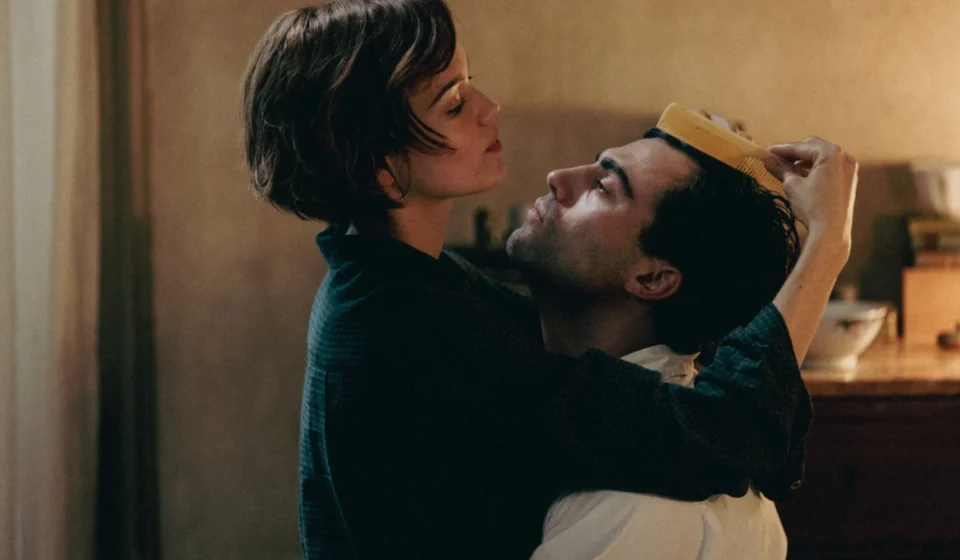
At the Venice Film Festival, Italian director Alina Marazzi’s latest work, The Girl With The Leica, has taken center stage in the Horizons (Orizzonti) section. The film is not merely a biopic; it is a cinematic reclamation of Gerda Taro, the German-born photojournalist who co-invented the "Robert Capa" persona and whose own formidable body of work was, for decades, subsumed by the man she helped create. Through an impressionistic blend of archival footage and dramatic narrative, Marazzi challenges the patriarchal narrative of the "lone genius" and restores Taro to her rightful place as a pioneer of the frontline.
Main Facts: The Invention of a Legend
The Girl With The Leica centers on Gerta Pohorylle, a Jewish refugee from Nazi Germany who, alongside her partner, the Hungarian photographer Endre Friedmann, invented the alias "Robert Capa." The name was designed to sound American and wealthy, a strategic move to bypass the anti-Semitic and anti-immigrant prejudices of the 1930s European press. By selling their work under this shared banner, they were able to command significantly higher fees from international magazines.
The film, starring Emilia Schüle as Taro and Aaron Altaras as Friedmann, eschews the traditional chronological structure of a documentary. Instead, it utilizes a "fact-based fiction" approach, jumping through time to mirror the chaotic, high-stakes life of a woman living on the edge of history.
A Multi-Lingual and Multi-Format Approach
Director Alina Marazzi, known for her innovative use of archives in films like For One More Hour with You, employs a rich tapestry of media. The film weaves together:
- Color dramatic sequences that recreate the bohemian life of 1930s Paris.
- Black-and-white archival footage and newsreels from the Spanish Civil War.
- Super 8 and Super 16mm film to evoke a sense of tactile nostalgia.
- Original photographs, many of which were only recently correctly attributed to Taro.
Crucially, the film maintains linguistic authenticity, with characters speaking the European languages—German, French, Spanish, and English—that defined their itinerant lives as exiles and correspondents.
Chronology: From Leipzig to the Frontlines of Brunete
The narrative of The Girl With The Leica is anchored by a pivotal date: July 14, 1937. Using this as a jumping-off point, the film traces Taro’s trajectory from a bourgeois upbringing to her death as a martyr for the anti-fascist cause.
1910–1933: The Radicalization of Gerta Pohorylle
Born in 1910 to a middle-class Jewish family in Stuttgart, Taro moved to Leipzig in her youth. The film highlights her early political awakening; as the Nazi Party rose to power, Taro became involved with socialist and communist resistance groups. In 1933, following a brief imprisonment for distributing anti-Nazi propaganda, she fled to Paris—then the intellectual and cultural haven for European refugees.
1934–1936: The Birth of "Robert Capa"
In Paris, Taro met Endre Friedmann, a scruffy, talented Hungarian photographer. The film depicts their immediate chemistry—a blend of romantic passion and professional ambition. While Friedmann taught Taro the technical nuances of photography, Taro, with her sharp business instincts and social grace, reinvented him. Together, they became "Robert Capa," a high-flying American photographer. For a period, their work was indistinguishable, both shooting on Leica and Rolleiflex cameras and selling their negatives under the same lucrative brand.
1936–1937: The Spanish Civil War
When the Spanish Civil War broke out, the pair rushed to the front to document the Republican struggle against Francisco Franco’s fascist forces. It was here that Taro began to emerge from the Capa shadow. She began publishing under her own name, "Gerda Taro," and became the official correspondent for the French leftist newspaper Ce Soir. Her images of militiawomen training on the beaches of Almería and the brutal aftermath of the bombing of Valencia became iconic symbols of the Republican resistance.
July 1937: The Final Assignment
The film reaches its emotional crescendo in the summer of 1937. Despite warnings from her friends and the increasing danger of the conflict, Taro returned to the Battle of Brunete. On July 25, 1937, while riding on the running board of a car carrying wounded soldiers, she was fatally injured in a collision with a Republican tank. She died the following day, just short of her 27th birthday.
Supporting Data: The "Mexican Suitcase" and the Shifting Archive
For nearly 70 years, many of Gerda Taro’s photographs were credited to Robert Capa or lost entirely. The film’s relevance is bolstered by a major historical discovery in 2007: the "Mexican Suitcase."
Three lost boxes containing 4,500 negatives taken by Robert Capa, Gerda Taro, and their colleague David "Chim" Seymour during the Spanish Civil War were discovered in Mexico City. This find revolutionized photographic history. It allowed scholars to distinguish between Capa’s and Taro’s work by analyzing the different camera formats they used—Taro frequently used a medium-format Rolleiflex, which produced square images, while Capa favored the 35mm Leica.
The data revealed that Taro was not just a companion, but a daring artist who often took greater risks than her male counterparts, positioning herself closer to the line of fire to capture the raw, human cost of the war. This historical evidence provides the backbone for Marazzi’s cinematic portrayal, ensuring that the film’s "impressionistic" style is grounded in rigorous archival truth.
Official Responses and Critical Reception
The premiere of The Girl With The Leica at Venice has sparked a renewed conversation regarding the ethics of historical attribution. Critics have praised Emilia Schüle’s performance for capturing Taro’s "mercurial energy"—described by her contemporaries as a mix of "iron will and joyful charm."
Festival Impact
The film’s inclusion in the Horizons section marks a significant moment for Marazzi, who has been lauded for her ability to "give a voice to the ghosts of the archive." Early reviews suggest that while the film’s non-linear structure may be challenging for some, its visual beauty and emotional resonance make it a strong contender for international distribution.
Comparative Works
The film arrives at a time of heightened interest in the "Capa-Taro" story. It precedes the high-budget English-language production Becoming Capa, directed by Charlotte Colbert. Industry analysts suggest that Marazzi’s film, with its focus on European authenticity and archival depth, will serve as the "intellectual and artistic" counterpart to more traditional Hollywood romances.
Implications: The Political Power of the Image
Beyond the biographical details, The Girl With The Leica explores the enduring political power of the image. In an era of "fake news" and digital manipulation, the film reflects on a time when a photograph was a weapon of war and a tool for social change.
The Erasure of Female Labor
Taro’s story is a quintessential example of how history often erases the contributions of women, especially when they are part of a high-profile romantic partnership. By "unmaking" the myth of the lone male genius, the film calls for a broader re-examination of other "silent partners" in the history of art and science.
The Legacy of the War Correspondent
Gerda Taro was the first female photojournalist to be killed while reporting from the front lines of a war. Her death in 1937 was met with a massive funeral in Paris, attended by thousands, where she was hailed as an anti-fascist heroine. Marazzi’s film suggests that Taro’s commitment was not just to the craft of photography, but to the idea that a journalist must "take a side."
Conclusion: A Lens Refocused
The Girl With The Leica concludes not with a sense of tragedy, but with a sense of restoration. By the end of the film, the viewer no longer sees Taro as a "tragic girlfriend" or a "supporting character" in the Robert Capa story. She is revealed as a woman of immense agency, a refugee who turned her displacement into a global perspective, and a photographer who helped invent the very visual language we use to understand conflict today.
As the credits roll over the real photographs taken by Taro—sharp, unflinching, and deeply human—it becomes clear that while she died young, her vision remains as clear and piercing as the click of a Leica shutter. The film serves as a vital reminder that behind every "iconic" image, there is a human story that history is often too quick to forget.