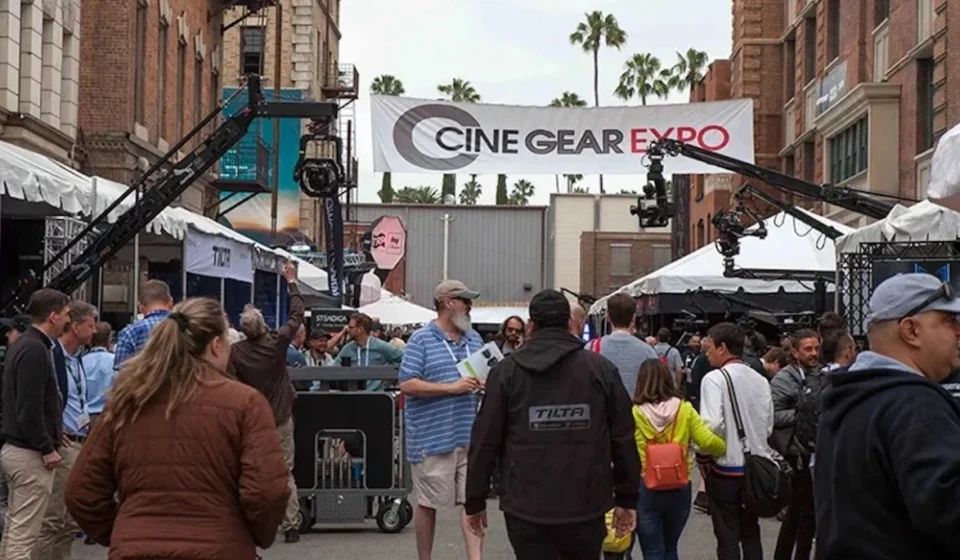

In an industry often haunted by the "existential dread" of shifting technological landscapes—where the lines between professional cinema, social media content, and high-end broadcast continue to blur—the Cine Gear Expo offers a rare, grounded sanctuary. Unlike the broader, more corporate-centric NAB Show, which often leaves attendees questioning the longevity of traditional filmmaking in a fast-paced digital world, Cine Gear remains a celebration of the craft. Held on the iconic Universal Studios Lot, the 2026 edition served as a two-day pilgrimage for Los Angeles cinematographers, gaffers, and lighting technicians to commune, debate, and examine the tools that will define the next generation of visual storytelling.
The State of the Industry: An Ethnographic Perspective
The demographic shift at this year’s Expo was impossible to ignore. As I navigated the backlot, I caught up with filmmaker Alec Moeller, a New Faces class of 2022 alumnus. While Moeller is a self-proclaimed skeptic of the industry’s obsession with the "latest and greatest" gear—preferring the simplicity of film and naturalistic lighting—his presence was purely ethnographic.
"In the wake of the success of films like Obsession and the Backrooms phenomenon, there’s a palpable, youthful energy in the air," Moeller noted, gesturing toward a crowd of students and independent creators. The Friday morning turnout was heavily skewed toward film school undergrads and the freelance, "forever-unemployed" demographic that keeps the Los Angeles independent scene alive. By contrast, the Saturday crowd signaled a shift toward the workaday, union-card-carrying professionals who form the backbone of Hollywood’s major productions.
Logistics and Layout: A Festival-Style Experience
The relocation of the Expo to the Universal Studios Lot presented both atmospheric charm and logistical friction. While the setting allowed for a cinematic, "backlot-chic" experience reminiscent of Christian Bale’s wanderings in Terrence Malick’s Knight of Cups, the sprawling layout was a point of contention.
Attendees found themselves navigating a disconnect between the seminar areas and the vendor-heavy tent cities. Much like at a major film festival—Sundance or Telluride—the physical commute required a shuttle ride, making back-and-forth movement cumbersome. However, the atmosphere was bolstered by the shared camaraderie of the event, complete with the ritualistic collecting of free "swag." The sight of industry professionals hauling comically large, bright yellow Insta360 totes filled with smaller giveaways became the unofficial aesthetic of the weekend.
ASC Insights: The Philosophy of the Image
The centerpiece of the weekend was the annual American Society of Cinematographers (ASC) panel, featuring a powerhouse lineup of 15 members, including industry titans Jeff Cronenweth, Rachel Morrison, Karl Walter Lindenlaub, and Natasha Braier.
The panel opened with a sweeping montage of ASC history, offering a rare, fleeting glimpse of John Toll’s Oscar-nominated work in The Thin Red Line. While the sheer number of panelists meant that technical deep-dives were limited, the resulting sound bites were profoundly human. Steven Fierberg offered a lesson in "body consciousness," urging cinematographers to consider how their physical position on set dictates the camera’s movement. Natasha Braier, reflecting on her upbringing under an Argentine military dictatorship, spoke movingly about how a life defined by subtext and secrecy informs her approach to the unconscious visual language of film.
Lighting the Future: The Evolution of LED Tech
Post-panel, I joined Local 728 gaffers Drew Moe and Jeffrey Taylor, founders of the boutique rental house Canary Yellow, to explore the latest lighting advancements. According to Moe, the industry is currently in the middle of a lighting renaissance.
"Most of Hollywood’s history has just been tungsten, then HMIs, then fluorescent," Moe explained. "That was a slow timeline. Now, every year, they’re updating LED units with new chipsets and attachments. It’s an exciting, rapid-fire era."
A major highlight in this sector was the evolution of lighting control. We observed a demonstration of V3, the latest update to the Blackout Lighting Console. By introducing visual control components to traditionally numerical processes, the software—run via iPad—offers a fluid, intuitive interface that promises to disrupt the current lighting control market. Furthermore, vendors like Aputure continue to dominate conversations, particularly regarding their proprietary Blair CG color engine, a breakthrough that remains a hot topic following its introduction at NAB earlier this year.
The Cinelux Sixteen: A Bridge Between Film and Digital
Perhaps the most ambitious project on the show floor was the Cinelux Sixteen, a prototype 16mm camera developed by Cinelux Cinema Tools. As the industry grapples with the high cost and labor-intensive nature of film, this camera offers a provocative solution: it is designed to shoot film and digital simultaneously.
Chief Engineer Caz Voorhees explained that the camera records to an SD card at 3.2k resolution, generating proxies and files with film-emulation LUTs applied. "The digital capture was the easy part," Voorhees admitted. "The magazine is the hard part—moving film from one side to the other with zero friction in such a tight space."
The project, currently in its third prototype phase, aims for a mid-2027 release. In a refreshing turn for proprietary-heavy industries, the Cinelux team intends to open-source the magazine designs, allowing users to 3D-print replacements in a pinch. It is a bold statement about ownership and sustainability in the digital age.
Optics and Heritage: Rehousing the Past
The optics market at Cine Gear reflected a deep respect for historical glass. Zero Optik has become the industry standard for breathing new life into vintage lenses. By rehousing Bausch & Lomb Ultra Baltar lenses from the 1940s, they have saved classic glass that was once relegated to basements.
"With digital cinema, all of a sudden you had all these new options," said operations manager Alex Baxter. These lenses, favored by cinematographers like Ed Lachman for El Conde and Maria, are now seeing a second life. The company’s work with the ASC—restoring 1950s Todd-AO 65mm lenses used on The Sound of Music—highlights the industry’s current trend: using modern digital sensors to capture the "imperfect" character of vintage glass.
Meanwhile, Atlas Lens Co. continues to define the anamorphic landscape. Founder Dan Kanes, who leveraged his success in wireless video technology to pivot toward his true passion, showcased the new Kaizen Series. Designed for large-format sensors like the Arri Alexa 265, the Kaizen series represents a technical shift away from the extreme field curvature of the past toward a more consistent, "parallel" field, allowing for multi-person shots without focus degradation.
Conclusion: Camaraderie in a Changing World
As the Expo drew to a close, the sense of community remained the most enduring takeaway. Cinematographer Chapin Hall perfectly captured the sentiment, noting that Cine Gear is the only trade show where he struggles to walk a block without being stopped by friends.
The event concluded with a masterclass seminar by M. David Mullen, whose ability to deconstruct complex tracking shots—like those from The Marvelous Mrs. Maisel—reminded the audience that behind every sensor, lens, and LED panel, there is a human mind making artistic choices.
The final stop was the ASC Clubhouse for their annual barbecue. Surrounded by the scent of grilled ribs and the chatter of professionals, it became clear that while gear will continue to evolve at a breakneck pace, the heart of the industry remains tethered to the social, collaborative, and human elements of the craft. Cine Gear 2026 wasn’t just a showcase of technology; it was a testament to the resilience of the cinematic community.