The Architect of Worlds: Ridley Scott on the Agony and Ecstasy of Screenwriting

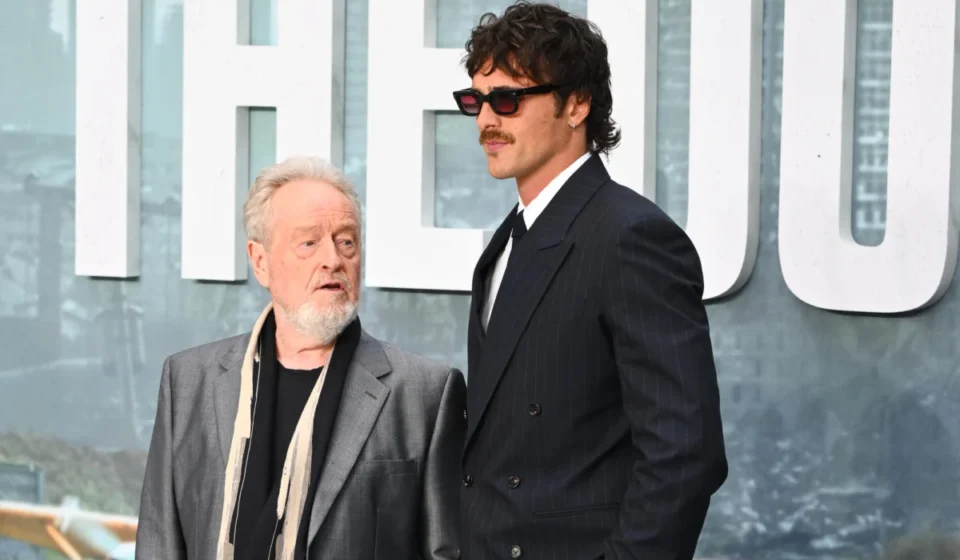
Ridley Scott is a titan of visual storytelling. From the sprawling, mud-caked chaos of the Battle of Waterloo in Napoleon to the claustrophobic, biomechanical nightmares of the Alien franchise and the rain-slicked, neon-drenched dystopia of Blade Runner, Scott has spent decades building worlds that feel tactile, lived-in, and profoundly immersive. Yet, as the legendary director prepares to unveil his latest project, The Dog Stars—which hits theaters this Friday—he admits that his most formidable challenge lies not in coordinating thousands of extras or crafting futuristic production designs, but in the solitary, cerebral act of writing.
"Writing is the hardest possible thing to do," Scott confessed in an upcoming episode of IndieWire’s Filmmaker Toolkit podcast. For a filmmaker whose brand is synonymous with high-concept spectacle, this admission offers a rare glimpse into the engine room of his creative process. While Scott prides himself on a career-long commitment to collaborating with the industry’s finest scribes—ranging from the raw, breakthrough energy of Callie Khouri on Thelma & Louise to the seasoned, gritty expertise of The Dog Stars writer Mark L. Smith—he maintains that the foundational architecture of a film remains its most grueling hurdle.
A Legacy of Collaboration: The Fancher Connection
If there is one name that remains etched into the bedrock of Scott’s career, it is Hampton Fancher. The duo’s collaboration on the 1982 masterpiece Blade Runner remains, by Scott’s own admission, the gold standard for his professional relationships.
At the time, the project was an insurmountable mountain of source material. Tasked with adapting Philip K. Dick’s Do Androids Dream of Electric Sheep?, Fancher faced a narrative landscape that was as sprawling as it was chaotic. "In the first 19 pages of that book, there are 200 stories," Scott recalled. Fancher, with an editor’s eye and a poet’s soul, bypassed the dense, labyrinthine lore of the novel to focus on a singular, humanizing thread: the bounty hunter who finds himself falling in love with his own quarry.
The resulting film did more than just define the cyberpunk aesthetic; it became a profound philosophical meditation on mortality, identity, and the blurring lines between creator and creation. While history has rightfully praised Scott’s visual sensibilities, he is quick to deflect that praise toward the rhythms Fancher instilled in the script. "The cadence is beautiful," Scott said. "He was great with dialogue. The grace of it was fantastic."

The Methodology: Developing the "Invisible" Narrative
Scott’s process with writers is inherently Socratic. He approaches the screenplay as a living document, constantly interrogating the text with "what if" scenarios designed to stress-test the story’s logic and expand its emotional resonance. This method led to the creation of extensive, hidden backstories for Blade Runner—narrative layers that, while often absent from the final cut of the film, provided the textural depth necessary for the performances and the set designs.
A prime example of this "invisible" world-building is the iconic pyramid that houses the Tyrell Corporation. In the film, the structure looms over Los Angeles as a testament to Eldon Tyrell’s unchecked power. But for Scott, the pyramid was not merely a design choice; it was a character motivation.
"The reason the pyramid happened is that I thought in any age, any time, any century, there will always be a disease we can’t figure out," Scott explained. In his original, unfilmed vision, Tyrell was not just a genius CEO; he was a dying man obsessed with his own legacy. "Tyrell died from one of those diseases, but as he was dying for months and years, he built a pyramid in honor of himself," Scott revealed. "In the middle of the pyramid is a highly electronic sarcophagus, where he put himself to go to sleep until they found a cure for the disease. One year, there was a massive shutdown of power, and he melted in his sarcophagus and died."
To maintain the charade of immortality, the corporation simply replaced him with a clone. Though this subplot was eventually deemed too complex for the film’s runtime, the narrative intention behind it informed every frame of the Tyrell scenes. It turned a cold, corporate headquarters into a tomb of vanity, a detail that subtly colors the audience’s perception of the film’s power dynamics.
The Friction of Genius: When Art Collides with Expectation
The history of cinema is littered with masterpieces that were misunderstood at their inception, and Blade Runner is the quintessential case study. When the film failed to meet box-office expectations in 1982, the strain of the project’s high-stakes development finally fractured the relationship between director and screenwriter.

"Hampton was furious," Scott recalled. "He said, ‘You ruined my script.’ I was really deeply hurt by that."
The tension wasn’t limited to the writer’s room. Scott also clashed with his lead, Harrison Ford, over the fundamental nature of the protagonist, Rick Deckard. Throughout the production, Scott was adamant that Deckard was a replicant—a point he believed was cemented by the film’s pervasive origami motif. He recalled the frustration of trying to convince his star, telling him, "Dude, you’re a replicant!"
Looking back, Scott harbors no resentment toward Fancher or the initial skeptics. He views the friction as a byproduct of a film that was simply too far ahead of its time. "I forgive him," Scott said, reflecting on the enduring legacy of the project. "It was just so far ahead of the game."
Implications: The Prescience of Dystopia
Perhaps the most startling aspect of the Scott-Fancher collaboration is how accurately they tapped into the zeitgeist of the 21st century. While Blade Runner was intended as a work of speculative fiction, Scott observes that its core themes—corporate hegemony, the commodification of life, and the consolidation of massive wealth in the hands of "trillionaire" figures—have transitioned from science fiction to contemporary reality.
"We’re headed there now," Scott noted, drawing parallels between the fictional Tyrell Corporation and the modern tech giants that currently shape global politics and economics. "Who’s to stop you from having an army of 10,000 people and 200 Black Hawks if you’ve got that kind of money? So, Blade Runner is coming to fruition as we speak."

This sense of encroaching reality is what keeps Scott’s work feeling vital. Whether he is directing historical epics or futuristic noir, his focus remains on the human struggle against forces—whether they be time, disease, or corporate greed—that are larger than the individual.
Looking Forward: The Dog Stars
As Scott moves forward with his latest release, The Dog Stars, he brings with him the lessons learned from decades of wrestling with scripts. Working with Mark L. Smith, Scott continues his tradition of building intense, collaborative relationships to ensure that the "cadence" of the story remains as compelling as the visuals.
The film, which debuts on August 28, represents yet another iteration of Scott’s lifelong pursuit: the attempt to capture the "hardest thing to do"—writing—and translate it into an experience that can be felt by audiences across the globe. For Ridley Scott, the work of the filmmaker is never finished; it is a constant process of questioning, refining, and daring to build worlds that might just come true.
Ridley Scott’s full conversation on the creative process and his latest project will be available on the upcoming episode of the Filmmaker Toolkit podcast. Subscribers can access the episode via Apple Podcasts, Spotify, or their preferred streaming platform.