The Power of Narrative: George Clooney Reflects on Art, Democracy, and Legacy at the Venice Film Festival

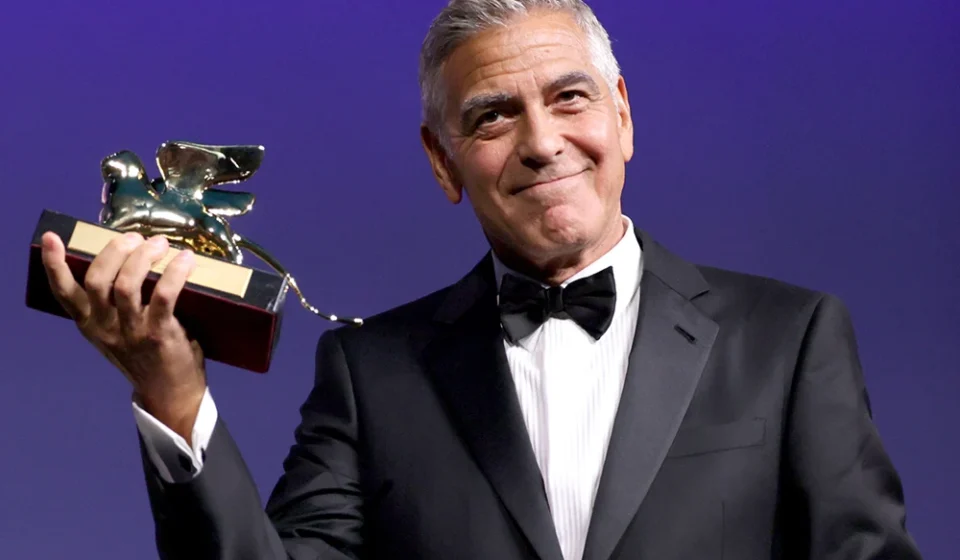
The 81st Venice Film Festival opened with a resonant, high-stakes atmosphere this Wednesday, anchored by the presence of Hollywood titan George Clooney. While the festival is traditionally a showcase for the season’s most anticipated cinematic offerings, the spotlight shifted from the silver screen to the stage of the Palazzo del Cinema, where Clooney was honored with the prestigious Golden Lion for Lifetime Achievement.
In a speech that bridged the gap between personal reflection and global socio-political commentary, Clooney reminded the industry—and the world—that art is not merely an escape from reality, but a fundamental tool for preserving empathy in an era of deepening division.
A Legacy of "Happy Accidents" and Professional Integrity
Clooney’s arrival in Venice was a homecoming of sorts. Having premiered films like Wolfs and the meta-drama Jay Kelly at the festival in recent years, and having famously married his wife, human rights lawyer Amal Clooney, in the historic city a decade ago, he is a familiar figure on the Lido. However, accepting the Golden Lion marked a shift in his tenure—a moment of pause to survey a 45-year career he modestly describes as a "series of happy accidents."
The Oscar-winning actor, producer, and director—one of only three individuals to be nominated for Academy Awards in six different categories—approached the accolade with his characteristic self-deprecation. "When they tell you that you’re going to be getting a lifetime achievement award, two things come to mind," he joked to the captivated audience. "The first is what an incredible honor this is. And then the second is: do they know something that I don’t?"
Despite the humor, the weight of the honor was palpable. His career, spanning from his breakout in the Ocean’s franchise to his directorial efforts in Good Night, and Good Luck and The Tender Bar, has consistently prioritized the intersection of intellectual curiosity and human storytelling.
The Weaponization of Fear and the Role of the Artist
The core of Clooney’s message was a stark warning about the current global climate. Addressing the rise of authoritarianism and the polarization of democratic discourse, Clooney posited that storytelling is an inherently revolutionary act.
"We’re living through a moment in time where the people in charge and people with the most money are telling us to fear one another," Clooney stated. "But we know better than that, don’t we? Because history does teach us a lesson."
He argued that when authoritarian regimes rise, their first targets are rarely politicians. Instead, they seek to silence journalists who ask difficult questions and artists who refuse to provide simple, comforting answers. According to Clooney, "stories are always dangerous to people who peddle in fear," and those who fear books, music, and narratives are "never the heroes in history."
His definition of the artist’s duty is clear: to insist that the "stranger" is not a stranger at all, but a potential hero in someone else’s narrative. "If we can still sit together in the dark and care about people we’ve never met," he remarked, "I think we’ll be OK."
Chronology of a Tribute: From Roast to Reflection
The ceremony itself was a meticulously crafted meta-experience. The tribute reel opened and closed with clips from Jay Kelly, the very film in which his character receives a similar lifetime achievement award. The presentation was led by his longtime collaborator and friend, Laura Dern, who managed to blend genuine reverence with sharp-witted roasting.
Dern lauded Clooney as a man of "deepest humanity and integrity," highlighting his dual roles as an entertainer and an activist. "He is a man who lives for service and truth," she said. However, the mood was lightened by a series of messages from industry peers, most notably Brad Pitt, who humorously targeted Clooney’s lack of rhythm. "Please, please keep him off the dance floor," Pitt quipped. "He doesn’t know!"

The evening concluded on a deeply personal note, with Clooney paying tribute to his wife, Amal, and their children. In a final, humorous nod to his own career trajectory, he joked about his much-maligned turn as Batman, revealing that his children remain the only people who think he was "good" in the role—though he admitted he hasn’t let them watch the film to its conclusion, declaring it "terrible."
Industry Stewardship: The Paramount-Warner Bros. Merger
Beyond the gala, Clooney’s presence at the festival served as a bellwether for the industry’s current anxieties. During a press conference earlier in the day, he addressed the proposed Paramount-Warner Bros. merger, a topic that has sparked significant debate regarding corporate consolidation and the health of the film business.
Clooney defended the right of fellow artists, such as Mark Ruffalo, to criticize the deal. "I support Mark Ruffalo’s ability to speak freely," Clooney said, before offering a pragmatic critique of the merger’s fiscal logic: "I don’t see how the merger financially ends up making sense for the people who are trying to do it. We’ll see."
His comments underscored a growing restlessness among A-list creators regarding the influence of major conglomerates on artistic output. By speaking out, Clooney demonstrated that his influence extends far beyond his own projects; he remains a vocal advocate for the independence of the creative class.
The "Kakistocracy" and the Path to Restoration
Perhaps the most provocative moment of his visit occurred when he was asked to characterize the current political state of the United States. Without hesitation, Clooney introduced the term "kakistocracy"—a government run by the least qualified or most unprincipled citizens—to describe his assessment of the current landscape.
"I think maybe we have a kakistocracy right now, but we’ll get through it," he told journalists. He expressed optimism regarding the democratic process, framing the upcoming November elections as a necessary "check and balance" and looking toward 2028 as a potential "restoration of some normalcy."
Implications: Cinema as a Moral Compass
The implications of Clooney’s message reach well beyond the glamour of the Venice Film Festival. In an industry increasingly dominated by franchise fatigue and algorithmic content, Clooney’s stance serves as a reminder of the "auteur" tradition—a tradition that views film as a primary record of human history and emotion.
By receiving the Golden Lion, Clooney does not just accept a trophy for past work; he accepts a mantle of responsibility. His career, defined by a move from the television screen to the director’s chair of political dramas like Syriana and The Ides of March, reflects a lifelong commitment to using his platform to illuminate uncomfortable truths.
As the festival continues, the echo of his words—that stories are dangerous to those who peddle fear—serves as the unofficial theme of the event. In a world that is arguably more divided than at any point in the last century, Clooney’s call to empathy and his insistence on the power of the "stranger’s story" offer a necessary antidote to the cynicism of the modern age.
Ultimately, George Clooney’s tenure in Venice proves that while he may be a Hollywood star, his most enduring role may be that of the concerned citizen, using the medium of film to hold a mirror up to society, daring us to look closely at what we see—and, more importantly, to care about the people we have never met.