The Architect of Subjectivity: Robert Greene’s "Too Much Sugar" Challenges the Boundaries of Cinematic Truth

In the landscape of modern documentary filmmaking, few directors possess the intellectual rigor and empathetic dexterity of Robert Greene. Known for his meta-cinematic inquiries into the nature of performance and identity, Greene has spent his career dismantling the wall between the observer and the observed. With his latest feature, Too Much Sugar, which recently premiered at the 2026 Venice International Film Festival, the filmmaker has delivered his most audacious project to date—a work that fundamentally questions the premise that we are all, inherently, the protagonists of our own lives.
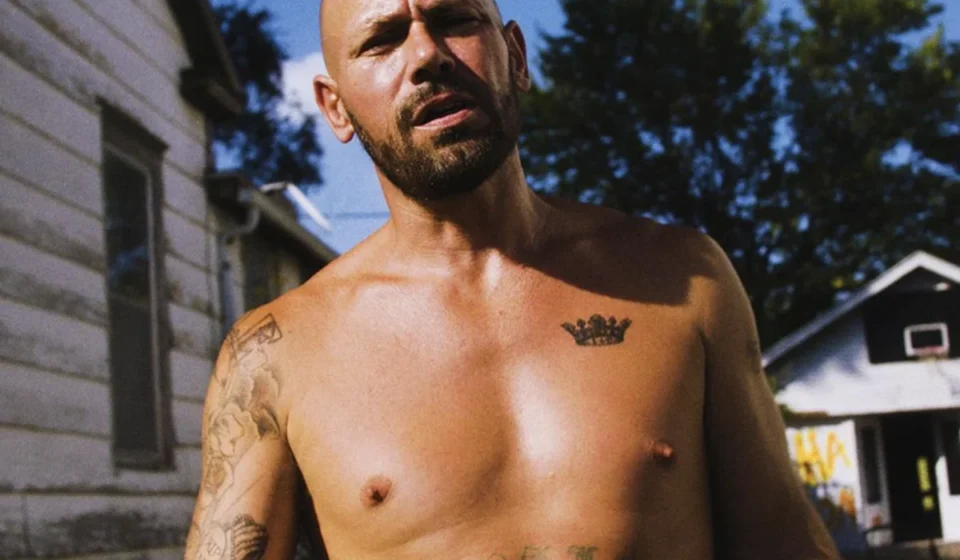
Too Much Sugar serves as a kaleidoscopic portrait of Ryan “Holli-wood” Holliger, a Missouri-based man with a penchant for grandiosity and a desire to see his life reflected through the lens of cinema. What begins as a seemingly modest collaboration spirals into a profound exploration of how storytelling—even the most performative kind—can serve as a radical act of self-actualization.
The Genesis of a Hybrid Vision
The relationship between Greene and Holliger did not begin in an editing suite or a production office, but on the sidelines of a youth basketball league. As fathers of players on opposing teams, the two men initially shared a friction born of athletic rivalry. However, as their paths continued to cross, that tension gave way to a genuine, complex camaraderie. It was during these candid, off-the-cuff conversations that Holliger expressed his desire to craft a film about his own life—a "grandiose" epic that would capture his self-defined essence as a "carpenter, fighter, and father."
Greene, recognizing the inherent cinematic potential of Holliger’s larger-than-life personality, agreed to facilitate this creative venture, but with a crucial stipulation: he would also document the reality of the man behind the persona. This dual-track approach serves as the central tension of the film. As an early title card reveals, Greene’s mission was to both indulge Holliger’s self-aggrandizing fantasies and to hold space for the raw, unvarnished circumstances that necessitated such myths.
Chronology of a Creative Experiment
The development of Too Much Sugar was far from a linear process. It began as an experiment in collaborative storytelling, bringing in trauma-informed practitioners—most notably, registered drama therapist Monica Phinney. Phinney’s involvement was instrumental, building upon the therapeutic methodologies established in Greene’s 2021 film, Procession. In that work, Greene explored the healing potential of letting survivors of sexual assault reimagine their traumas as controlled cinematic scenes.

In Too Much Sugar, that framework is expanded. The production timeline was governed not by a traditional script, but by the emotional needs of its subjects. As filming progressed, the project grew beyond a simple profile of Holliger. It expanded to encompass the “blast radius” of his existence: his six children, his five former partners, and his closest confidant, Michael “AccRite” Midgyett.
The film’s structure reflects this expansion, moving from the singular focus on Holliger to an ensemble piece where every participant is given the agency to conceptualize their own "movie." Whether it is a family horror, a superhero actioner, or a romantic comedy, these individual film-within-a-film projects act as a mirror to their internal realities. By the time the film reaches its final act, the lines between the "real" documentary footage and the "staged" cinematic scenes have become intentionally porous, forcing the audience to abandon the need for a strict genre classification.
Supporting Data and Collaborative Dynamics
One of the most remarkable aspects of Too Much Sugar is its democratic approach to authorship. The film carries a “film by” credit shared by 12 individuals. Despite this potentially unwieldy number of voices, the film maintains a cohesive, albeit chaotic, narrative drive. This chaos is a deliberate stylistic choice; it mirrors the fragmented, high-pressure life of a man whose obligations pull him in competing directions.
The film’s cinematography, helmed by Robert Kolodny, is bifurcated to reflect this dichotomy. The “cinematic” segments utilize intimate close-ups, controlled framing, and a haunting, rhythmic score of piano key taps. In contrast, the documentary reality segments rely on observational verité techniques, with the camera positioned at a distance to capture the freewheeling, often messy interactions of the Holliger clan.
A pivotal scene—one that exemplifies this methodology—takes place in an open field, where Holliger and Midgyett discuss the tragic shooting death of Midgyett’s son. While it appears to be an unscripted, raw moment of consolation, the edit later reveals it was a staged scene. By disclosing this, Greene challenges the viewer’s perception of "authenticity." The scene proves that while the staging was synthetic, the grief and the comfort provided were deeply, palpably real.

Official Perspectives and Thematic Stakes
The implications of the film are best understood through the perspectives of its subjects. For many of the participants, cinema serves as a tool for both future-building and historical revision.
Wayde, Holliger’s 23-year-old son, offers a sobering perspective on the project. During the filming, he struggles to conceptualize his own life story, revealing the difficulty many working-class Americans face when asked to envision a future for themselves. His struggle serves as a critique of a society that often denies such populations the space to see themselves as the heroes of their own narratives. As Greene gently prods Wayde, the conversation becomes a testament to the importance of representation—not just on a screen, but in the belief that one’s life has inherent, grand value.
For AccRite, the stakes are existential. Utilizing the therapeutic framework provided by Phinney, he uses the film to rewrite the tragedy of his son’s death. Through the lens of a science-fiction narrative, he creates a scenario where he can prevent the murder with a time-travel device. His proclamation following the shoot—that even if it didn’t happen in reality, "it happened on the inside of me"—encapsulates the film’s thesis. Greene argues that the internal experience of catharsis holds as much truth as any objective, external record.
Implications: The Power of Ecstatic Truth
Too Much Sugar does not function as a puzzle box for the audience to solve. Instead, it serves as an acknowledgement of the artistry inherent in vulnerability. The text overlays that identify when a scene is "someone’s movie" are not intended to hold the viewer’s hand; rather, they serve as a respectful bow to the imagination of the participant.
The film concludes on a bittersweet, open-ended note. As production wraps, the participants are forced to reconcile their cinematic personas with the realities of their daily lives. The coda offers a glimpse into the aftermath, suggesting that while the "movie" is over, the transformation—the "ecstatic truth," as Greene often calls it—remains.

The documentary’s success lies in its refusal to offer a tidy, Hollywood-style resolution. Instead, it presents a mirror to the human condition, suggesting that the act of telling one’s own story is a vital, if messy, endeavor. By the time the credits roll, the distinction between the artificial and the authentic has not been eradicated; it has been rendered irrelevant.
In Too Much Sugar, Robert Greene has provided a masterclass in documentary ethics and artistic ambition. He proves that while a film may not be able to physically change the world, it can fundamentally alter the internal architecture of those who inhabit it. As the industry looks toward the upcoming distribution cycle, Too Much Sugar stands as a defining work of the decade—a film that dares to ask not just what is real, but what is true.
Robert Greene’s "Too Much Sugar" is currently seeking U.S. distribution following its successful debut at the 2026 Venice International Film Festival. The film is expected to be a major contender in the upcoming festival circuit.