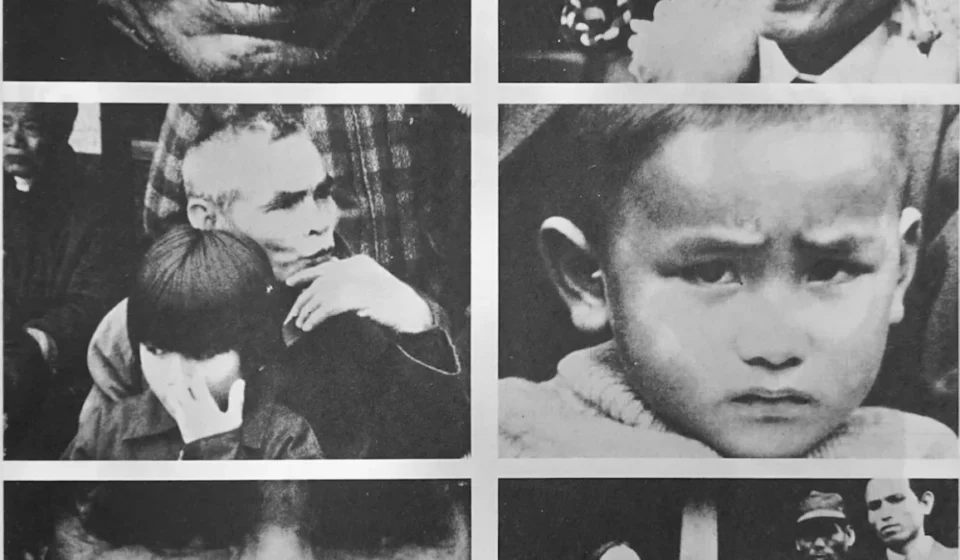

The 15th edition of the Taiwan International Documentary Festival (TIDF), held this May, served as more than a mere showcase of contemporary nonfiction; it functioned as a vital interrogation of history, trauma, and the evolving role of the lens in East Asian society. Since its inception in 1998—a decade after the lifting of martial law in Taiwan—the TIDF has been a crucible for independent media. In an era where regional cinema is often consumed by Western festival circuits hungry for specific narratives of suffering, the 15th TIDF asserted a defiant, prismatic vision of the continent, foregrounding the hybridity of identity and the resilience of those living in the shadow of historical and urban upheaval.
The Archival Awakening: Excavating Hidden Histories
The most revelatory moment of the festival was the screening of Archive: Li Guang-hui (1979/2024), a 30-minute masterwork by the late, renowned photographer Chang Chao-tang. Compiled from television newsreel outtakes shot between 1975 and 1979 while Chang worked for the China Television Company (CTV), the film documents the return of Suniuo—an Indigenous Amis soldier who had been drafted into the Japanese Imperial Army during World War II.
A Chronology of Myth-Making
Suniuo, later known as Teruo Nakamura and eventually rechristened Li Guang-hui, spent 30 years in the jungles of the Indonesian island of Morotai, entirely unaware that the war had concluded. Upon his "discovery" in 1974, his return was immediately co-opted by the Kuomintang (KMT) government. The state recast him as a national hero who had resisted the Japanese, though archival evidence suggests he had simply been left behind.
Chang’s film is a masterclass in editorial restraint. He chronologically assembles the spectacle of Suniuo’s homecoming, stripping away the state’s triumphant narration to focus on the man himself. In one haunting sequence, the famous Taiwanese folk singer Chen Da performs a traditional song for Suniuo, attempting to welcome him back into a national fold that felt entirely foreign to him. Chang’s camera lingers on Suniuo’s face, revealing not the expected joy of a returned hero, but a profound, hollowed-out incomprehension. The film demonstrates how a man’s private trauma was subsumed by a narrative he did not write, highlighting the TIDF’s commitment to challenging the mythologies that underpin the modern Taiwanese state.
Supporting Data: Regional Perspectives and Post-Colonial Hybridity
The festival’s archival programs, specifically "Reel Taiwan" and "War Memories, Shifting Identities," moved beyond the borders of the island to explore the complex, archipelagic relations of the Pacific. These programs challenged the long-held assumption that Taiwanese documentary cinema only blossomed after the 1987 democratic reforms.
The Heterogeneity of East Asia
The film Asia Is One (1973) by the leftist collective NDU provided crucial historical context. By stitching together testimonies from Taiwanese fishermen in Okinawa, Zainachi Okinawan miners, and Tayal Indigenous villagers, the film illustrates the varying, often contradictory relationships to Japanese colonial history. The sea is presented not as a barrier, but as a bridge for seasonal labor and a space where nationalistic territorialization constantly fails to capture the complexity of the people it seeks to define.
As Taiwan’s geopolitical standing becomes increasingly precarious—caught between the competing imperial interests of the United States and the People’s Republic of China—the festival’s archival focus becomes a political act. By highlighting these suppressed histories, the TIDF aligns itself with broader, global anti-imperial struggles, a connection made explicit in the program "Palestine and Its Archiveless Archive," which frames the Palestinian experience as part of a continuum of resistance.
Urban Development and the Human Scale
If the archival films dealt with the ghosts of the past, the contemporary selection faced the steel-and-concrete reality of the present. Many films at the festival grappled with the confrontation between the individual and predatory urban expansion.
The Stage of Destruction
Hu Sanshou’s Xiangzidian Village: The Stage (2026) offers a 150-minute meditation on the erasure of rural space. Filmed over six years, the work eschews the standard "fly-on-the-wall" documentary approach. Instead, Hu acts as a storyteller, binding the villagers to their environment through wide, sustained shots that emphasize their smallness against the looming, god-like presence of bulldozers.
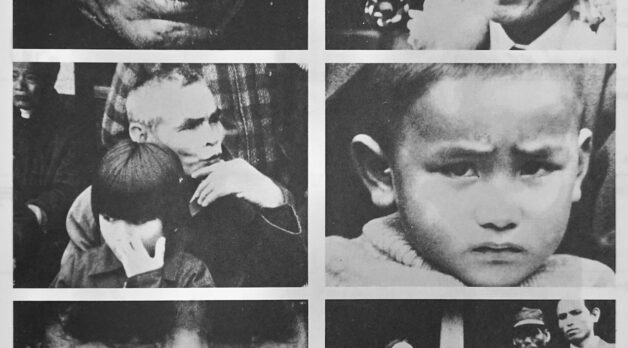
Unlike many documentaries that cater to the European festival circuit’s demand for "poverty porn" or rapid-fire cinéma vérité, Xiangzidian Village is patient. It captures the slow, grinding death of a community. The film’s emotional impact comes from the filmmaker’s personal intimacy with his subjects; these are people who watched him grow up, and whom he now records as they grow old. It is a work of mourning, culminating in a rare close-up that shows the villagers watching a past film by Hu during his father’s funeral—a moment of communal recognition that stands in stark contrast to the sterile, gray highways that have replaced their homes.
Official Responses and Theoretical Frameworks
A persistent theme across the 15th TIDF was the skepticism toward the "therapeutic" power of film. Many filmmakers, particularly those documenting the aftermath of political revolts in Hong Kong and Thailand, consciously avoided the trope that cinema can "change the world."
The Quagmire of Testimony
Anocha Suwichakornpong’s Narrative (2026) serves as a trenchant critique of how trauma is commodified in legal and filmic frameworks. By staging a theatrical workshop with families of Red Shirt activists killed in the 2010 Bangkok massacre, Suwichakornpong exposes how the legal system disaggregates collective tragedies into isolated cases.
The film’s three-act structure—mimicking an abstract narrative—highlights how we demand that victims tell "neat" stories of suffering and resolution. By rendering the participants’ voices inaudible during a moment of forced gratitude (overlaid by Eiko Ishibashi’s haunting score), Suwichakornpong questions whether individual healing is even possible without the restitution of the collective body politic.
Implications: The Exhausted Reality
Perhaps the most poignant reflection on the current state of the region was Luo Li’s Air Base (2025). Set in post-pandemic Wuhan, the film functions as a "city symphony" for an age of apathy. Through a series of staged, repetitive actions—a man straightening curtains on a bus, a woman collecting sighs, a broom stuck in an escalator—the film depicts a society where the citizens have reached a state of "exhausted reality."
The film captures the peculiar, prickly nature of contemporary public life. People obey irrational traffic commands, ignore the absurd, and treat the collective experience of the pandemic with a shrug of apathy. Yet, in this repetition, there is a strange, subtle form of resistance. The characters in Air Base do not collapse; they perform their exhaustion until it becomes a new, surreal form of endurance.
Conclusion: A Prismatic Future
The 15th Taiwan International Documentary Festival did not offer easy answers or comforting resolutions. Instead, it provided a space for "prismatic" reflection. Whether through the archival excavation of a soldier lost in time or the observational study of villagers facing the bulldozer, the films selected this year suggested that the future of Asian nonfiction lies in the gaps between the official history and the lived, often inconvenient, experience of the individual.
By refusing to treat the camera as a weapon of salvation, these filmmakers have instead used it as a tool for mapping the contours of resilience. In a world increasingly defined by the collision of nationalisms, the TIDF reminds us that the most radical thing one can do is to continue to witness, to archive, and to observe the ways in which we bend around the edges of the possible. The festival, much like the subjects it profiles, proves that even when the narrative of progress fails, the act of documenting remains a defiant testament to our shared, if fragmented, humanity.