The Terror of the Closet: Adrian Chiarella’s Leviticus and the Resurrection of Queer Horror

In the landscape of contemporary cinema, the horror genre has long served as a jagged mirror held up to the anxieties of the marginalized. From the subversive subtext of A Nightmare on Elm Street 2: Freddy’s Revenge to the paranoia-drenched isolation of John Carpenter’s The Thing, queer filmmakers have consistently utilized the grotesque and the supernatural to articulate the lived experience of "the other." With his debut feature Leviticus (2026), Australian filmmaker Adrian Chiarella reclaims this tradition, crafting a visceral, modern-day biblical parable that reframes the trauma of conversion therapy through the lens of supernatural terror.
The Premise: When Desire Becomes a Death Sentence
Leviticus opens with a sequence that serves as both a chilling hook and a thesis statement. A lesbian lifeguard, seeking a moment of respite in a secluded poolside shower, falls prey to an invisible entity. This creature—a shapeshifting predator that assumes the form of the victim’s deepest desire—is not merely a random monster. It is the manifestation of a dark hex, cast by a local, ultra-conservative church as a punitive response to the "transgression" of queer identity.
The film is anchored by a haunting, recurring motif that haunts many queer youth: the pious, weaponized dictum that "your desires will kill you." By literalizing this homophobic trope, Chiarella transforms the internal psychological struggle of coming out into a tangible, lethal threat. The monster does not just hunt the body; it exploits the vulnerability of the heart, turning the most intimate form of love into a weapon of destruction.
Chronology and Narrative Arc: A Descent into Dogma
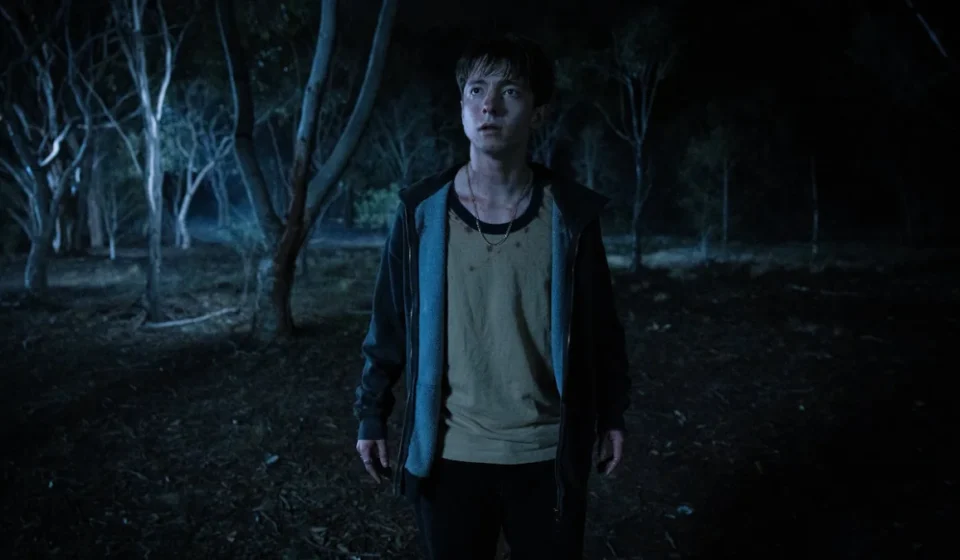
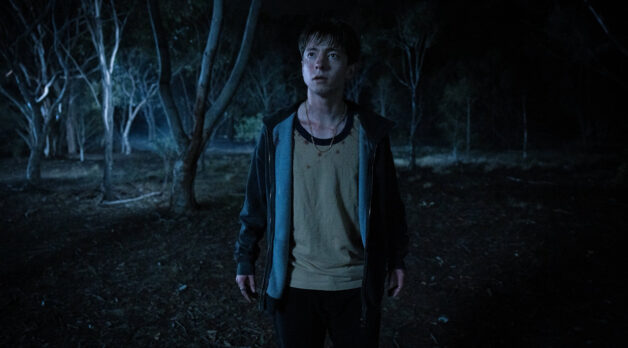
The narrative centers on Naim (played by Joe Bird), a shy, introspective teenager living in the suffocating environment of an Australian industrial town. Naim’s life is governed by the rigid, cult-like religious community that dictates the social and moral boundaries of the region. His world begins to fracture when he finds himself drawn to Ryan (Stacey Clausen), a classmate whose brash, charismatic exterior hides a profound, shared loneliness.
The tension of their burgeoning romance is palpable, defined by a desperate, aggressive intimacy. In one pivotal scene, Ryan pins Naim to the floor of an abandoned, derelict building—a space that mirrors the decay of their own social standing. Their struggle is interrupted by a kiss, yet the moment is quickly tainted by Naim’s own internalised self-loathing; he catches his reflection and recoils, illustrating the film’s central conceit: the horror is not just the monster in the woods, but the fear of one’s own reflection.
The plot spirals into tragedy when Hunter (Jeremy Blewitt), the closeted son of the local preacher, intervenes in the boys’ lives through a violent and confusing tryst with Ryan. Driven by jealousy and the desperate hope that he might be spared from the church’s wrath by betraying his peers, Naim informs on the pair. He spends the remainder of the film in a state of purgatorial atonement, realizing too late that in a system built on bigotry, there is no "lesser" punishment for being yourself.
Supporting Data: The Genre as a Sanctuary
For Chiarella, the creation of Leviticus was a direct response to a global resurgence of reactionary politics and a backsliding in the progress toward queer safety. "I started thinking about what would be personal for me," Chiarella notes, reflecting on his own upbringing. "Horror movies were something that I turned to as a young queer teenager. I don’t think I was alone in that. The genre has been important to the community for a very, very long time."
Chiarella cites the classic horror canon not as a mere aesthetic choice, but as a framework for understanding the "tension between the self and the other." He recalls being forbidden from watching films like The Thing, noting that the prohibition only served to amplify their allure. This "forbidden knowledge" informs the DNA of Leviticus. The production design utilizes a blend of industrial and pastoral landscapes, creating a sense of "dreary, vacant hostility" that forces the characters into a corner where they must decide whether to trust their peers or succumb to the isolation forced upon them by their environment.
Official Perspectives: The Director’s Vision
In interviews regarding the film’s production, Chiarella emphasizes that Leviticus is intended to function as a modern biblical parable. "We wanted to play with this theme of what’s man-made and what comes from the universe," he explains. "It’s about the tension between human nature and the rules and the edicts we live by."
The film’s visual language is meticulously crafted to enforce this theme. Much of the action is observed through distorted perspectives—mirrors, windows, and the impassive, unseeing eyes of bystanders. Those who are not "cursed" by the knowledge of the monster’s existence are effectively blind to the suffering of the queer characters. This mirrors the willful ignorance of a society that dismisses queer identity as a "phase" or an external influence.
A notable performance comes from Mia Wasikowska, who plays Naim’s mother. Her character occupies the space between protector and oppressor, delivering a chilling line that encapsulates the film’s central conflict: "We need fear." For Chiarella, this was essential: "I wanted to create a world where you weren’t sure you could trust even the real people around you anymore."
The Implications: A New Era of Queer Horror
Leviticus arrives at a unique juncture in cinema history. For years, queer media has trended toward stories of empowerment, joy, and the shedding of the "crisis" narrative. While these stories are vital, Leviticus argues that the horror genre remains a necessary space to process the lingering, systemic trauma that still persists.
The film’s ending is a masterclass in modern horror ambiguity. Eschewing the traditional, neatly wrapped conclusion, Chiarella leaves the audience with a haunting reminder of the persistence of trauma. By invoking the classic trope of the "monster that keeps coming back," the film suggests that the shadows of the past are not easily exorcised. "I thought about what that would mean in this film," Chiarella reflects. "That whatever trauma these boys have been through may not go away for a very long time. It may never go away."
Analysis of Thematic Impact
The implications of Leviticus extend beyond the screen. By utilizing the specificities of an Australian "boondocks" setting—a location that feels both hyper-local and universal—the film exposes the fragility of queer safety in rural and isolated communities. The use of "false allyship" and "predatory love" as narrative devices provides a stinging critique of how marginalized groups are often forced to compete for survival within the very systems that seek to erase them.
Ultimately, Leviticus is not a film that promises salvation; it is a film that demands witness. It captures the visceral tremors of being young, queer, and trapped in a world that views your existence as an abomination. By fusing genre conventions with a deeply personal, brutal, and intimate narrative, Adrian Chiarella has created a work that is as intellectually stimulating as it is terrifying—a stark, unflinching look at the horror of the closet, and the long, arduous road to surviving it.
In the final assessment, Leviticus stands as a testament to the enduring power of the horror genre to unearth truths that are too painful to address in the light of day. It is a bold, challenging debut that cements Chiarella as a filmmaker to watch, and a definitive entry in the expanding library of queer-led, genre-bending cinema.