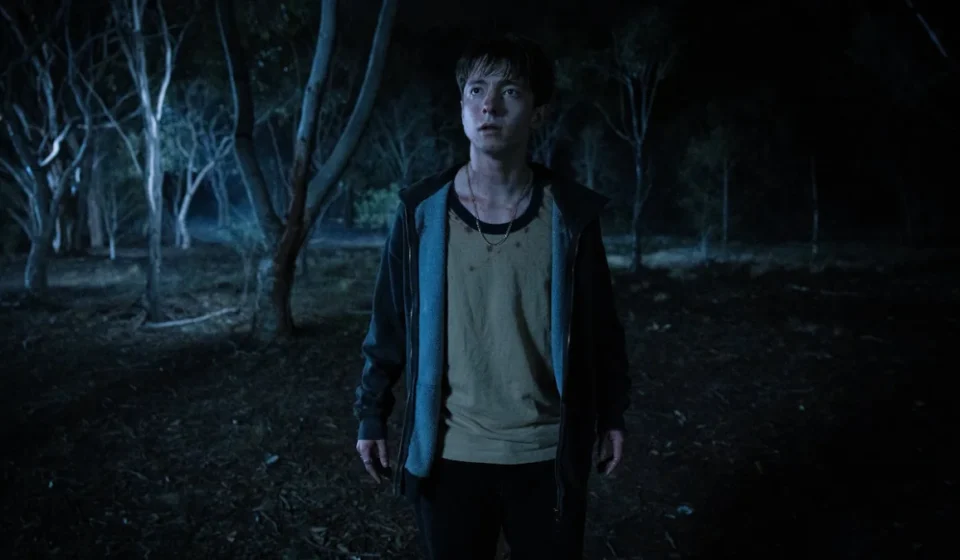
Shadows of the Pious: Adrian Chiarella’s Leviticus and the Resurrection of Queer Horror

In the landscape of modern cinema, the horror genre has long served as a jagged mirror, reflecting the anxieties of the era back at its audience. From the Cold War paranoia of The Thing to the subtextual closeted turmoil of A Nightmare on Elm Street 2: Freddy’s Revenge, the genre has provided a sanctuary for those whose realities are defined by the "other." With his debut feature, Leviticus (2026), director Adrian Chiarella reclaims this tradition, crafting a visceral, haunting parable that transmutes the trauma of conversion therapy into a literal, shape-shifting monster.
The Premise: When Desire Becomes a Death Sentence
Leviticus opens with a chilling sequence that establishes the film’s central conceit: a young lifeguard is seduced in a poolside shower by an entity that appears as her greatest desire, only to be brutally murdered. This "little death" serves as the catalyst for the film’s broader narrative, where a malevolent force haunts a remote, industrial town in the Australian outback.
The entity is no mere slasher; it is the physical manifestation of a hex cast by a local fundamentalist church. The logic of this supernatural affliction is rooted in the hateful rhetoric of conversion therapy: the idea that a queer individual’s desires are not just sinful, but lethal. By literally killing those who succumb to their attractions, the monster serves as a gruesome, supernatural enforcement of the pious dictum that "your desires will kill you."
A Chronology of Transgression and Consequence
The narrative heart of Leviticus follows Naim (Joe Bird), a timid newcomer to the town, and his burgeoning attraction to the charismatic, brash Ryan (Stacey Clausen). Their relationship is defined by a tension that is simultaneously romantic and perilous. In a pivotal scene set in an abandoned industrial building, their bravado gives way to a kiss—a moment of intimacy that is immediately met with self-loathing as Naim catches his own reflection, a recurring motif symbolizing the internalized homophobia that Chiarella weaves throughout the film.
The plot spirals into tragedy with the arrival of Hunter (Jeremy Blewitt), the closeted son of the town’s preacher. After a violent, chaotic tryst involving Hunter and Ryan, a jealous Naim makes a fateful decision: he reports the encounter, hoping for a minor disciplinary action. Instead, his betrayal triggers a cycle of divine, systemic punishment. As Chiarella notes, the film follows the classic horror trajectory where "someone commits a transgression, and whatever horrible thing comes after is because of this."
The boys soon realize they are being hunted. Because the monster can mimic their lovers, the very act of seeking companionship becomes a survival risk. They embark on a desperate journey to find the partner of the film’s first victim—a woman now sequestered in a hospital, forced to live in constant, desperate proximity to others to avoid being alone, yet profoundly isolated by her trauma.
Supporting Data and Production Context
To achieve the film’s suffocating atmosphere, Chiarella utilized the stark, weathered architecture of the Australian boondocks. The production design deliberately contrasts industrial decay with pastoral emptiness, creating a "modern biblical parable" that feels both grounded and otherworldly.
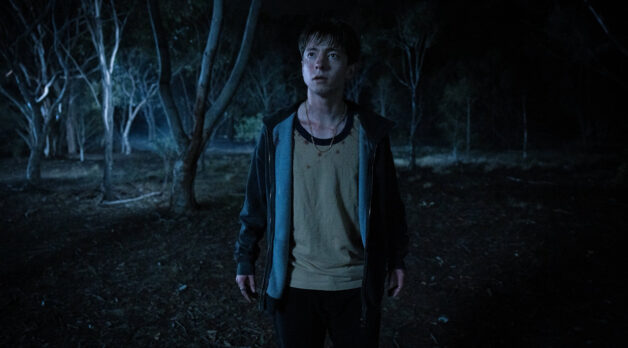
- Visual Language: The film employs a sophisticated use of voyeuristic camerawork. Much of the horror is framed through windows, mirrors, and surveillance, emphasizing the theme of "seeing is believing." The entity is invisible to those who are not "cursed" or "involved," a visual metaphor for the willful ignorance of a community that refuses to acknowledge the existence or validity of the queer experience.
- The Cast: The performances, anchored by Joe Bird and Stacey Clausen, are bolstered by the inclusion of Mia Wasikowska, who plays Naim’s mother. Her character is a masterclass in ambiguity, delivering lines that blur the boundary between protective maternal instinct and the coercive control of the church.
- Influences: Chiarella cites The Thing (1982) as a primary influence, specifically for its exploration of trust and the "tension between the self and the other." He reflects on his own youth, stating, "I was always told not to watch those films, which only made me want to watch them more."
Official Responses and Creative Intent
In interviews, Chiarella has been vocal about the political impetus behind Leviticus. He describes the project as a direct response to the recent, global regression in queer rights and the resurgence of dogmatic, anti-LGBTQ+ rhetoric.
"I started thinking about what would be personal for me," Chiarella explains. "Horror movies were something that I turned to as a young queer teenager. I don’t think I was alone in that. The genre has been important to the community for a very, very long time."
By using the horror genre as a "blunt instrument of identification," Chiarella is not merely seeking to entertain; he is demanding empathy. The director insists that the film’s focus on "man-made rules" versus "the universe" serves to highlight the artificiality of the religious mandates that constrain his characters. When asked about the unsettling nature of the film’s climax, Chiarella emphasizes that he wanted to subvert the "happily ever after" trope often found in contemporary, more sanitized queer media.
Implications: The Modern Queer Horror Renaissance
The release of Leviticus arrives at a pivotal moment. While queer cinema has made significant strides in moving away from stories defined solely by tragedy or systemic prejudice, Chiarella argues that returning to these themes is necessary when those rights are under threat.
The film’s ending—which offers an ambiguous, haunting sliver of hope—serves as a commentary on the nature of trauma. "We took that idea of how, in the final frame of a lot of horror movies, the monster comes crawling back," says Chiarella. "I thought about what that would mean in this film—that whatever trauma these boys have been through may not go away for a very long time. It may never go away."
Cultural Significance
The implications of Leviticus reach beyond the screen. By positioning the monster as a metaphor for the structural violence of conversion therapy, the film forces an audience to confront the reality that for many, the "monster" is not a supernatural entity, but a societal one. The film effectively argues that:
- Isolation is the Primary Tool of Oppression: The entity’s ability to prey on those who are alone mirrors the way fundamentalist institutions isolate queer youth from their support networks.
- Perception is Subjective: The film’s "blinker" mechanic—where the unburdened cannot see the danger—serves as a potent allegory for the privilege of those who choose to ignore the suffering of marginalized groups.
- Resilience is Not Restoration: The film rejects the idea that trauma can be simply "healed" or forgotten, instead suggesting that resilience is found in the endurance of the self despite the persistent scars of the past.
Leviticus is a testament to the enduring power of horror to articulate the unspeakable. By blending the visceral tropes of the genre with a deeply personal, localized story, Chiarella has created a work that is as intellectually challenging as it is terrifying. It is a film that reminds us that while the "monsters" of the past may evolve, the necessity of witnessing and validating the queer experience remains as vital as ever. In the final, shivering frames of the film, the audience is left with a sobering truth: the cycle of fear may be difficult to break, but the act of naming the monster is the first step toward survival.