Beyond the Autobiography: Feng-i Fiona Roan Reinvents Herself with ‘Happily Ever After’

The global stage of the Toronto International Film Festival (TIFF) is once again serving as a launchpad for one of Taiwan’s most promising cinematic voices. Feng-i Fiona Roan, whose debut feature American Girl captured the hearts of critics and audiences alike, is returning to the spotlight with her highly anticipated sophomore feature, Happily Ever After. Selected for the festival’s prestigious Special Presentations lineup, the film arrives not merely as a follow-up, but as a deliberate statement of artistic evolution, marking Roan’s transition from intimate, autobiographical storytelling to a broader, more nuanced exploration of fictionalized human dynamics.
The Weight of Expectation: Navigating the Sophomore Slump
In the world of independent cinema, the "second feature" is a notorious threshold. It is the moment where a director must prove that their initial success was not a stroke of beginner’s luck or a singular lightning strike of personal history, but the foundation of a sustained career.
Roan’s debut, American Girl, was a triumph. Premiering in the Asian Future section of the Tokyo International Film Festival, the film went on to earn seven Golden Horse Award nominations and secured three major prizes, including the coveted Best New Director trophy for Roan. Yet, the film’s success—deeply rooted in Roan’s own upbringing and family history—led some industry observers to pigeonhole her as a filmmaker who could only mine her own life for material.
During the whirlwind of the Golden Horse celebrations, Roan received a piece of advice that would become a guiding principle during the development of her new work. Oscar-winning director Ang Lee, a titan of world cinema, offered her a gentle but prescient warning: "The second film is always the hardest."
"Director Ang Lee reminded me that the second film is always the hardest," Roan tells Variety. "Being able to present my second feature at TIFF as its first stop is very meaningful to me. I also hope it can open up more conversations and opportunities."
Chronology: From Personal Memoir to Fictional Landscapes
The gestation of Happily Ever After was intentionally rapid, born from a desire to pivot away from the constraints of memoir. While American Girl was a meticulous reconstruction of her own childhood, Happily Ever After emerged from a different phase of Roan’s life: her own transition into marriage.
"From the development stage, I was determined to break away from that [autobiographical] label," Roan explains. "I was entering a different phase of my life and was even planning my own wedding at the time. This fictional story went from nothing to a complete screenplay within a year, but it also captured the emotional shifts that my friends and I were experiencing at different stages of our lives."
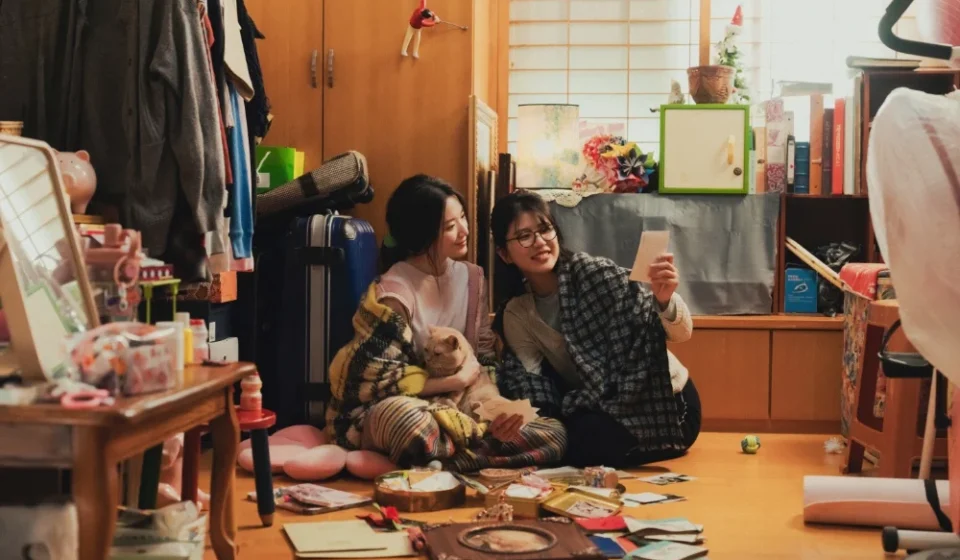
The film, which focuses on the intricate, often fraught relationship between two sisters, underwent a significant structural evolution during the writing process. Originally, the script prioritized the perspective of the younger sister. However, as Roan delved deeper into the emotional architecture of the story, she realized the narrative required a more balanced weight.
In a surprising revelation, Roan cites an unlikely source for structural inspiration: the Disney phenomenon Frozen. "While developing the screenplay, I watched Frozen for a second time and suddenly realized how remarkably well it balances the narrative arcs of its two sister protagonists," Roan says. "I went back and analyzed the screenplay for that reason, then used what I learned to refine the rhythm of my own script."
Casting the Spark: The Debut of Shuhua
Beyond the artistic curiosity surrounding Roan’s evolution, Happily Ever After has generated significant buzz across the entertainment spectrum for its casting of K-pop star Shuhua in her feature film debut. The move is a bold one, blending the prestige of auteur-driven cinema with the massive, cross-generational appeal of a global pop idol.
The decision to cast Shuhua was immediate, driven by an undeniable screen presence that transcended her musical background. "When we met Shuhua, we only asked her to read two scenes," Roan recalls. "Her confidence and personality came through so naturally that we decided on the spot."
To foster an environment of authentic familial intimacy, Roan employed unconventional directing techniques. On set, the hierarchy of stardom was dissolved; cast members were instructed to refer to Shuhua not by her name or her character’s name, but simply as "little sister." This immersion strategy was bolstered by Shuhua’s own life experience as the middle child in a family of three sisters, allowing her to tap into the specific psychological undercurrents of sibling rivalry and camaraderie.
Roan’s directorial guidance for Shuhua was concise but demanding: "I gave her only one note: Before making any movement or delivering any line, she had to have a motivation. Only after you have convinced yourself can your performance move the audience."
The Cultural Landscape: Taiwanese Cinema in a Global Context
As an artist who has spent significant time living in the United States, Roan occupies a unique vantage point regarding the perception of contemporary Taiwanese cinema. She is acutely aware of the giants who came before her, yet she is equally focused on the distinct identity of her own generation.
"Filmmakers from the previous generation, such as Hou Hsiao-hsien and Edward Yang, naturally still have enormous international visibility," Roan notes. "Their particular time and circumstances allowed them to pursue their artistic practices to an extremely high degree, and those achievements have secured their place in film history."
However, Roan posits that her generation is defined by a different set of tools and sensibilities—specifically, a more fluid relationship with genre and a heightened willingness to experiment with formal structures. She views the international festival circuit as a laboratory for these experiments. "Every festival feels a little like a social experiment," she observes. "We bring different stories to international audiences and observe how they respond and what kinds of thoughts those stories provoke."
Influences and Intellectual Foundations
Roan’s cinematic vocabulary is a tapestry of international influences. While she respects the pillars of Taiwanese New Wave, she draws equal inspiration from the humanism of Japanese masters like Ozu Yasujirō and Kore-eda Hirokazu, the formal curiosity of Agnès Varda, and the sharp, contemporary investigations of women’s inner lives championed by Greta Gerwig.
This intellectual breadth is reflected in the literature she consumed during the early stages of Happily Ever After. She immersed herself in the work of Taiwanese author Kevin Chen, particularly his novel Ghost Town, which delves into themes of family legacy and identity. These stories acted as a catalyst, allowing Roan to maintain the "emotional honesty" that defined American Girl while successfully navigating the new territory of purely fictional storytelling.
Implications: Defining Happiness on One’s Own Terms
As Happily Ever After makes its international debut in Toronto, the implications for Roan’s career are clear. She has successfully navigated the sophomore hurdle, proving that her vision is not tethered to her own biography but is, instead, a flexible, evolving lens through which she can examine the human condition.
For the audience, the film poses a deceptively simple question that is embedded in its What does it mean to be happy on your own terms? In a society that often imposes standardized metrics for success—especially for women—Roan’s film seeks to disrupt these narratives, offering instead a nuanced look at the quiet, often messy reality of finding one’s own path.
By moving away from the "autobiographical" label, Roan has not left her past behind; she has integrated it into a more expansive creative philosophy. Whether she is analyzing the structure of an animated blockbuster or reading the works of contemporary Taiwanese novelists, Roan’s approach is defined by a constant, restless search for the truth of the moment. As she engages with international filmmakers and audiences in Toronto, the conversation she hopes to spark is not just about her film, but about the universal search for identity, self-worth, and the elusive nature of a "happily ever after."