

In the annals of cinema, few challenges are as daunting as adapting Homer’s The Odyssey. It is a narrative defined by the impossible: sea-swallowing whirlpools, island-dwelling giants, and the divine intervention of gods who view humanity as little more than pawns on a Mediterranean chessboard. When Christopher Nolan announced his $250 million 2026 adaptation, skeptics questioned whether the sheer scale of the epic could be captured without devolving into a sea of artificial, weightless pixels.
Nolan’s answer was characteristically tactile. By utilizing IMAX 70mm film cameras—the first feature production to shoot its entirety in the format—the director sought to anchor the ethereal nature of myth into the brutal, textured reality of physical film. The result is a cinematic achievement that functions as a bridge between ancient storytelling and cutting-edge practical production.
The Genesis of the Giant: A Triumph of Practical Performance
The centerpiece of Nolan’s vision is the Cyclops, Polyphemus. In a traditional blockbuster, such a creature would be an entirely digital creation, often resulting in the "uncanny valley" effect that detaches audiences from the stakes of the scene. Nolan, working alongside visual effects supervisor Andrew Jackson and the wizards at DNEG, opted for a hybrid approach that prioritizes performance over software.
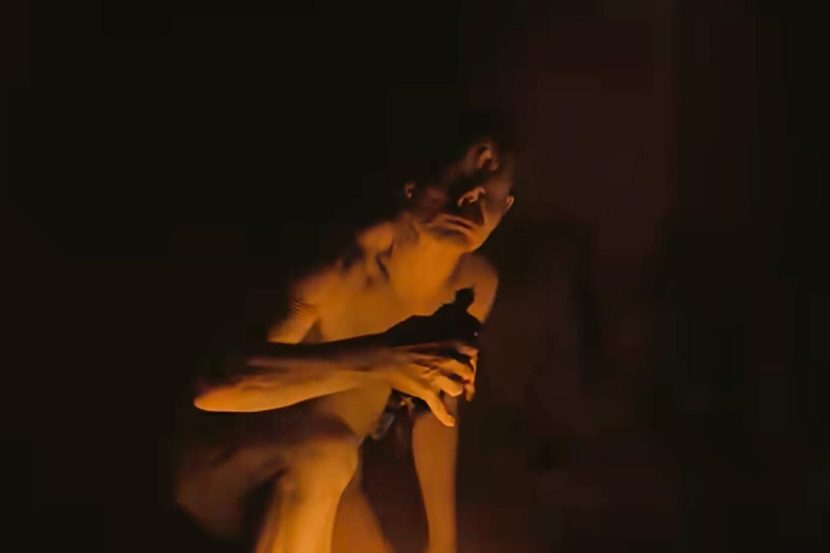
The creature is brought to life by theatrical veteran and mime artist Bill Irwin. Having previously collaborated with the Nolan camp to provide the physical performance for the robots in Interstellar, Irwin was the natural choice to embody the Cyclops. Clad in complex, full-body prosthetics, Irwin did not merely provide motion capture data; he gave the monster a soul.
The Anatomy of the Illusion
The production team utilized a multi-layered approach to sell the scale of the sixty-foot giant:

- The Practical Base: On location at Nestor’s Cave in Greece, a colossal, non-digital puppet served as a physical stand-in. This allowed the actors, including Matt Damon, to react to a genuine presence rather than a tennis ball on a stick.
- The Performance Layer: Irwin’s performance was captured separately, often filmed from low angles to exaggerate his size against the cave’s natural geometry.
- Real-Time Integration: Irwin provided the Cyclops’ voice on set in real time, allowing for a dynamic, reactive performance that dictated the rhythm of the scene rather than the other way around.
This philosophy—building the impossible in front of the lens and using VFX merely to bridge the gaps—is the heartbeat of the film.
Technical Chronology: Constructing the Mythic World
The production of The Odyssey was not merely a filming schedule; it was a feat of engineering. The timeline of the project reflects the grueling nature of Nolan’s commitment to "invisible" effects.
- Phase I: The Research and Design (2024): Nolan and his team spent over 18 months analyzing how ancient, natural phenomena might have been interpreted as supernatural events. This "grounded mythology" approach meant that every monster, storm, and divine encounter had to be tethered to real-world physics or geography.
- Phase II: The Greek Expedition (2025): The production moved to various Mediterranean locations. Here, the challenge was logistical. Shooting on 70mm IMAX is physically demanding; the cameras are massive, loud, and require constant maintenance.
- Phase III: The Post-Production Synthesis (2026): DNEG’s primary task was not to create, but to integrate. By blending plates, live-action photography, and subtle digital enhancements, they ensured that the "invisible effects" remained, as the name implies, unseen.
For the Laestrygonian giants, the production utilized forced perspective—a technique as old as cinema itself—combined with the casting of seven-foot stunt performers and undersized doubles. By manipulating the physical environment, Nolan forced the audience to reconsider their sense of depth and scale.
Supporting Data: The Cost of Realism
The $250 million budget, while significant, is a testament to the cost of tangible filmmaking. In an era where many studios opt for cheaper, fully digital pipelines, Nolan’s insistence on IMAX 70mm and practical set-building represents a massive investment in asset longevity.
| Element | Production Methodology |
|---|---|
| Cyclops (Polyphemus) | Prosthetic suit (Bill Irwin) + Puppet + Digital compositing |
| Laestrygonian Giants | Forced perspective + 7ft stunt performers + Undersized doubles |
| Ocean Sequences | Real-world marine photography + Practical wave-tanks |
| Divine Intervention | Practical lighting effects + Atmospheric manipulation |
The reliance on practical sets meant that when a location wasn’t available, it was built. The production designers focused on materials—stone, wood, and salt—that would react realistically to the high-resolution requirements of the IMAX format.
Official Responses and Critical Discourse
The release of The Odyssey has reignited the perennial debate surrounding Christopher Nolan’s directorial style. The VFXShow podcast recently hosted an episode featuring Matt Wallin, Jason Diamond, and Mike Seymour, where the panel dissected the film’s technical merits.
Predictably, the panel reached no consensus. The debate touched upon the core tension of modern filmmaking: at what point does the digital "enhancement" of a physical set undermine the authenticity of the performance?
"Nolan is attempting to reconcile the irreconcilable," noted Mike Seymour during the broadcast. "He wants the sheer scale of fantasy with the gritty, weight-filled reality of a period drama. Sometimes the seams show, but when it works, it is transformative."
The official stance from DNEG and Andrew Jackson has been one of collaboration. Their statements emphasize that the VFX were never intended to replace the set, but to act as an extension of the camera’s reach. By keeping the digital work "invisible," they aimed to preserve the integrity of the 70mm negative.
Implications: The Future of the Epic
What does The Odyssey mean for the future of the blockbuster?
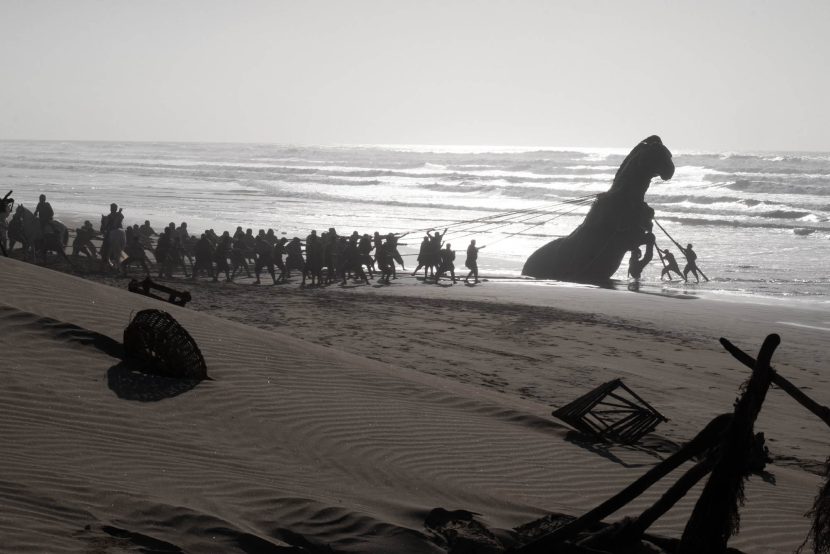
First, it signals a potential resurgence in the demand for large-format, practical-first filmmaking. Audiences, increasingly fatigued by the "digital sheen" of contemporary superhero films, have responded to the visceral texture of Nolan’s work. There is a palpable difference between a creature composed of digital polygons and one that has been lit by the actual sun in a Greek cavern.
Second, it redefines the role of the VFX house. In the current industry, VFX supervisors are often brought in at the very end to "fix it in post." On The Odyssey, they were partners from the inception, helping to design the shots so that the digital work would be secondary to the physical truth.
Finally, the film challenges the industry to rethink the "supernatural." By grounding the divine in natural phenomena—treating a god’s wrath as a sudden tectonic shift or a localized weather anomaly—Nolan has provided a blueprint for how to adapt fantasy literature for a modern, skeptical audience.
As the dust settles on the release, the debate continues. Was the use of a physical puppet for the Cyclops an unnecessary expense, or was it the essential element that allowed Matt Damon to deliver a performance rooted in genuine dread?
For the team at fxguide, the answer remains elusive, much like the path home for Odysseus himself. However, in the tension of that disagreement lies the value of the film. It is a production that demands to be looked at, debated, and—most importantly—seen on the largest screen possible. Whether you agree with Nolan’s methodology or find it to be a masterclass in cinematic excess, one thing is certain: the myth has been brought into the light, and it is more physically imposing than ever before.