From Country Ballad to Primetime: The Curious Case of Sherwood Schwartz and ‘Harper Valley PTA’

In the pantheon of television history, few names resonate as loudly as Sherwood Schwartz. As the creative force behind the cultural juggernauts Gilligan’s Island and The Brady Bunch, Schwartz essentially codified the American sitcom, blending high-concept premises with an enduring, lighthearted optimism. However, the legacy of a legendary producer is often defined not just by their hits, but by the "lost" projects that populated the fringes of their career. Among these is the early 1980s television adaptation of Harper Valley PTA—a show that brought a chart-topping country song to the small screen, only to become a reluctant footnote in the career of one of TV’s most influential architects.
The Genesis: A Song Becomes a Phenomenon
To understand the television series, one must first understand the cultural lightning in a bottle that was the 1968 song "Harper Valley PTA." Written by Tom T. Hall and performed by Jeannie C. Riley, the track was a biting, satirical country anthem that resonated with millions. The narrative was simple but provocative: a widowed mother named Mrs. Johnson receives a sanctimonious note from the local Parent-Teacher Association criticizing her attire and her social life. In a cathartic climax, Mrs. Johnson attends a PTA meeting and proceeds to dismantle the hypocritical members by revealing their own salacious secrets.
The song’s success was meteoric, spending weeks at the top of both the Billboard Hot 100 and the Hot Country Singles charts. Its narrative potential was undeniable; it captured a specific era of American small-town tension, pitting a free-spirited outsider against a rigid, judgmental establishment. By 1978, the rights to the song were acquired by April Fools Productions, leading to a feature film starring the incomparable Barbara Eden—fresh off her iconic run as the lead in I Dream of Jeannie. With a modest budget of $1 million and a box office haul that reached upwards of $8 million to $25 million, the film was a bona fide success. This transition from a three-minute song to a 90-minute film naturally begged the question: could the premise sustain a weekly series?
Chronology: Navigating the Development Maze
The development of the Harper Valley PTA television series was, by all accounts, a chaotic endeavor. Following the success of the 1978 motion picture, NBC moved quickly to capitalize on the momentum. The studio turned to industry veteran Sherwood Schwartz and his son, Lloyd J. Schwartz, to shepherd the project.
However, the production was fraught with internal friction from the outset. While the network saw a ratings goldmine, the elder Schwartz viewed the project as an obligation rather than a passion.
1978–1980: Pre-Production and Development
Following the box office triumph of the film, NBC greenlit the television adaptation. Barbara Eden was signed to reprise her role as Stella Johnson, the resilient and fashionable single mother. The network’s strategy was to transplant the film’s tone—a mix of small-town satire and light comedy—into a standard sitcom format.
January 1981: The Series Premiere
Harper Valley PTA debuted in the winter of 1981. The show centered on Stella’s life in the fictional town of Harper Valley, Ohio, as she navigated the judgmental gaze of the local elite, including Mayor Otis Harper, Jr. (played by George Gobel) and the antagonistic Reilly family.
1981–1982: The Transition and Cancellation
After the first season, the production underwent a seismic shift. The PTA element—the core narrative conceit of the original song—was stripped away, and the production team was overhauled. Sherwood Schwartz exited the series, leaving the show to navigate a second season without its foundational creative vision. By August 1982, the series was canceled, marking the end of the Harper Valley experiment.
The Reluctant Producer: Sherwood Schwartz’s Perspective
Perhaps the most intriguing aspect of Harper Valley PTA is the documented reluctance of its primary producer. In a 2003 interview with RetroCrush, Sherwood Schwartz provided a candid glimpse into the reality of studio-mandated projects.
"I just came in as a favor to Universal, ’cause I was doing The Brady Brides at the same time," Schwartz revealed. "But I really didn’t want to do this other one. They were floundering around. They wanted me to do it."
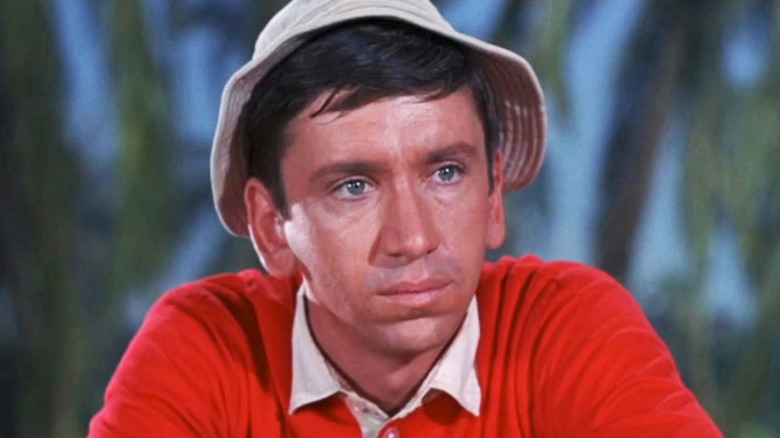
This admission highlights the disconnect between the network’s perception of a "sure-fire hit" and the creator’s own creative sensibilities. Schwartz recognized that while the performers—most notably Barbara Eden—were highly capable, the show itself was "kind of a dead-end." This skepticism explains why the show’s quality was often inconsistent. For a man who had built his career on meticulously crafted, high-concept family sitcoms, Harper Valley PTA felt like a creative compromise, a project he had been drafted to salvage rather than cultivate.
Supporting Data: Cast, Setting, and Structural Shifts
The series featured a notable cast tasked with carrying the weight of the transition from film to television. Barbara Eden, as the focal point, brought her considerable charisma to the role of Stella Johnson, a woman whose mere presence threatened the fragile social order of a small town.
The structure of the show relied heavily on the "us vs. them" dynamic. The first season focused on the bureaucratic absurdity of the PTA and the petty power struggles between Stella and the town’s matriarch, Flora Reilly. This setup served as a direct nod to the lyrics of the original Jeannie C. Riley song. However, the shift in the second season was arguably the show’s undoing. By abandoning the PTA setting, the series lost the very tension that gave the song and the first season their narrative teeth.
Barbara Eden later reflected on the turmoil during an interview with the Television Academy, noting that while the Schwartzes did a "fabulous job," the constant changes in leadership in the second season created a fractured experience. The "zigging and zagging" she described was a clear symptom of a show that had lost its original north star.
Implications: The Legacy of "Dead-End" Shows
The legacy of Harper Valley PTA serves as a case study in the risks of adapting non-narrative intellectual property. While the song provided a strong character archetype and a clear conflict, it lacked the depth required for an ongoing series. The show’s failure—or, more accurately, its mediocre two-season run—demonstrates that even a legendary producer cannot manufacture magic when the source material is stretched beyond its natural capacity.
Furthermore, the show stands as a testament to the "hired gun" nature of 1980s television production. Producers were often asked to take on multiple projects, leading to situations where creative vision was sacrificed for corporate necessity. For Sherwood Schwartz, Harper Valley PTA was a diversion from the projects he cared about, a temporary assignment that he fulfilled with professionalism but without the creative spark that defined his greatest works.
Conclusion: A Footnote in Sitcom History
Today, Harper Valley PTA is largely remembered by television historians and nostalgic fans of 1970s and 80s pop culture. It is not listed alongside Gilligan’s Island or The Brady Bunch as a cornerstone of the medium, nor was it intended to be. It exists as a curious intersection of country music folklore and network television ambition.
Sherwood Schwartz eventually moved past the experience, continuing his career with other projects and reflecting on his filmography with the clarity of hindsight. The show remains a perfect example of the complexities of the industry: a story that started with a country song, moved through the lens of a hit film, and eventually ended in the annals of "short-lived" television. It serves as a reminder that even the most successful creators have projects that don’t quite take flight—and that sometimes, the most interesting parts of a legendary career are the ones that didn’t go according to plan.