From Classroom to Cinema: How The Los Angeles Film School is Shaping the Future of Entertainment

In the high-stakes, fast-paced world of global media, the gap between a passionate enthusiast and a professional filmmaker is often measured by technical proficiency, industry networking, and a deep understanding of the machinery that powers the entertainment sector. For decades, the aspiration to join the ranks of top-tier directors, visionary screenwriters, and elite producers has been tempered by a singular, daunting question: Where does one begin?
Since its inception in 1999, The Los Angeles (L.A.) Film School has positioned itself as the definitive bridge between academic theory and the realities of modern production. Located in the heart of Hollywood, the institution has cultivated a reputation for transforming raw creativity into professional-grade execution. By stripping away the abstract nature of traditional film studies and replacing it with industry-standard hardware and real-world workflows, the school has become a breeding ground for the next generation of award-winning talent.
Main Facts: The L.A. Film School Model
The core philosophy of The Los Angeles Film School is built on the principle of "active immersion." In an industry that rewards those who can navigate a high-pressure set, the school emphasizes that education should not be confined to a lecture hall. Instead, students are placed directly behind the cameras, into the edit suites, and into the boardrooms where entertainment deals are struck.
The institution’s mission is threefold: fostering creative independence, encouraging professional collaboration, and facilitating the exploration of emerging technologies. By utilizing the same equipment found on major studio backlots—from high-end cinema cameras to professional sound-mixing consoles—the school ensures that graduates are not just "film school ready," but "set ready." This focus on practical application is designed to give students a competitive advantage in a landscape that is constantly shifting due to digital disruption and the rise of streaming platforms.
A Chronology of Growth: Two Decades of Industry Evolution
To understand the significance of The L.A. Film School, one must look at the timeline of its development. Founded at the turn of the millennium, the school emerged during a period of transition in the film industry. The late 90s marked the shift from purely analog production to the early adoption of digital non-linear editing and computer-generated imagery (CGI).
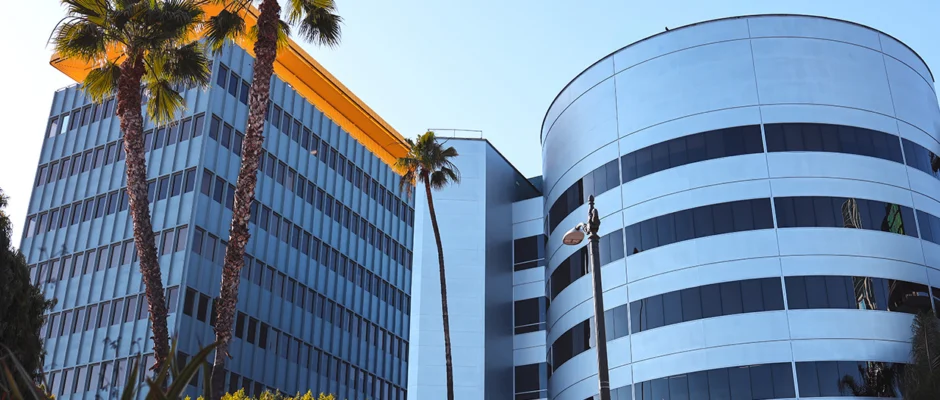
- 1999: The L.A. Film School opens its doors, establishing its campus in the historic RCA building in Hollywood, signaling a commitment to maintaining ties to the physical history of the entertainment industry.
- Early 2000s: The curriculum expands to include emerging digital workflows, recognizing that the "film" in "film school" was rapidly becoming a metaphor for digital content creation.
- 2010s: The institution pioneers robust online learning environments, breaking geographical barriers and allowing students from across the globe to access the same industry-standard curriculum as their on-campus counterparts.
- 2020s to Present: The school continues to pivot toward the intersection of entertainment and technology, incorporating modern disciplines like social media management, digital content production, and advanced animation techniques into its degree programs.
Supporting Data: An Overview of Specialized Programs
The L.A. Film School offers a diverse portfolio of Bachelor of Science (B.S.) and Associate of Science (A.S.) degrees, meticulously structured to address the specific needs of different creative and business verticals.
The Production and Directing Pipeline
- Bachelor of Science in Film Production: This program is the flagship offering for those aiming for the director’s chair. Students delve into visual storytelling, choosing concentrations in cinematography, directing, or producing. It is designed to mirror the hierarchy and collaborative nature of a professional set.
- Associate of Science in Film: A condensed, intensive, in-person program that provides a comprehensive overview of production stages. It is ideal for those looking to enter the workforce quickly with a solid, hands-on foundation in the mechanics of filmmaking.
The Digital and Remote Frontier
- Bachelor of Science in Digital Filmmaking (Online): Recognizing the global nature of modern media, this program covers the full spectrum of the craft—from pre-production planning to post-production editing—all within a virtual classroom that maintains high academic rigor.
- Bachelor of Science in Writing for Film & TV (Online): This curriculum focuses on the structural integrity of a narrative, teaching students how to craft compelling, character-driven scripts that resonate in the current television and streaming climate.
Business and Media Strategy
- Bachelor of Science in Entertainment Business: Available both on-campus and online, this program treats entertainment as a global enterprise. Students learn the nuances of talent management, distribution, marketing, and the legal framework that governs the business of show business.
- Bachelor of Science in Media Communications (Online): In the age of the creator economy, this program is essential. It equips students with the tools to master social media management, digital content production, and new media advertising, ensuring they understand how to distribute and monetize content in a digital-first world.
The Art of Animation
- Bachelor of Science in Animation (On-Campus & Online): These programs bridge the gap between fine art and computer engineering. From the fundamentals of 3D modeling to complex character animation and digital sculpting, the curriculum ensures students are fluent in the proprietary software and techniques currently used by major animation studios.
Official Perspectives: The Value of Immersive Education
Leadership at The L.A. Film School frequently emphasizes that their value proposition is not just the degree, but the ecosystem. By situating the school in Hollywood, they provide students with "accidental" networking opportunities—the chance to interact with guest lecturers who are active industry professionals, and the ability to find internships at production houses within a short radius of the campus.
"Our approach is about removing the mystery of the industry," noted a representative of the institution. "When a student graduates, they shouldn’t be wondering how a film set works. They should be looking for their next project because they already possess the vocabulary, the technical skills, and the professional confidence to step into a role on day one."
![Craft your story, leave a legacy [Sponsored]Filmmaker Magazine](https://cdn.filmmakermagazine.com/uploads/2026/07/LAFS_building-1240x698.jpg-628x348.png)
The focus on "industry-standard equipment" is a deliberate pedagogical choice. By training on the same cameras, software suites, and lighting rigs that are used on current blockbuster productions, students bypass the "learning curve" that often plagues recent graduates when they transition from academia to professional sets.
Implications: The Future of Entertainment Education
The entertainment industry is currently undergoing a radical transformation. With the proliferation of AI-assisted tools, the dominance of streaming services, and the blurring lines between video games and linear film, the definition of a "filmmaker" is shifting.
The L.A. Film School’s commitment to expanding its online offerings suggests a recognition of this new reality: the future of media is decentralized. By providing a high-quality education to students who may not be able to physically reside in Los Angeles, the school is democratizing access to top-tier training.
Furthermore, the integration of programs like Media Communications and Entertainment Business reflects a broader understanding that a filmmaker must also be a strategist. In today’s market, the ability to produce a film is only half the battle; the other half is understanding how that content reaches an audience in a crowded, noisy digital ecosystem.
Why This Matters
For the prospective student, the choices provided by The L.A. Film School represent a menu of possibilities. Whether one is drawn to the technical precision of cinematography, the creative architecture of screenwriting, or the strategic orchestration of entertainment business, the path is clearly marked.
As the lines between traditional media and digital content continue to dissolve, the demand for professionals who are technically literate and business-savvy will only increase. The L.A. Film School stands as a benchmark for how specialized, career-focused education can keep pace with an industry that waits for no one.
For those ready to transition from a viewer to a creator, the institution provides the necessary tools to navigate the ever-evolving landscape of the entertainment industry. For more information on programs, admissions, and upcoming enrollment cycles, aspiring professionals are encouraged to visit lafilm.edu.
In an industry defined by the stories it tells, The Los Angeles Film School is focused on writing the next chapter of the creators themselves. Through its blend of traditional craft and modern innovation, the school continues to prove that while talent is innate, the professional execution of that talent is something that can—and must—be taught.