Eternal Damnation in 4K: Revisiting the Legacy of Neil Jordan’s ‘Interview with the Vampire’

Thirty years after its initial release, Interview with the Vampire (1994) remains a monolithic achievement in the landscape of gothic horror. As the 1990s saw a renaissance of creature-feature cinema—anchored by Francis Ford Coppola’s Bram Stoker’s Dracula—Neil Jordan’s adaptation of Anne Rice’s seminal novel carved out its own, far more melancholic space. With Warner Bros. recently releasing a meticulously restored 4K Ultra HD edition of the film, fans and scholars alike are finding themselves drawn back to the humid, blood-drenched streets of New Orleans and the suffocating opulence of Paris.
The Genesis of a Gothic Masterpiece
To understand the weight of Interview with the Vampire, one must first acknowledge the shadow of its source material. Anne Rice’s The Vampire Chronicles redefined the monster trope, transforming the vampire from a mindless, predatory beast into a Byronic, existential philosopher. The film captures this transition with unflinching commitment: Louis de Pointe du Lac (Brad Pitt), a man drowning in grief and nihilism, is seduced into immortality by the charismatic and destructive Lestat de Lioncourt (Tom Cruise).
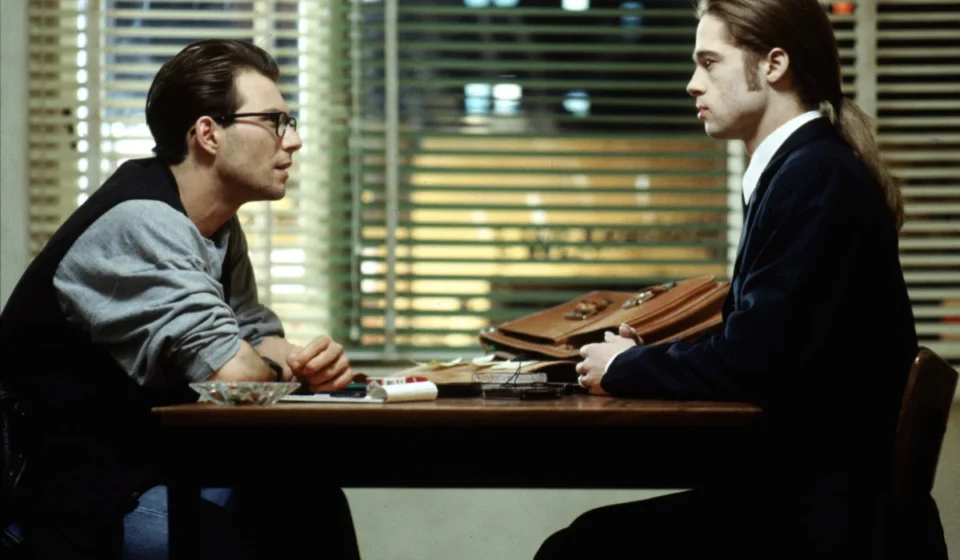
The narrative, framed as a confessional dialogue between the ancient Louis and the modern interviewer Daniel Molloy (Christian Slater), is less a horror movie and more a meditation on the agony of infinite life. The chemistry between the leads—often the subject of tabloid fodder at the time of release—serves as the film’s beating, albeit frozen, heart. With the addition of Kirsten Dunst’s haunting turn as Claudia, the film explores the "baby-trap" of immortality, where the lines between creator and creation blur into a cycle of mutual resentment.
A Chronology of Development Hell
The journey to the screen for Interview was as arduous as the eternal lives of its protagonists. Paramount Pictures originally secured the rights in 1976, the same year the novel was published. For nearly two decades, the project languished in development purgatory.
It was the critical and commercial success of Neil Jordan’s 1992 thriller The Crying Game that finally moved the needle. However, the true catalyst for the film’s unique aesthetic was Jordan’s earlier work, The Company of Wolves. In a recent interview, Jordan recalled the surreal moment when Anne Rice reached out to him.
![‘Interview With the Vampire’ Director Talks Anne Rice, Lestat, Claudia & the Legacy of All Three [Exclusive]](https://www.dreadcentral.com/wp-content/uploads/2026/09/LESTAT-LOUIS-1600x900.jpg)
"When Anne Rice called me up to persuade me to make this movie, she said to me, ‘Company of Wolves is Lestat’s favorite film,’" Jordan explained. "It was really weird. You’re talking about your fictional character as if he’s sitting there beside you, having a cup of tea with you."
This anecdote perfectly captures the intensity with which Rice approached her creations. For Jordan, the project felt like a spiritual successor to his previous work, providing the perfect vehicle to explore the intersection of fairy-tale logic and adult morbidity. After securing the director’s chair, Jordan pushed for creative control over the script, demanding to restore the eroticism and philosophical depth that had been stripped away during the film’s years in production limbo.
Casting Conundrums: The Road Not Taken
The history of the film’s casting is a masterclass in "what ifs." Biographer Katherine Ramsland noted that Rice initially envisioned French icon Alain Delon for the role of Louis. When it came to the role of Lestat, the author famously campaigned for Julian Sands, believing he possessed the ethereal, dangerous quality required for the character. The studio, however, was wary of casting a lead they deemed not "bankable" enough for such a high-budget endeavor.
The casting of Tom Cruise as the titular vampire was, at the time, met with vitriol from fans of the book. Rice herself was initially skeptical, publicly voicing her concerns about the choice. Yet, Jordan remained steadfast. "I was both intrigued and unsettled," Jordan noted regarding his first meeting with Cruise. He championed the actor’s "icy beauty," a decision that ultimately paid off, as Rice later softened her stance, expressing admiration for the final performances of Cruise, Pitt, and Antonio Banderas.
The production also faced tragic shifts. River Phoenix was slated to play the interviewer, Daniel Molloy, but his untimely death necessitated a last-minute casting change, with Christian Slater stepping into the role. Similarly, the role of Claudia was a highly contested position, eventually going to a twelve-year-old Kirsten Dunst, whose performance remains one of the most chilling portrayals of a child-vampire in cinema history.
![‘Interview With the Vampire’ Director Talks Anne Rice, Lestat, Claudia & the Legacy of All Three [Exclusive]](https://www.dreadcentral.com/cdn-cgi/image/width=788%2Cheight=444%2Cfit=crop%2Cquality=75%2Cgravity=auto%2Csharpen=1%2Cmetadata=none%2Cformat=auto%2Conerror=redirect/wp-content/uploads/2026/09/LESTAT-LOUIS.jpg)
The Architecture of Dread
A defining feature of the film’s production was the decision to shoot almost entirely at night. This logistical choice forced the cast and crew into a nocturnal existence that mirrored the lives of their subjects.
"New Orleans was amazing… We never saw the daylight," Jordan recounted. He joked that he has never seen the Mississippi River in the sunlight, adding, "We lived like vampires when we made the movie."
This commitment to the "endless night" aesthetic was bolstered by the work of director of photography Philippe Rousselot and production designer Dante Ferretti. The resulting visual language is one of saturated shadows, opulent decay, and a romanticism that feels both beautiful and suffocating. The film eschews traditional jump scares, opting instead for a lingering, atmospheric dread—a technique that remains highly effective three decades later.
Modern Reimagining and the "Claudia Problem"
The endurance of The Vampire Chronicles is currently being tested by AMC’s recent television adaptation. While the series has garnered significant acclaim, it has taken liberties that have sparked debate among purists, most notably the age of Claudia. In the AMC series, she is turned as a teenager rather than a child.
Jordan, reflecting on his own interpretation, expressed his confusion over the change. "The only thing I didn’t understand was why they made Claudia so old," he said. "When I was making the movie, I thought, ‘This is a beautiful thing.’ You get two men stuck together in a relationship that both find unbearable… and he makes a child, so he knows once he’s made the child, [Louis] will never leave. If she’s not a child, it’s not the same thing, really, in a strange way."
![‘Interview With the Vampire’ Director Talks Anne Rice, Lestat, Claudia & the Legacy of All Three [Exclusive]](https://www.dreadcentral.com/cdn-cgi/image/width=787%2Cheight=518%2Cfit=crop%2Cquality=75%2Cgravity=auto%2Csharpen=1%2Cmetadata=none%2Cformat=auto%2Conerror=redirect/wp-content/uploads/2026/09/DANIEL-LOUIS-1.jpg)
This divergence highlights the shift in cultural sensitivities regarding the representation of children in horror, yet Jordan maintains that his original vision was essential to the emotional architecture of the story—a testament to the power of his 1994 vision.
The Legacy of the Outsider
As the industry celebrates the 50th anniversary of the book and the 30th of the film, one must ask: Why does the story of Louis and Lestat continue to hold us in a "chokehold"?
Jordan suggests that the answer lies in the fundamental shift Rice brought to the genre. "Anne reinvented the figure of the vampire," he said. "She broadened it out into this kind of Byronic, romantic kind of zone. The idea of vampires as doomed, attractive figures—as doomed outsiders—that will express whatever outsiderness we want to express came from her, didn’t it?"
The restoration of Interview with the Vampire in 4K allows a new generation to appreciate the craft behind this evolution. With the inclusion of newly discovered deleted scenes and deep-dive featurettes, the release serves as more than just a home video update; it is a historical preservation of a moment when the horror genre leaned into its own humanity.
While Jordan admitted that he attempted to locate his original, bloodier "director’s cut" during the restoration process, it proved elusive in the Warner Bros. vaults. However, what remains—the lush, terrifying, and deeply romantic final cut—stands as a definitive work. It is a film that treats its monsters not as villains to be vanquished, but as tragic figures to be understood, forever trapped in the cycle of their own making.
![‘Interview With the Vampire’ Director Talks Anne Rice, Lestat, Claudia & the Legacy of All Three [Exclusive]](https://www.dreadcentral.com/cdn-cgi/image/width=787%2Cheight=529%2Cfit=crop%2Cquality=75%2Cgravity=auto%2Csharpen=1%2Cmetadata=none%2Cformat=auto%2Conerror=redirect/wp-content/uploads/2026/09/CLAUDIA-LOUIS-1.jpg)
In the final analysis, Interview with the Vampire is not just a film about creatures of the night. It is a mirror, reflecting our own desires, our fears of mortality, and our eternal, often destructive, need for connection. Thirty years later, the interview continues, and we are still listening.