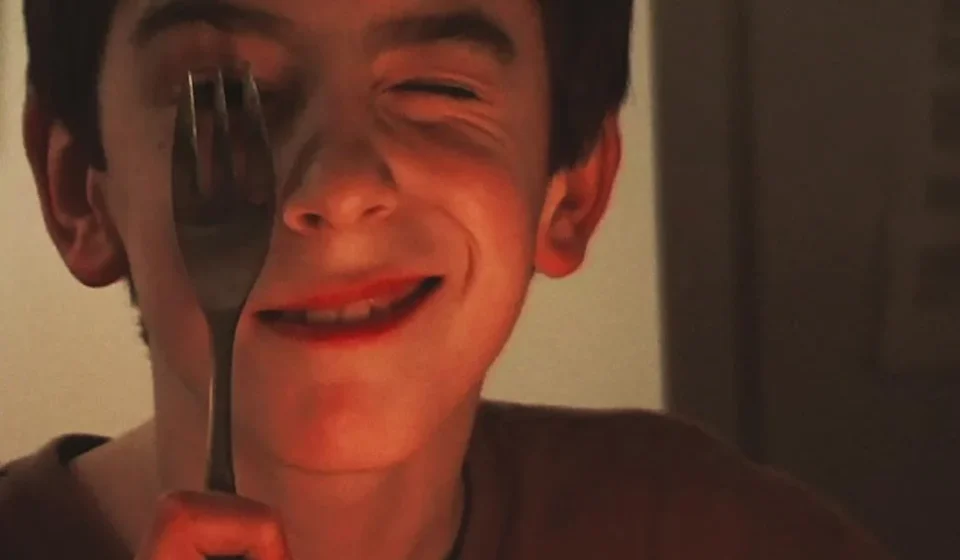
The Architecture of Memory: Ross McElwee’s ‘Remake’ and the Ethics of the First-Person Lens

Editor’s Note: This review was originally published during the 2025 Venice Film Festival. Music Box Films releases “Remake” in U.S. theaters starting Friday, July 10.
Long before the video diary became the en vogue format of personal expression on YouTube and social media platforms like TikTok, Ross McElwee was America’s preeminent first-person filmmaker. While studying under cinéma vérité pioneers Richard Leacock and Ed Pincus in MIT’s graduate film program, McElwee developed a distinct style of memoir cinema—one informed by the observational rigor of direct cinema, the rich, Southern literary sensibility of his North Carolina upbringing, and a near-religious conviction that the mundane texture of daily life could be elevated into a sprawling artistic canvas. His droll, introspective voiceover, which blankets his imagery with warmth and context, has long provided audiences with an entrée into a worldview effortlessly engaged with culture, politics, and the minute, often excruciating details of his private life.
In his latest feature, "Remake," McElwee pushes his signature style to its most devastatingly intimate limits. It is not merely a film about his life; it is an interrogation of the medium he has spent a lifetime mastering.
The Evolution of a Cinematic Memoirist
To understand "Remake," one must understand the scaffold of McElwee’s career. His filmography—including "Sherman’s March," which examined the lingering echoes of the Civil War; "Six O’Clock News," a critique of broadcast media; and "Bright Leaves," which tackled the legacy of the tobacco industry—has always been a sleight of hand. While these projects carried traditional documentary premises, they functioned primarily as vehicles for examining his own identity, his family, and his peculiar compulsion to film everything.
McElwee’s father, his siblings, and his long-time creative foils, such as the poet and teacher Charleen Swansea, became recurring characters in an ongoing, real-life drama. Swansea, in particular, often acted as a critical mirror, expressing gentle skepticism toward his obsession with recording. "Turn it off! This is important. This is not art; this is life!" she famously exclaimed in "Sherman’s March." That tension—the friction between living a moment and documenting it—has defined McElwee’s practice for decades.

A Portrait of Grief: The Tragic Core of ‘Remake’
"Remake" strikes a raw, unvarnished nerve because, for the first time, the personal stakes are fundamentally transformed by irreparable loss. McElwee’s son, Adrian, a fixture in his father’s work since his birth was documented in 1993’s "Time Indefinite," passed away in 2016 following a long struggle with mental health issues and an accidental drug overdose.
The film serves as both a eulogy and a forensic examination of their relationship. McElwee announces the tragedy within the opening minutes, casting a long, mournful shadow over every frame that follows. We see Adrian as a photogenic child, a troubled adolescent, and finally, a young adult navigating a world that often felt inhospitable to his sensitive, brilliant, and deeply flawed nature.
McElwee utilizes a non-linear narrative structure, jumping through time in a way that mimics the fractured nature of grief. By blending 16mm film stock with contemporary digital video, the director creates a collage that reflects his own mental state: a father attempting to piece together the narrative of a life cut short, while simultaneously grappling with his own culpability. He asks, with agonizing clarity, whether his constant presence behind the camera—his "filmmaker’s eye"—distanced him from his son during the years when connection was needed most.
The Intersections of Life and Art
"Remake" is not a singular, narrow focus on tragedy; it is a sprawling, multifaceted tapestry. As the film progresses, it meanders into the peripheral threads of McElwee’s life: the dissolution of his 24-year marriage to Marilyn, the sale of his family home, and the heartbreaking decline of Charleen Swansea, who struggles to recall her own history as a documentary subject.
One of the most bizarre and illuminating subplots involves the comedy director Steve Carr, known for mainstream fare like "Daddy Day Care" and "Paul Blart: Mall Cop." Carr approached McElwee with the intention of remaking "Sherman’s March" into a fictional narrative film. In a move that is both absurd and deeply characteristic of his career, McElwee agreed to let this process be filmed. The attempt fails, of course—moving through stages of development as an hour-long drama before collapsing into a half-hour comedy sizzle reel set to Beck’s "Loser"—but it provides a necessary, darkly comic respite from the film’s heavier themes.

Through this failed "remake," McElwee uses the lens of Hollywood’s superficiality to contrast his own, deeply personal approach to storytelling. He reunites with old flames and friends from his 1986 opus, documenting how they have aged and how their memories of his previous work have shifted over time.
Ethical Implications: The Filmmaker as Subject
Perhaps the most significant contribution "Remake" makes to the canon of documentary film is its willingness to confront the ethics of the "first-person" format. Throughout the documentary, McElwee revisits footage from his previous films, particularly "Photographic Memory," to analyze his own past directorial choices. He does not shy away from the criticism that he may have commodified his family’s struggles for the sake of his work.
In one of the most powerful scenes in the film, McElwee watches footage of his own wedding during a screening in Poland. As he watches his younger self, he admits to a fantasy: the urge to storm the stage, stop the projector, and confess that the film is a "lie." This level of introspection—where the artist stops being the creator and becomes the primary critic of his own life’s work—is rare in documentary filmmaking. It transforms the project from a simple memorial into a profound existential inquiry.
A Legacy Preserved in Amber
"Remake" is not without minor flaws; the cross-cutting can occasionally feel disjointed, and there is a rhythmic repetition in the sound design that may feel redundant to some. Yet, these technical notes are rendered almost entirely irrelevant by the film’s emotional impact.
By incorporating Adrian’s own filmmaking efforts—his skateboard videos, his attempts to document the opioid crisis in youth culture—McElwee allows his son to be a co-author of his own narrative. We see a young man who shared his father’s obsession with the lens but applied it to a different, more contemporary reality. It is in these moments of shared creative DNA that the film finds its greatest resonance.

McElwee has described "Remake" as his attempt to hold onto his son while simultaneously learning how to let him go. In doing so, he has created a work that serves as a testament to the power of the camera as a vessel for memory. While his earlier films were about the search for identity, "Remake" is about the search for meaning in the wake of loss. It is a monumental achievement in personal cinema, proving that even as we age and our memories fade, the images we leave behind—and the act of documenting our own lives—can serve as a bridge across the void.
In the final analysis, "Remake" stands as a poignant reminder that life is not just something to be lived; it is something to be observed, reflected upon, and ultimately, cherished. It is, in every sense of the phrase, the stuff of life.
Grade: A-
“Remake” premiered at the 2025 Venice Film Festival. Music Box Films releases “Remake” in U.S. theaters starting Friday, July 10.