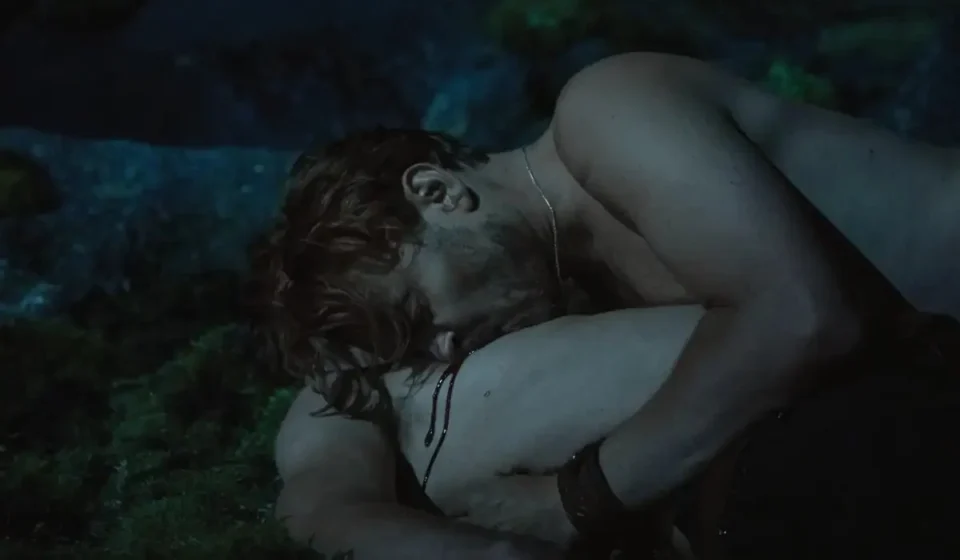
Echoes from the Faroes: Kaspar Kalle’s ‘No Rest for the Wicked’ and the Evolution of Queer Gothic Cinema

The intersection of maritime isolation and the supernatural has long provided a fertile ground for cinematic exploration, yet few films manage to anchor these ethereal themes in the raw, salt-sprayed reality of 19th-century life as effectively as Kaspar Kalle’s No Rest for the Wicked. Making a significant splash on the international festival circuit, this Danish production serves as a hauntingly beautiful meditation on grief, desire, and the lengths to which the human spirit will go to reclaim what has been lost to the sea.
Based on an 1884 short story by the pioneering German gay rights advocate Karl Heinrich Ulrichs, Kalle’s feature—alternately described as an assured debut and a sophisticated sophomore effort—bridges the gap between the traditional gothic horror of the Victorian era and the modern "queer yearning" cinema exemplified by works like Brokeback Mountain and All of Us Strangers.
Main Facts: A Convergence of History and Haunting
At its core, No Rest for the Wicked is a period piece set in the remote Faroe Islands in 1862. The film follows the lives of a young fisherman, his protective mother, and a charismatic sailor whose arrival disrupts their isolated existence. While the marketing may lean toward the "creature feature" or "vampire" subgenres, the film is a deliberate subversion of those tropes, using the supernatural as a metaphor for the persistence of memory and the refusal to let go of forbidden love.
The film is notable for several key reasons:
- Source Material: It adapts a work by Karl Heinrich Ulrichs, arguably the first person in modern history to publicly "come out" and a man who coined the term "Uranian" to describe same-sex attraction.
- Cast: It features a powerhouse performance by Pilou Asbæk (Game of Thrones, Borgen), alongside newcomer Egor Venned, a Faroese model making his acting debut.
- Visual Language: Shot on location, the film utilizes the stark, treeless landscapes of the Faroe Islands to create a sense of "terrestrial seafaring," where the land is as dangerous and unpredictable as the ocean.
- Genre Blending: It maneuvers between a romantic drama and a psychological thriller, eventually settling into a melancholy "ghost story" that prioritizes emotional resonance over jump scares.
Chronology: From Isolation to Resurrection
The narrative of No Rest for the Wicked unfolds with a deliberate, slow-burn pacing that mirrors the rhythm of life in the mid-1800s.
The Encounter
The story begins in 1862 with Baldur (Egor Venned), a taciturn young man whose life is defined by the daily grind of survival and the watchful eye of his mother, Asla (Sofía Nolsøe). Asla is a woman haunted by the sea, having already lost her husband to its depths. When Baldur ventures out to fish alone, he is caught in a sudden, supernatural fog. A mishap leads to a head injury, and he is rescued by Helge (Pilou Asbæk), a seasoned sailor in his 40s who has found himself stranded on a part of the island he does not recognize.
The Awakening
Helge is brought back to the family cabin to recover. His presence acts as a catalyst for change. While Asla is initially charmed by his gregarious nature and worldly stories, Baldur is wary. The tension between the two men is palpable, oscillating between adversarial posturing and a burgeoning, unspoken attraction. Helge speaks of trees, mountains, and cities—things Baldur, confined to his rocky outcrop, has never seen. This "opening of the world" eventually leads to a passionate secret affair.
The Tragedy
The romance is cut short when a whaling ship arrives. Both men intend to sign on and escape the island together. However, Asla, having discovered the nature of their relationship through eavesdropping, uses maternal guilt to tether Baldur to the home. She cannot bear to lose her only child to the same sea that took her husband. Helge sails away alone, only to be returned days later by the tide. A shipwreck has claimed his life, and his body is washed ashore among a heap of corpses.
The Blood Wish
Driven by a grief he cannot publicly express, Baldur performs a "blood wish"—a desperate ritual demanding that Helge return to him. The film then takes a sharp turn into the supernatural. Helge does return, but not as the man he was. As his presence begins to affect the health of the villagers and the stability of the household, the film asks whether this resurrection is a miracle of love or a "force of evil," as Asla suspects.
Supporting Data: Production and Performance
The success of No Rest for the Wicked rests heavily on its technical execution and the chemistry of its leads.
Casting Dynamics
The casting of Egor Venned was a bold choice. As a Faroese native and a successful model, Venned possesses an "idealized" physique that stands in stark contrast to the rugged, weather-beaten environment. While his looks are almost too polished for a 19th-century fisherman, his performance is grounded and internal. Opposite him, Pilou Asbæk provides the necessary gravitational pull. Asbæk’s Helge is a man of the world—warm, slightly dangerous, and deeply charismatic. The age gap between the two actors adds a layer of "mentor/protege" energy that evolves into a peer-to-peer romance.
The Visual and Auditory Landscape
Cinematographer Jacob Møller captures the Faroe Islands not as a tourist destination, but as a liminal space between life and death. The use of natural light and the focus on the "poetically stark" locations emphasize the characters’ isolation. This is complemented by the score from Hettarher, which utilizes wordless choral passages to evoke a sense of ancient, pagan spirituality that predates the strict Christian morality of the era.
Script and Adaptation
The screenplay, co-written by Rasmus Birch and Kaspar Kalle, makes significant departures from Ulrichs’ original 1884 text. Where the original story was somewhat literal and functioned more as a plot outline for oral storytelling, the film opts for visual storytelling and pared-down dialogue. By removing the more "crudely literal" aspects of the supernatural, the filmmakers allow the audience to interpret the "haunting" as a manifestation of the characters’ psychological states.
Official Responses and Critical Reception
Early reviews of the film have been largely positive, with critics praising Kalle’s ability to handle sensitive subject matter without falling into the trap of "misery porn" or simplistic allegory.
Comparisons to Modern Classics
Critics have drawn frequent parallels to Brokeback Mountain, specifically in the way both films treat the landscape as a witness to a love that society refuses to acknowledge. The ending of the film, which leans into a "melancholy poignancy," has also been compared to Andrew Haigh’s All of Us Strangers, where the line between the living and the dead is blurred by the necessity of emotional closure.
Subverting the "Evil Queer" Trope
One of the most discussed aspects of the film is its handling of the "vampire" or "undead" elements. In many historical horror films, queer subtext was used to signal villainy or monstrosity. Kalle intentionally subverts this. While the villagers and Asla fear Helge’s return as a contagion or an evil force, the film remains sympathetic to the lovers. The "horror" is not the men themselves, but the societal and personal grief that prevents them from being together in life.
Implications: The Legacy of Karl Heinrich Ulrichs and Queer History
The release of No Rest for the Wicked serves as a vital cultural reclamation of the work of Karl Heinrich Ulrichs. By bringing his 19th-century prose to the screen, Kalle reminds audiences that queer narratives are not a modern invention but have been part of the human experience—and the gothic tradition—for centuries.
The Role of Motherhood and Homophobia
Significantly, the film downplays explicit, violent homophobia. Instead, it focuses on the "interfering jealousy" of the mother, Asla. This choice makes the story more universal. Asla is not a villainous bigot; she is a woman terrified of abandonment. By framing the conflict through the lens of family and survival rather than just hate, the film provides a more nuanced look at how queer lives were constrained in the 1800s.
Cinematic Significance
For the Danish and Faroese film industries, No Rest for the Wicked represents a high-water mark for atmospheric, high-concept drama. It proves that local stories, rooted in specific geographies like the Faroe Islands, can resonate on a global scale when they tap into universal themes of love and loss.
In conclusion, No Rest for the Wicked is more than a ghost story. It is a beautifully rendered "honorable addition" to the roster of seafaring romances. Through its assured direction, haunting visuals, and deep respect for its historical roots, the film ensures that the yearning voices of the past—like those of Ulrichs and his fictional lovers—are finally heard, echoing across the cliffs of the Faroes and into the modern cinematic canon.